
This year, I tried winter sowing for the first time. I was pretty skeptical. It honestly sounds too good to be true. But ultimately it was much easier and more successful than I ever would have imagined!
- What is Winter Sowing?
- What Can I Grow With Winter Sowing?
- When Do I Plant My Seeds in Winter Sowing?
- How I Tried Winter Sowing in Montreal
- Planting after Winter Sowing
- Does Winter Sowing Work?
What is Winter Sowing?
Winter sowing is sowing seeds in potting medium in covered plastic containers usually with aeration and drainage holes. These containers are placed outside at any time to germinate and grow.

My winter sown bins covered in snow.
The pros:
- Winter sowing is very low maintenance. You need only to make sure that the soil stays moist. If you have made holes in the top of your container, you might not even need to water.
- You don’t need to take up indoor space.
- You don’t need grow lights.
- You don’t need to harden off your seedlings.
- Winter sowing is extremely flexible. You can start seeds when it is convenient to you.
The cons:
- Not many that I can think of! Maybe it would be that it takes a while to know whether or not your seeds germinated.
What Can I Grow With Winter Sowing?
Allegedly, you can grow just about anything with winter sowing. Some people even start their vegetables such as peppers and tomatoes using this method. I was quite skeptical that those warmth-loving plants would grow in such a cold climate. I decided to start with plants that made sense to me like hardy perennials. After all, they’re designed to overwinter in Montreal.
When Do I Plant My Seeds in Winter Sowing?
You can truly start the seeds whenever is convenient for you. The idea is that they will germinate and grow when the conditions are right for them. I started my first round in late March, then a second round in April.
How I Tried Winter Sowing in Montreal
To be honest, I was pretty half assed in my winter sowing experiment. I have young kids and a business to run, so speed was of the essence. The one thing I did well was that I tried a few different methods. I actually kind of fell into performing an experiment.
Winter Sowing in Bins
I bought three large transparent plastic bins from Costco and drilled holes in the top and bottom. In the first one, I placed soil directly on the bottom of the bin and spread my seeds in there. In the other two, I planted the seeds in solo cups that I sealed in the bins.
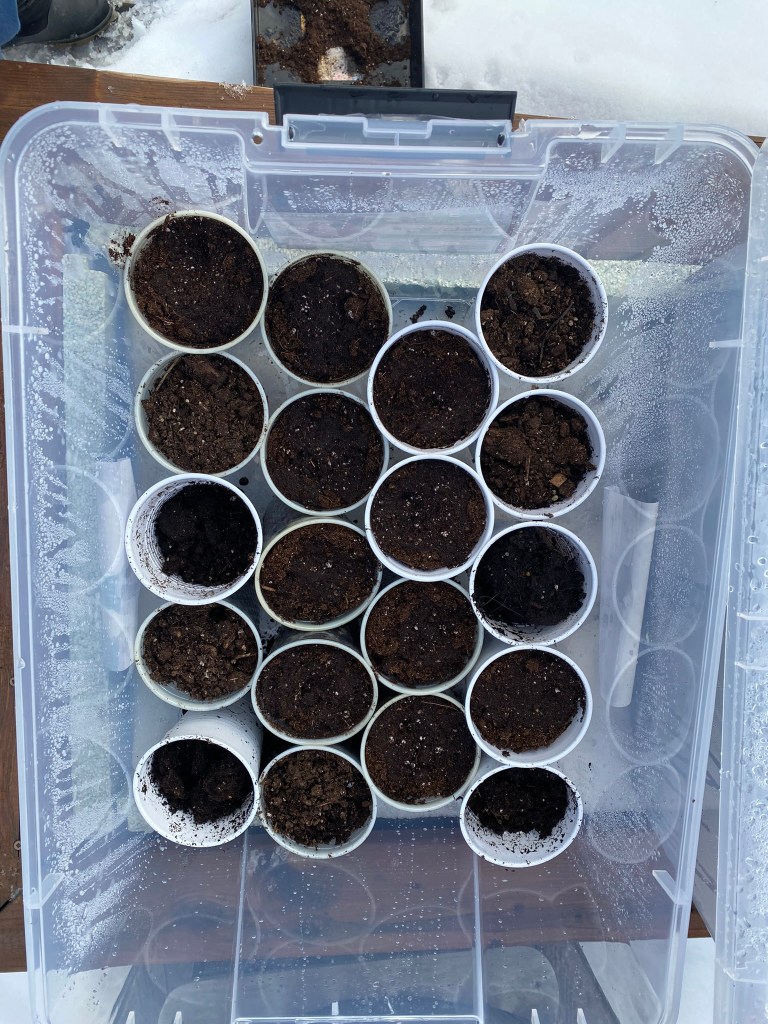
The major benefit to the plastic bins is that you can easily lift the lids to water, check on your seedlings and keep them from overheating.
I started by planting native perennials:
- Echinacea
- Anise hyssop
- Wild bergamot
- Poppies (ok, neither a native nor a perennial)
A note about the poppy: My mom has been collecting and giving me poppy seeds from her garden for years. Every fall she tells me to simply sprinkle them and that they’ll grow – after all that’s how hers come back year after year. And every year – a big fat nothing! So this year I sprinkled half outdoors and decided I wanted to do something different. Initially I had planned to start them indoors, but poppies hate being transplanted. In fact, I read that you need to harden them off for four weeks!! Not an option! This seemed like a simple solution.
Winter Sowing in Milk Jugs
And then in my last method, I used the most common winter sowing method, which is milk jugs. To use milk jugs, you slice them about one third to one half of the way down, drill drainage holes and plant seeds in potting medium. You then duct tape the top of the jug back on.
The whole milk jug process is very simple, but once you are ready to lift the top to care for your seedlings, it is very hard to get off and not easy to replace.
Then I put the bins and the jugs out in my sunny backyard and forgot about them. They were snowed on, then the snow melted. And eventually, in early May, I noticed tiny sprouts! I started removing the bin covers whenever it would be above 10 degrees Celsius during the day. I was extremely vigilant and covered them again at night. I watered them when they looked dry since not a lot of water seemed to pass through when it rained.
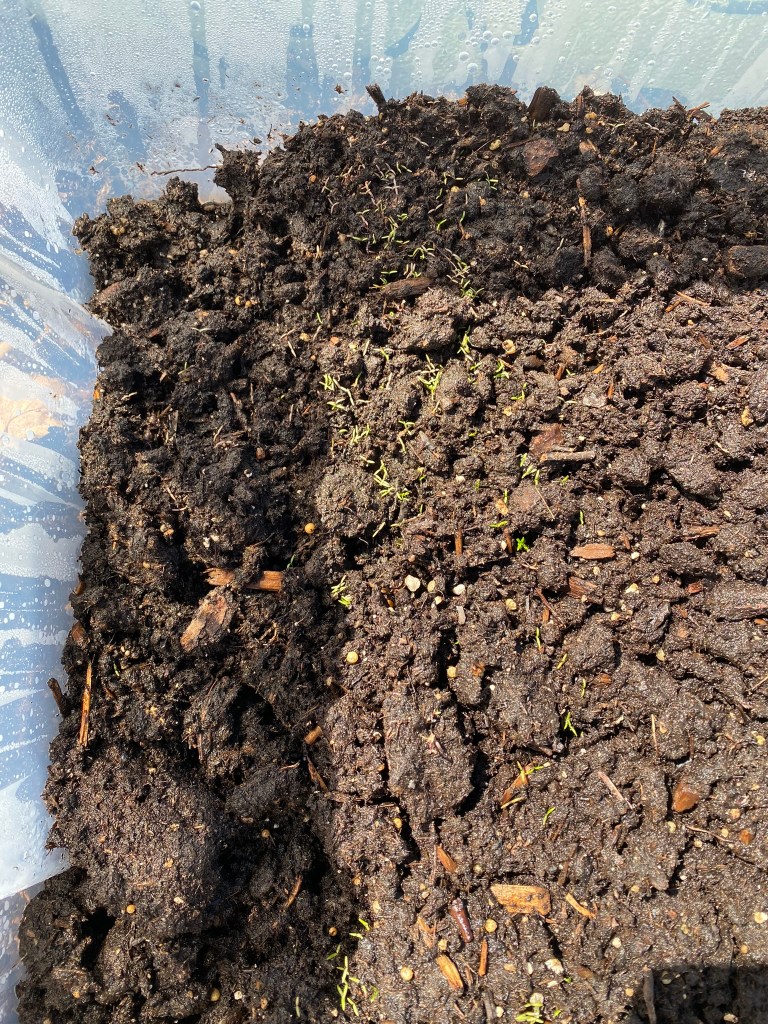
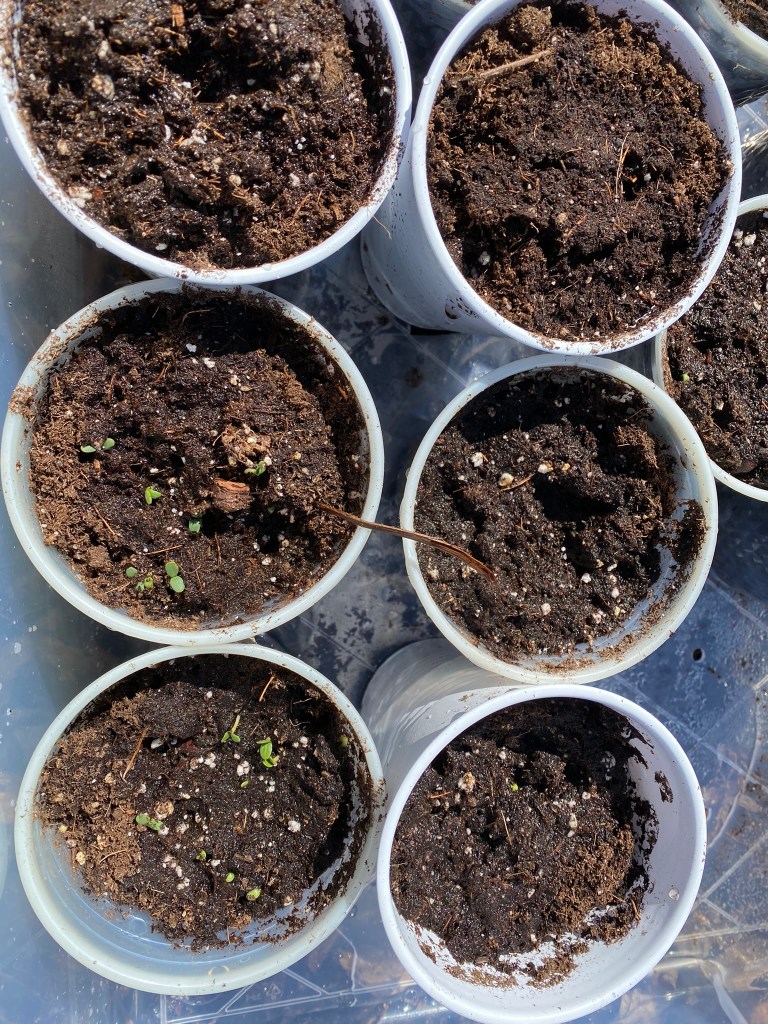
Because the process seemed to be working, I decided to try some annuals as well. These I planted in solo cups again, and also in milk jugs.
In the solo cups, I planted:
- Bachelor’s buttons
- Strawflower
In the milk jugs I planted:
- Two types of cosmos
- Zinnias
And all of them grew beautifully. I love the surprise of one day seeing all the sprouts where nothing was the day before.
Planting after Winter Sowing
Then comes the issue of when and how to plant winter sown plants. The general rule in winter sowing is to plant the seedlings once you have at least two sets of leaves. In zone 5b, the temperatures really are all over the place well into June these days and there’s also the issue of how long it takes the snow to melt. Most of my seedlings had many more than two sets of leaves before I planted them and it was fine. I did probably wait longer than I should have to plant them, but I just didn’t have time.
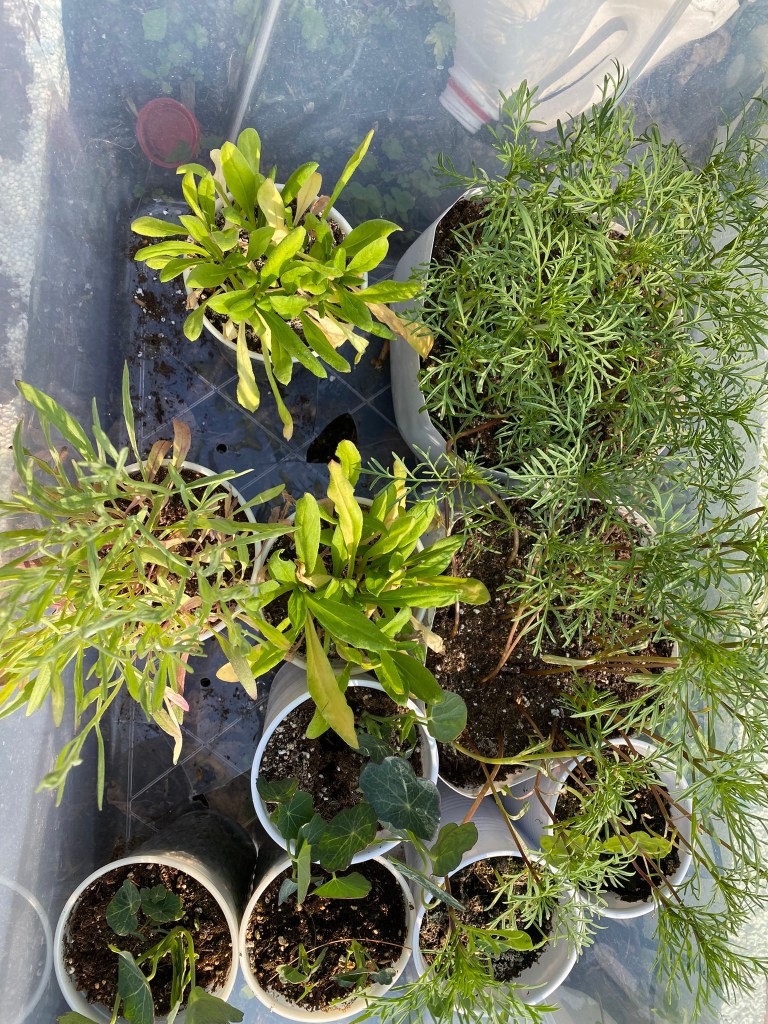
And the one true snag that I did run into was that the seedlings in the soil on the bottom of the bin just seemed to stall. I waited and waited for them to grow more, but it just didn’t seem to happen. Maybe they weren’t able to establish roots that were deep enough?
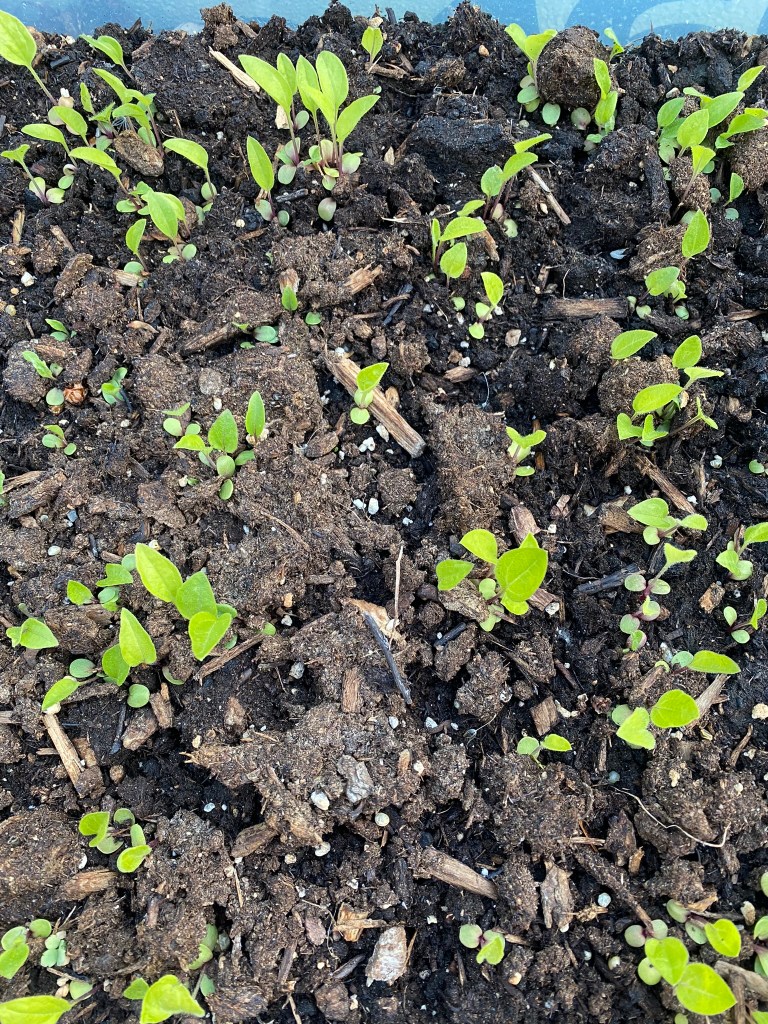
In winter sowing, there is the idea of planting in “hunks”. I was a bit nervous about this, but in practice the soil broke apart beautifully and didn’t damage any of the roots.
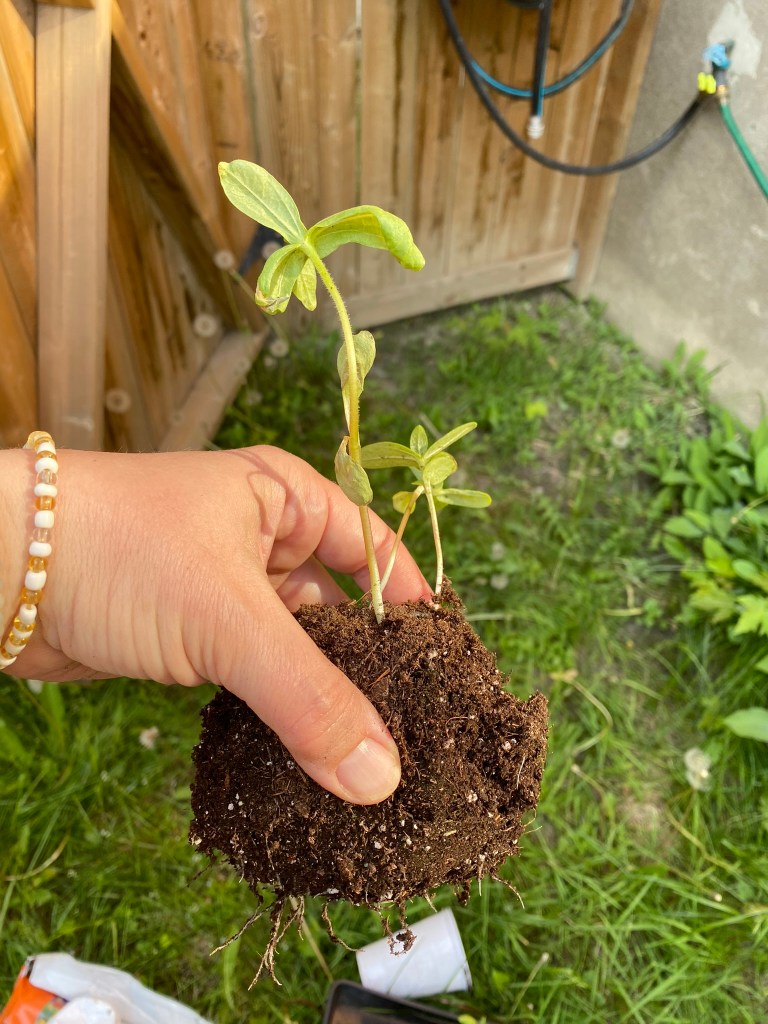
So easy to separate the seedlings grown in milk jugs.
And planting from the solo cups couldn’t have been easier. It was much like getting seedlings from a garden centre.
Planting from the bins was the most difficult, but that was in large part because the roots simply hadn’t developed well enough to hold any soil together.
Does Winter Sowing Work?
I count my winter sowing experience to be a huge success. I will definitely do it again! I will not put soil directly in the bin again, but using the solo cups worked like a charm. I would also plant in milk jugs again, though they are slightly less convenient because once you’ve pulled off the duct tape, how do you get the lids back on? It’s quite important to be able to do that when you’re dealing with the variable temperatures in spring.
I loved being able to start my annuals outside. I didn’t end up with an overcrowded grow room in my basement, panicked about running out of space and light. I am already dreaming about all of the annuals I will be starting next year!
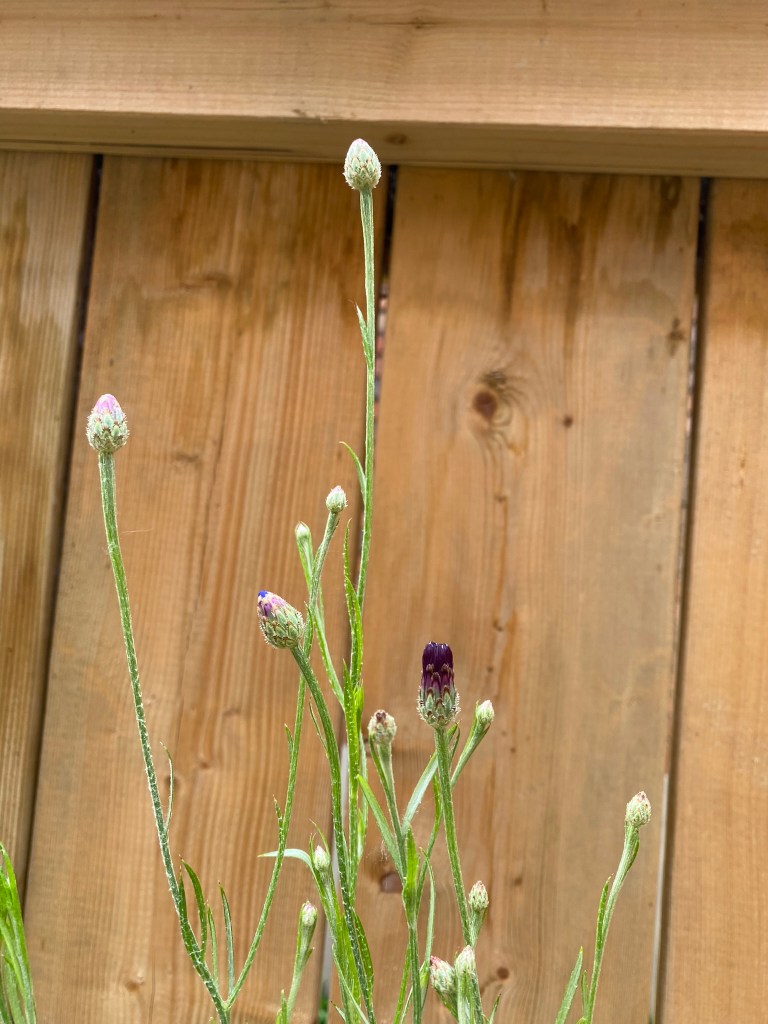
Just waiting for these bachelor’s buttons to flower!
 Martha's Garden Obsession
I definitely will try winter sowing next year. Love your enthusiasm for gardening.
LikeLike
I am plotting so many things to try with winter sowing!
LikeLike