This post should come with a trigger warning. It won’t be my usual gushing prose interspersed with gorgeous pictures of my garden. No, it is going to be full of decimated, damaged, and besieged plants. Consider yourself warned!
Anyone who knows me can testify that I am an animal lover. I’ve always had a soft spot for the creatures who share our planet with us. And I’m pretty indiscriminate in this affection. I even look kindly on reptiles, insects, and rodents. Am I thrilled to find spiders in my home? No, but I’ll carefully transport a spider into my bedroom so I don’t have to kill it when my boys freak out about it. Do I love when a mouse scurries across the kitchen floor? No, but I’m still not going to try to kill it (I leave the trap setting to my husband when the cats are too lazy to take care of the mice. But I feel just terrible about it. Have you ever really looked at a mouse?? They’re adorable!) Is my heart warmed when a snake darts away from my feet in the backyard? No, but I’m in its territory. Live and let live is how I feel. We’re all fellow travelers.
Japanese Beetles

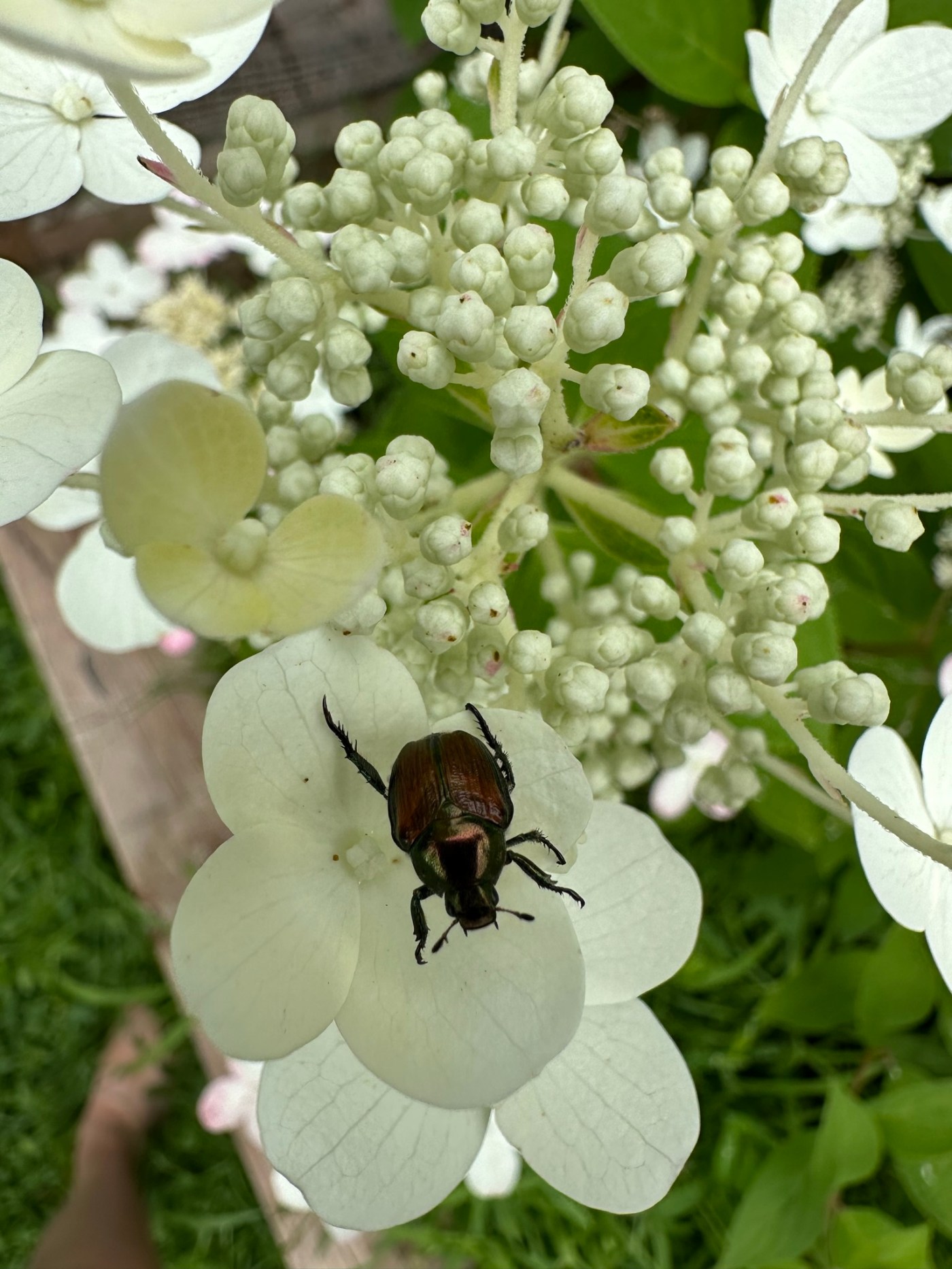
I took a photo of this guy before I drowned him.
Except the dang Japanese beetles. I have no empathy for those little buggers. And I show no mercy either. The hot days of July are marked in our house by the appearance of a plastic cup full of soapy water and Japanese beetle carcasses. I can’t bring myself to squash them in my fingers yet, so I knock them into my trusty cup of soapy water. It’s very effective. Their defence is to let themselves fall when they feel threatened, so if you position the cup underneath them while knocking them off the plant, you can usually catch and drown them easily. I have had bad infestations every year since I started my garden. They attack my roses most of all, especially my most fragrant (and favourite) ones.
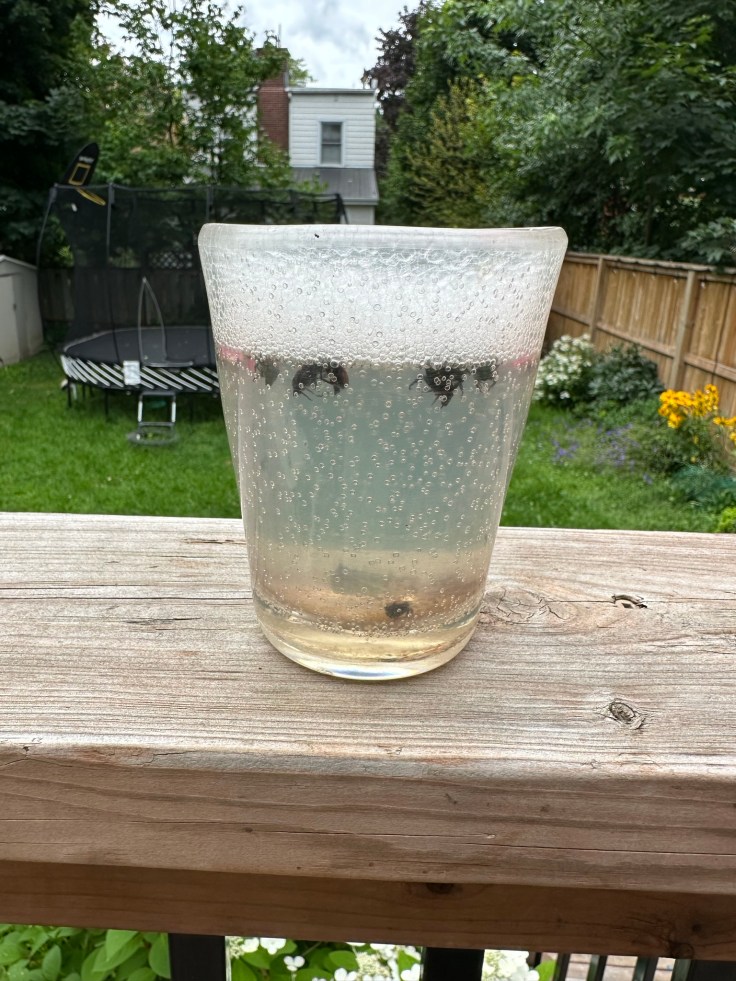
My weapon of choice against Japanese Beetles.
Where do Japanese Beetles Come From?
I’m sure you’re not surprised to learn that this scourge originated in Japan, given its name. First found in the US in 1916, this invasive species has spread all over Eastern North America, except for Florida. It has no natural predators here, though I know lots of people like to feed them to their chickens. No chickens here, so I don’t have any good use for the hundreds (thousands?) of carcasses I collect each year.
They’ll eat over 300 species of plant, but particularly love rose bushes and fruit trees. You can recognize their handiwork in the lacelike patterns they leave behind on the leaves they strip.
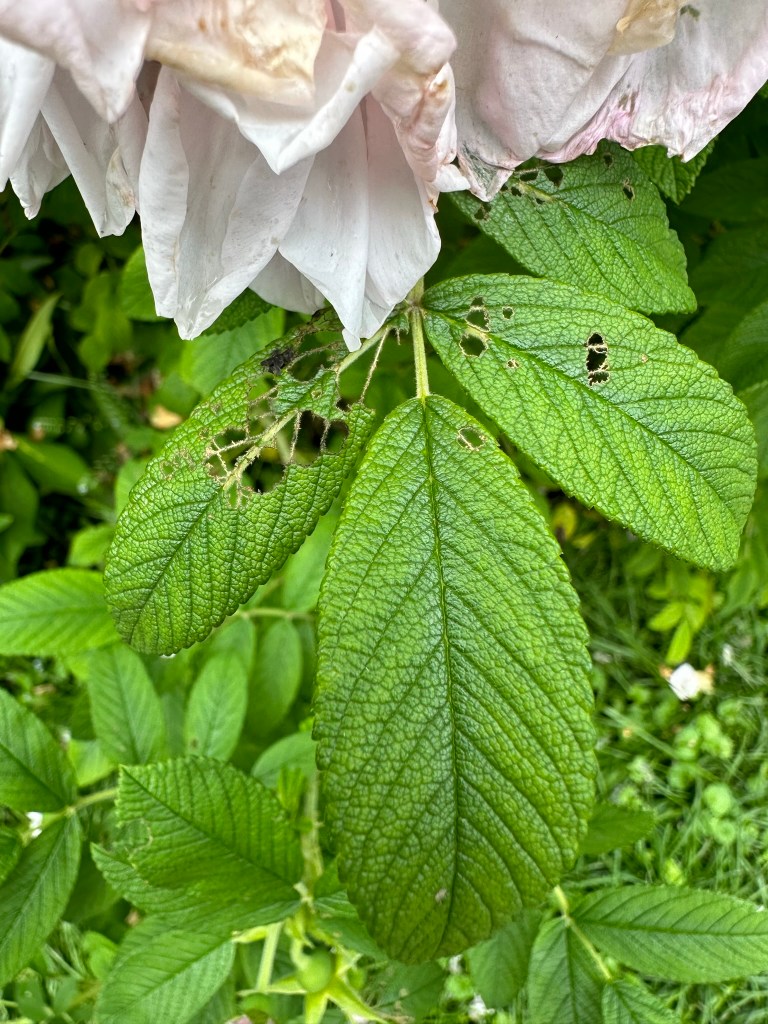
Will Japanese Beetles Kill My Tree or Plant?
I guess it’s pretty rare for these voracious critters to kill a plant, but they sure are hard on them! They can certainly ruin your enjoyment of your plants.
Japanese Beetle Traps
There’s some controversy about whether Japanese beetle traps are a good idea. The traps send out pheromones to lure beetles to their death. The thinking is that while you may trap a lot of beetles, those beetles might snack on your garden as they pass through. I always hesitated for that reason, but my lovely husband gifted me one. Last year, I felt so desperate that I thought it couldn’t hurt. And the trap just didn’t work! No extra beetles on my plants, but it didn’t catch more than five. I think it was in the wrong place. I have read of people catching thousands of beetles, so I can only assume it was an error on my part. I might try again this summer but find a better location for the trap.
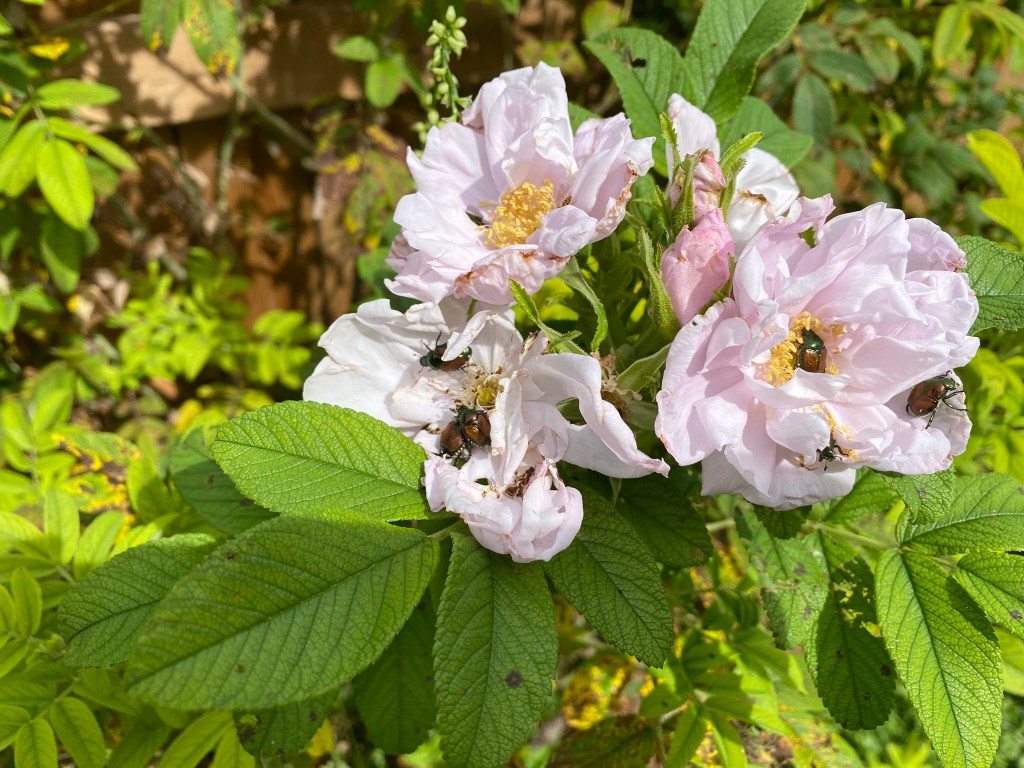
So many, all the time! Often stacked right on top of each other.
Neem Oil to Control Japanese Beetles
Obviously, I am going to stay away from artificial pesticides in my garden. The only pest deterrent I use is neem oil, which is easy to obtain online. I mix it with water and sometimes a little dish soap and spray it on the leaves. Apparently it does actually seep into the plant somehow, so you don’t have to worry about it washing off in the rain. This stuff is used in hair and skin care, so it’s pretty safe, but to be sure it doesn’t interfere with pollinators, it should be used before dawn or after dusk.
Does it work? I can’t say I know for sure. I don’t think it is harmful in any way. Mostly I rely on my handpicking to try to control these awful pests.
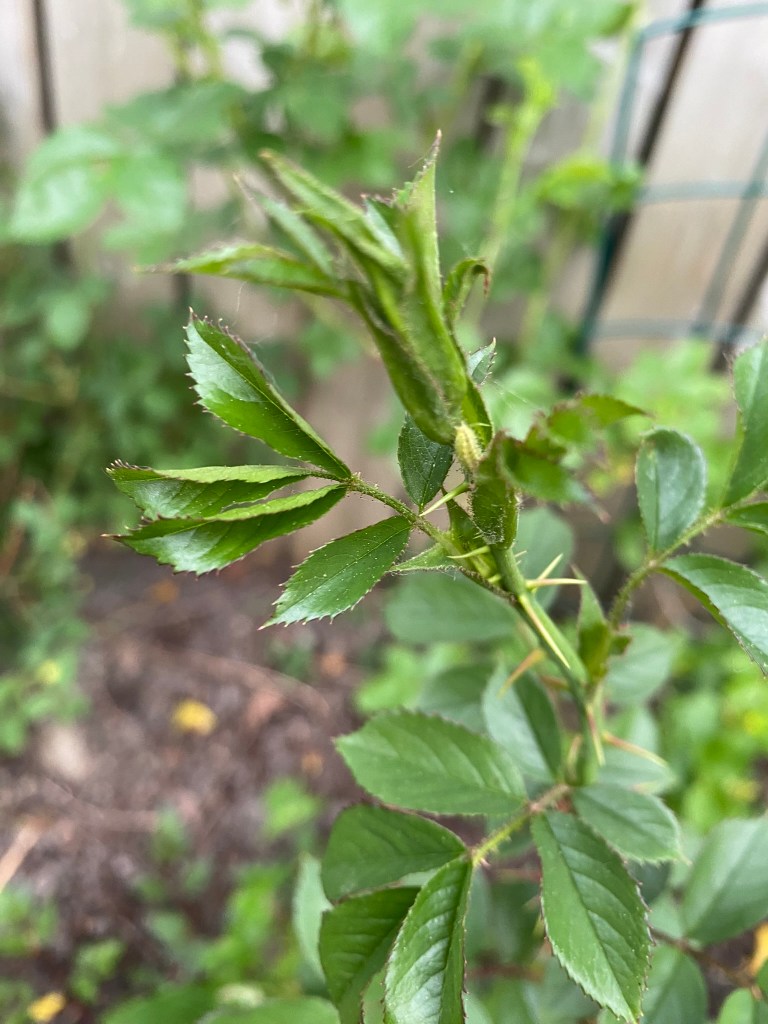
Sawfly larvae
I’m also ruthless when it comes to sawfly larvae. These tiny green worms can be hard to spot, but I have good eyes. As I mentioned in my post on roses, they always attack one particular rosebush. I handle them by handpicking and putting them into my cup of soapy death. From what I understand, they will not kill a plant, but they do strip the foliage and ruin the buds, so they’re no fun. I find after two or three days of picking, the infestation is over.

Slugs
Slugs wreak havoc on my garden every year. I think this year is particularly bad, I assume because it’s been very wet. I have never successfully grown a zinnia, until this year, when I planted them in a box on our fence. Still, I see signs of slug damage on the plants living there, but it’s not severe enough to completely strip them. Slugs can be particularly frustrating because you don’t see them during the day. But it’s hard to miss the tell-tale holes they leave in your plants. They seem to have a very varied diet, going after just about everything in my garden.
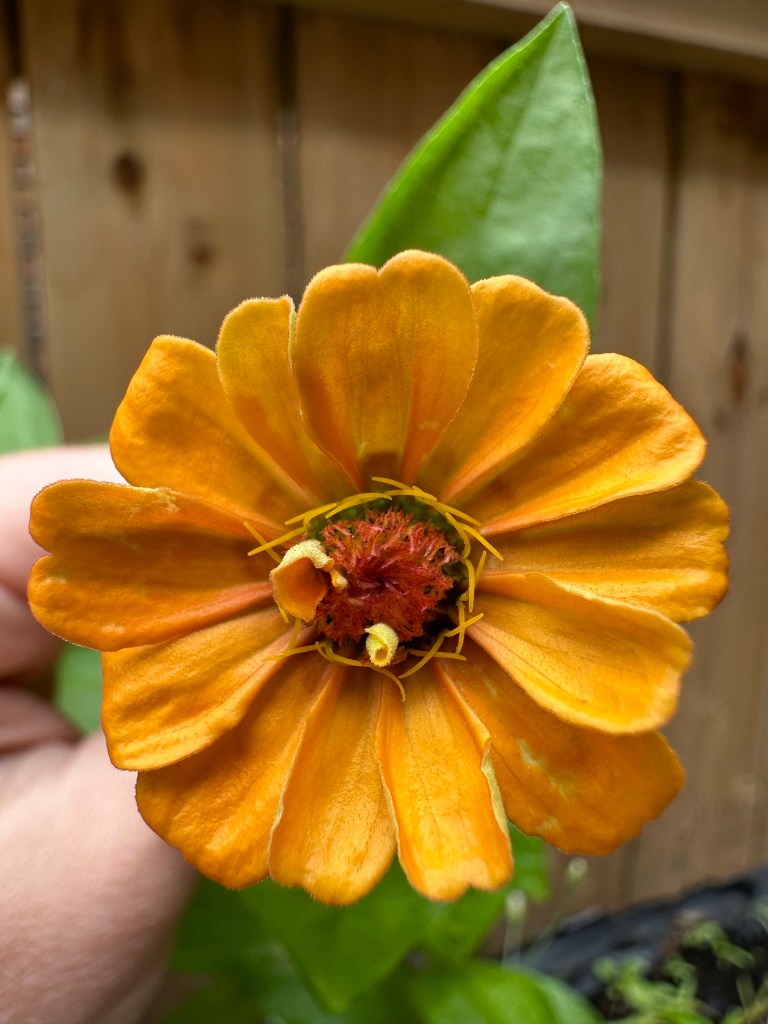
Finally! A cheerful image of my zinnia triumph!
How to Control Slugs
I’m not sure there’s any really effective way to control these pests. I did use beer traps one year. Again, there is the school of thought that you risk attracting more of the very pests you’re trying to get rid of. And then I felt guilty because I was killing creatures that are part of the food chain. I don’t want to deprive the birds of their food! (And yet I don’t feel guilty about killing sawfly larvae somehow – go figure!) I found a website that tests all the supposed ways to control them, and honestly, it seems like nothing works.
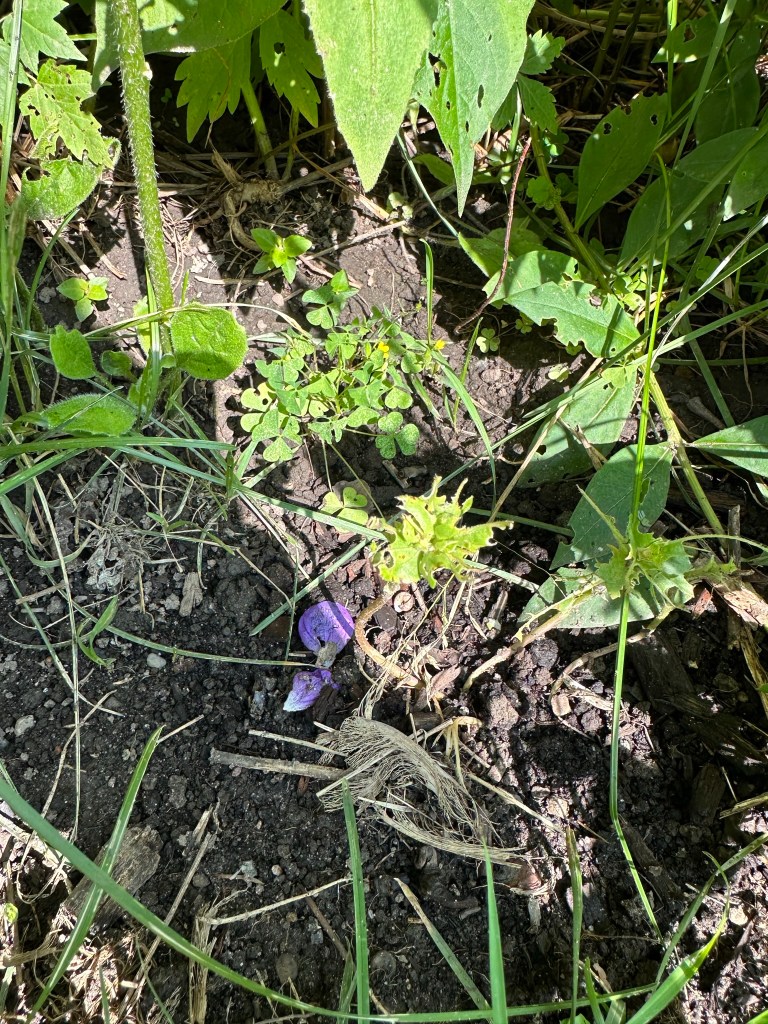
A less-fortunate zinnia plant. There’s nothing left!!!
Copper Rings for Slug Control
In desperation, I bought copper rings from Lee Valley that are designed to fit around the base of the plant. I guess slugs and snails don’t like the feel of the copper or they’re unable to climb it? Either way, I found that they actually work pretty well. Just remember to trim the leaves that flop over the edges so the buggers don’t use them as a pathway up the plant.
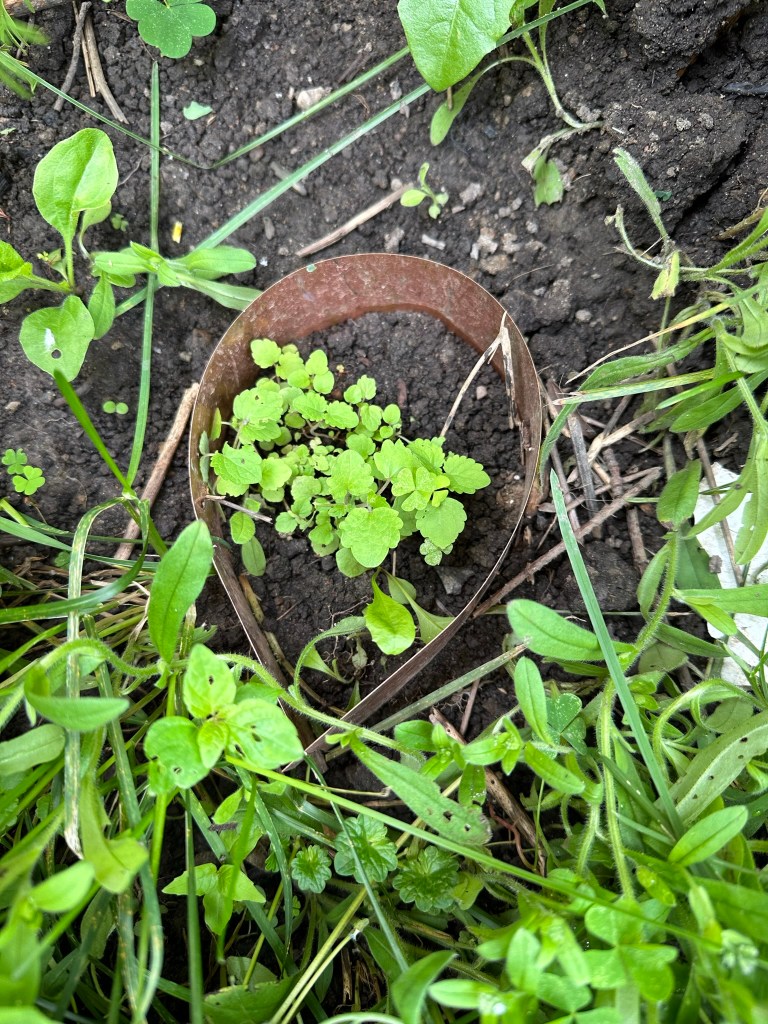
I’m still trying to grow this anise hyssop. I started it using winter sowing, but it has been extremely slow to start, as you can see.
Eggshells to Deter Slugs
But I’m not made of money, and the slugs are so voracious this year, that I just don’t have enough copper rings! So I’m trying crushed eggshells. They’re free and good for the soil as well. The idea is that the slugs are unable to cross the eggshell barrier without getting cut up.
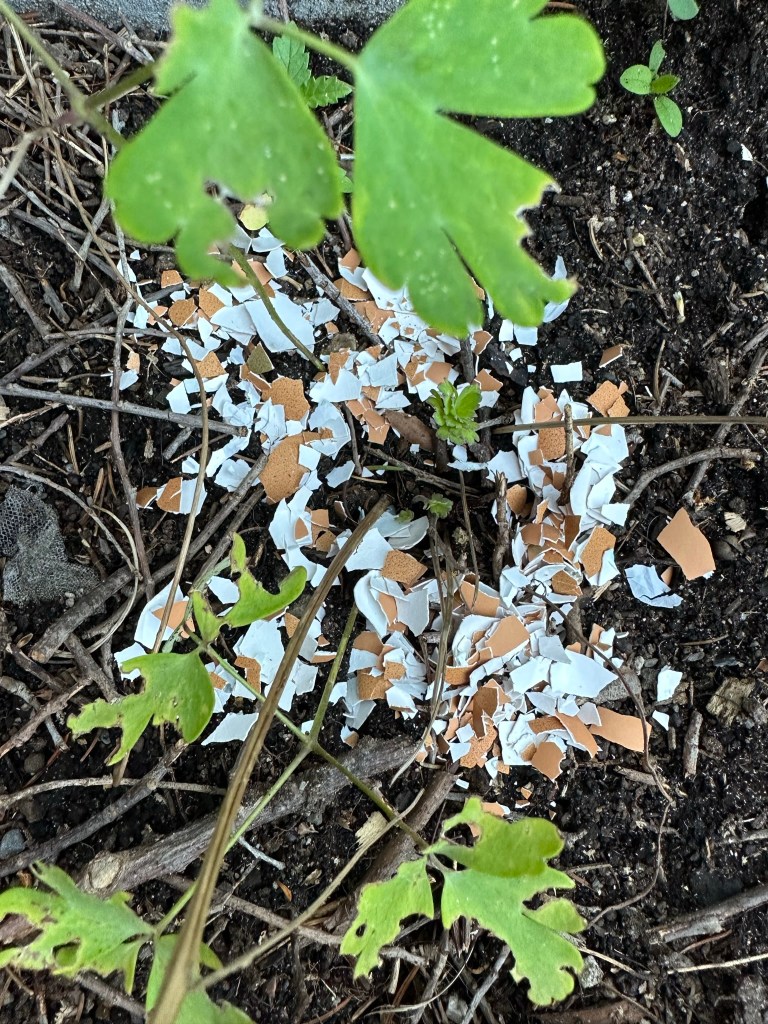
I can’t say for sure that it’s working – the website that tests these things says that they’re not particularly effective – but I feel like it might be? That could be wishful thinking as well.
Groundhog
And now for my nemesis, Sam the groundhog. He lives under my neighbour’s shed and treats my beloved garden as his own personal buffet. Last year, he ate my nasturtium, lettuce, and cucumber seedlings within hours of my planting them. As much as I think groundhogs are cute, I really hate this one!
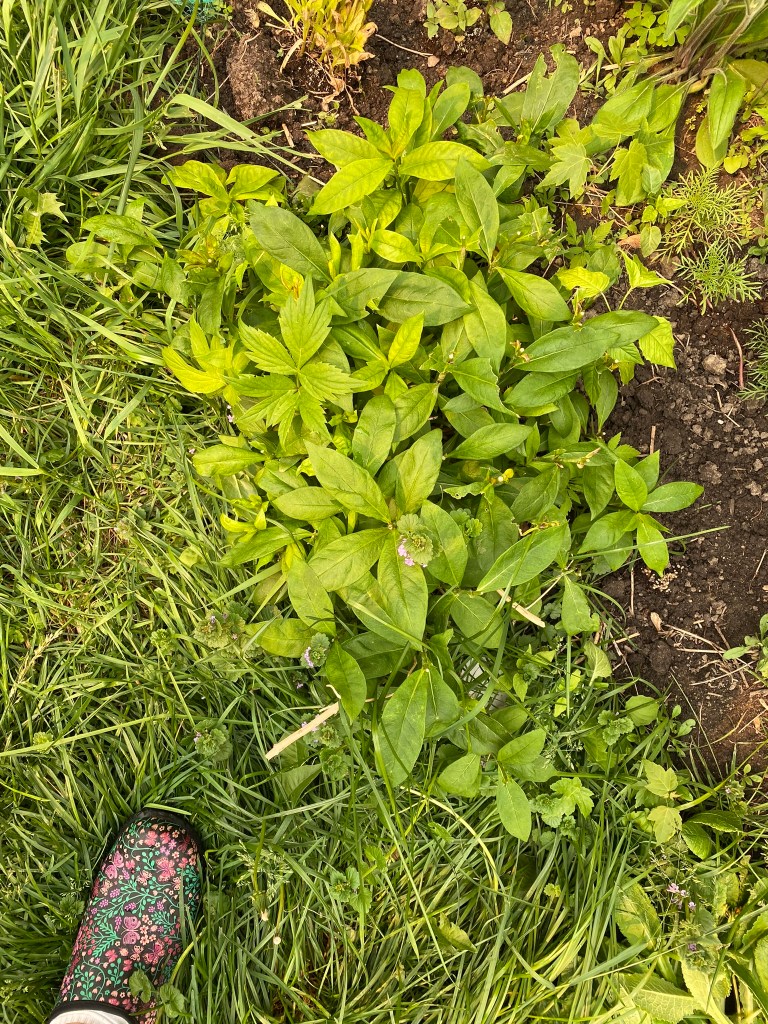
My poor phlox!!!
Groundhog Damage
He has prevented my aster from flowering every year for three years (as I mentioned in a previous post, I moved that aster. I think it’s too late for this year, but maybe next year will be better). He is very hard on my coneflowers. And he’s prevented my tall phlox from flowering for years now. I have four of them that I used to enjoy very much. I am thinking of getting rid of them at this point. And as I mentioned before, he seems to be eating my columbine this year – something he never did before and really bums me out.
How I’ve Tried to Deter The Groundhog
I have tried:
- Blocking the holes where he comes in, but that’s pointless since our land is in no way level and it would require blocking the entire perimeter of our property
- Spreading epsom salts near his known entry points. This didn’t seem to work and also they need to be replenished after every rainfall. And I wasn’t sure about adding all that epsom salt to my soil
- Planting oregano and lavender at his known entry points. This was an act of desperation! I read a claim that they don’t like the smell of fragrant herbs and it would deter them. I’ll let you in on a secret – it did nothing!
- Covering some of his favourite plants in netting and surrounding them with miniature fences from the dollar store. This did work well enough. The problem with the netting is that the plants grow into it, so it’s hard to know how to manage. Also it’s ugly. Also he eats anything that grows through or around it!
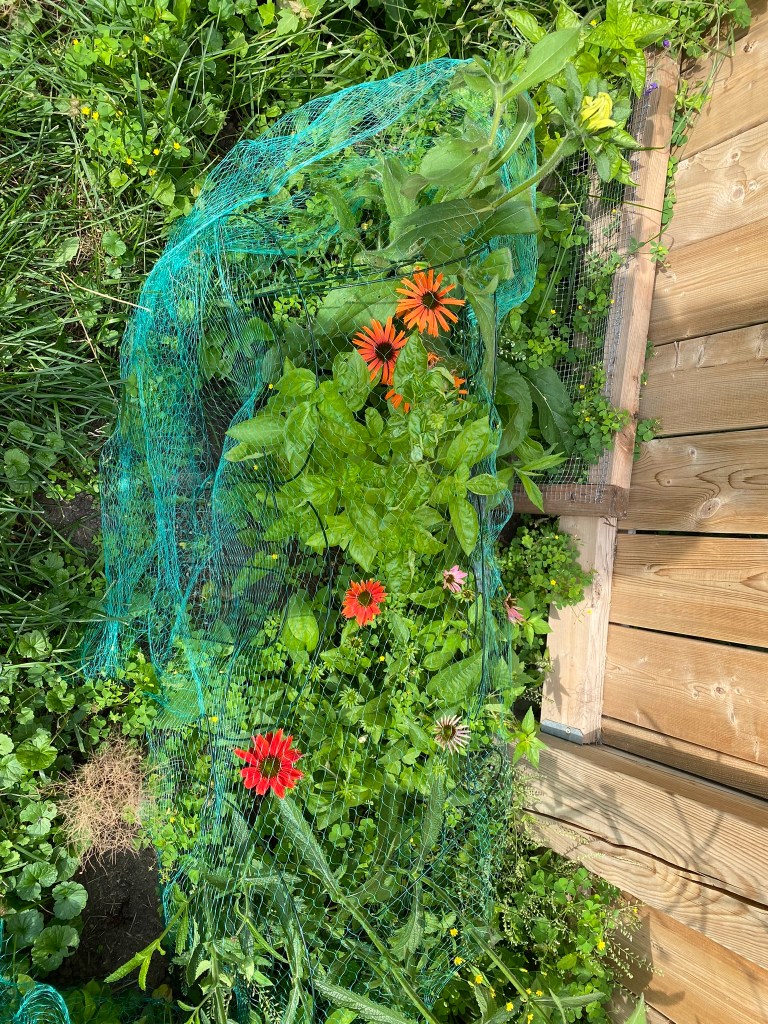
It’s all so depressing.
Other Groundhog Deterrents
This groundhog is not scared of dogs – both we and our neighbours have them. But their dog is small and blind and my dog is old. I would think the groundhog liked taunting them if I thought they were smart enough for that sort of thing! This groundhog definitely is not deterred by dog urine. I’ve heard of coyote urine being a good deterrent but I’m skeptical since he’s not scared of the dogs. Apparently some people just pee around their plants, but I have so many little boys peeing around my backyard that I think I can conclusively say that this is not effective for this groundhog! I’ve also heard of people using devices that emit a high frequency that deters rodents. I’m just not sure I want to invest a chunk of money in something that just might not work.
Many people will trap and release groundhogs. I simply don’t have the time or dedication to do that. I guess I’m waiting him out? He won’t live forever…
Plants That Groundhogs Don’t Eat
Plants he leaves alone in my garden:
- Roses
- Hardy geraniums – groundhogs don’t like the smell. And if you install them next to plants that are important to you, they can offer some protection. I think I’ve noticed this in action with my tall phlox, which he leaves alone while the geranium is having its moment, only to decimate it again with just one meal!
- Peppers
- Tomatoes – again, I think it’s the smell
- Sedum
- Bee balm and wild bergamot (so far)
- Peonies
- Hydrangeas
Notice anything about that list? Wild bergamot is the only native species on there. I am going to discuss this further in a future post, but this groundhog is preventing me from introducing many native plants into my garden. I have some native echinacea that I want to plant out, but I feel like I’m just planting a snack for Sam. It’s creating a real conundrum for me. Do I just accept that he’s the boss, get rid of his favourite snacks and only plant things he doesn’t eat? Or do I continue as I have been, with him hurting my enjoyment of my garden and preventing plants that I’ve spent time and money on from growing? What would you do?
So these are the four biggest pests in my garden right now. Any tips on how to get rid of them? Any avid gardener knows just how discouraging it is to put in all the effort of growing and caring for plants, just to have them decimated by a pest. What pests are creating problems for you?
 Martha's Garden Obsession
Leave a comment