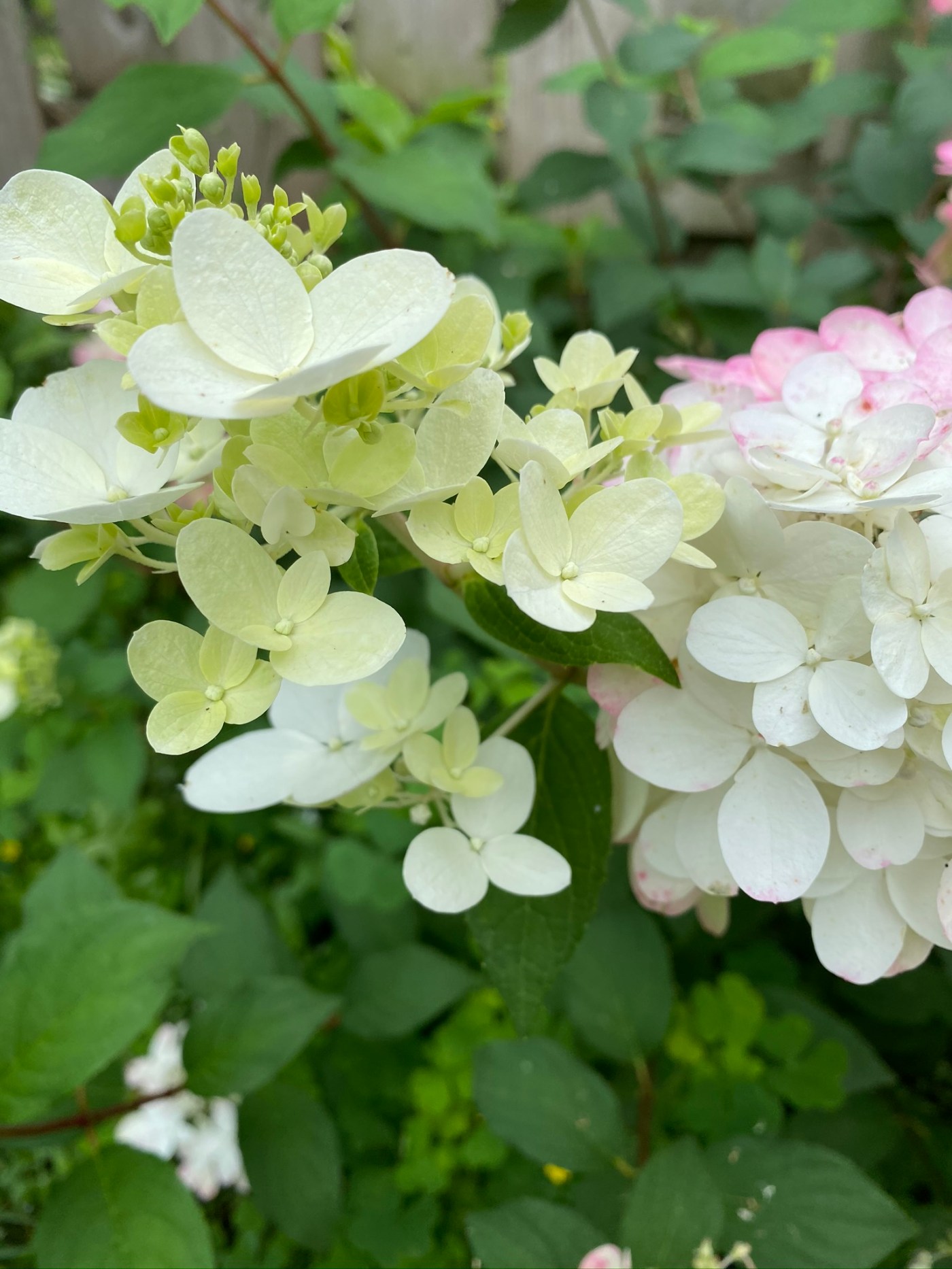
After the horrors of last week, we’re back to regularly scheduled content, with lots of gorgeous images. I have so many pictures to share! That’s because, along with roses and columbines, hydrangeas have to be some of my favourite shrubs. And with good reason. Their blooms are reliable and long lasting. They come in a variety of beautiful colours and types of flowers. They are gorgeous in cut-flower arrangements and can make beautiful dried flowers. I myself have nine hydrangea shrubs in four different varieties on my property. I could never pick a favourite. My problem – I have no idea how to care for these fantastic plants! And they really are starting to need some TLC. Ready to do some detective work with me?
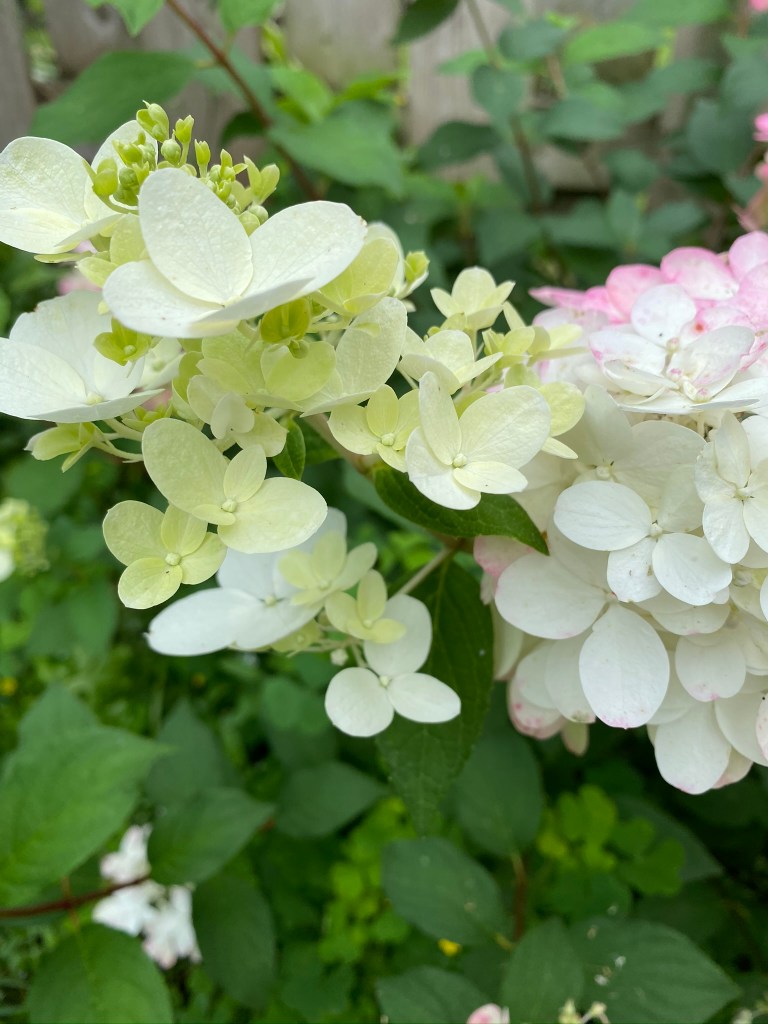
Can you blame me for having hundreds of pics of something so beautiful???
So the one thing I do know about hydrangea care is that some hydrangea plants flower on new wood and some flower on old wood. And that means they are pruned at different times. But when? As my garden is relatively new, I’ve been able to sort of put off pruning. But it’s starting to fill out and I don’t have a choice.
Hydrangea arborescens aka Annabelle

Here are my Annabelles. They are going to need pruning, if not dividing soon.
Did you know that Annabelles are actually native to the Eastern United States? Maybe that’s why they’re so successful! I planted three bushes together in mostly shade and what I would imagine is acidic soil and they’ve bloomed and grown beautifully. They really don’t need much attention and, frankly, I don’t give them any. From what I read, Annabelles bloom on new wood and should be pruned in the fall. In fact, they can be cut to the ground and still grow back beautifully the following summer.
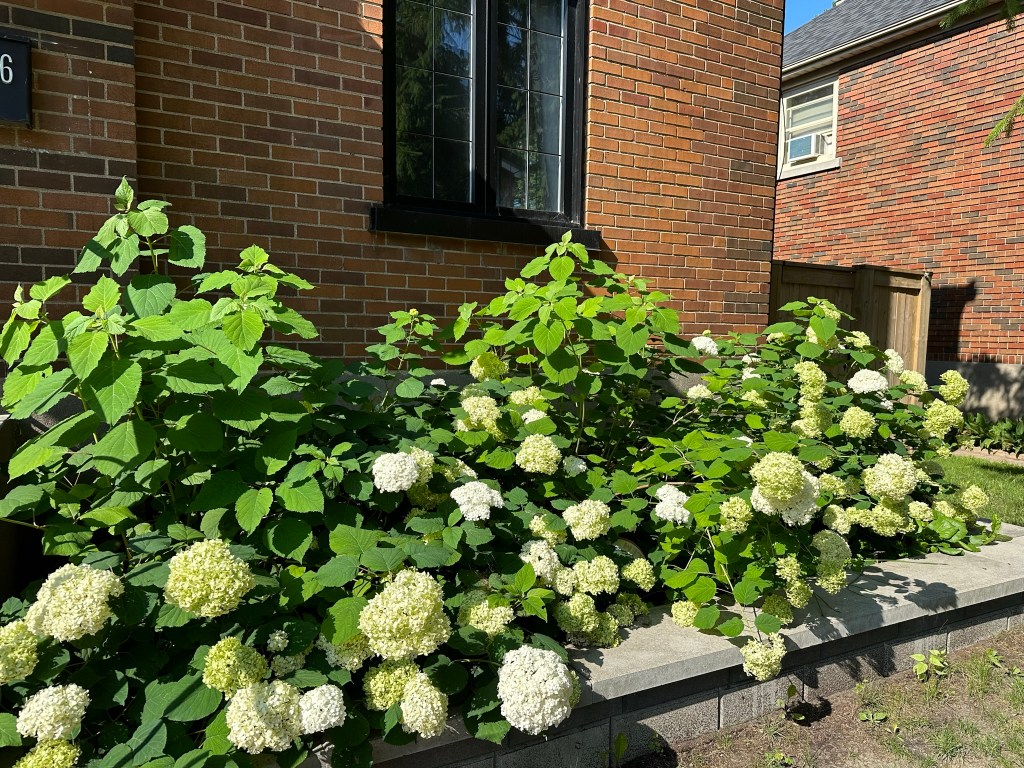
One of the common issues with Annabelle is that their flowers get so big that they tend to flop over after rain. My flowers are the biggest they’ve ever been this summer and I love them that way! But apparently if you don’t cut them to the ground, and instead leave a couple of inches, you’ll get more, smaller flowers and the stems are stronger. Maybe I will try that this fall. But in the meantime, I’m loving the ridiculously large flowers.
Hydrangea paniculata ‘Savill Lace’ aka Lacecap Hydrangea
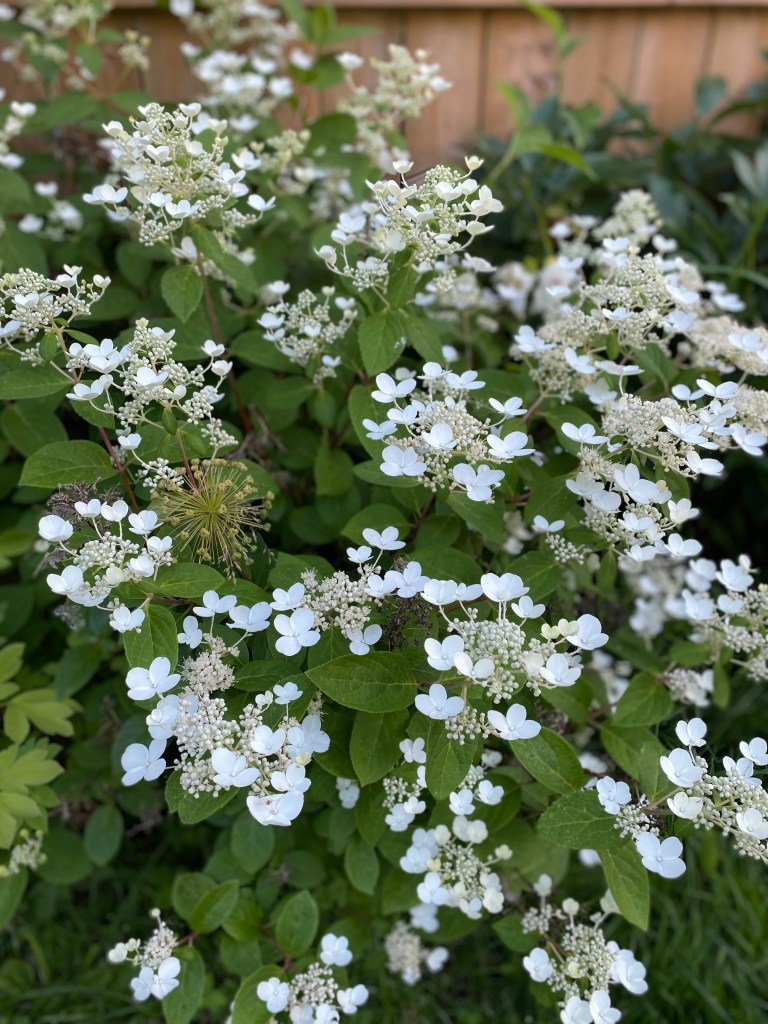
My lacecaps are so happy this year! They are so sweet and delicate from close up but make a gorgeous show when I look out my window. I love all the interest they add, opening into white blooms that gradually turn a deepening shade of pink.
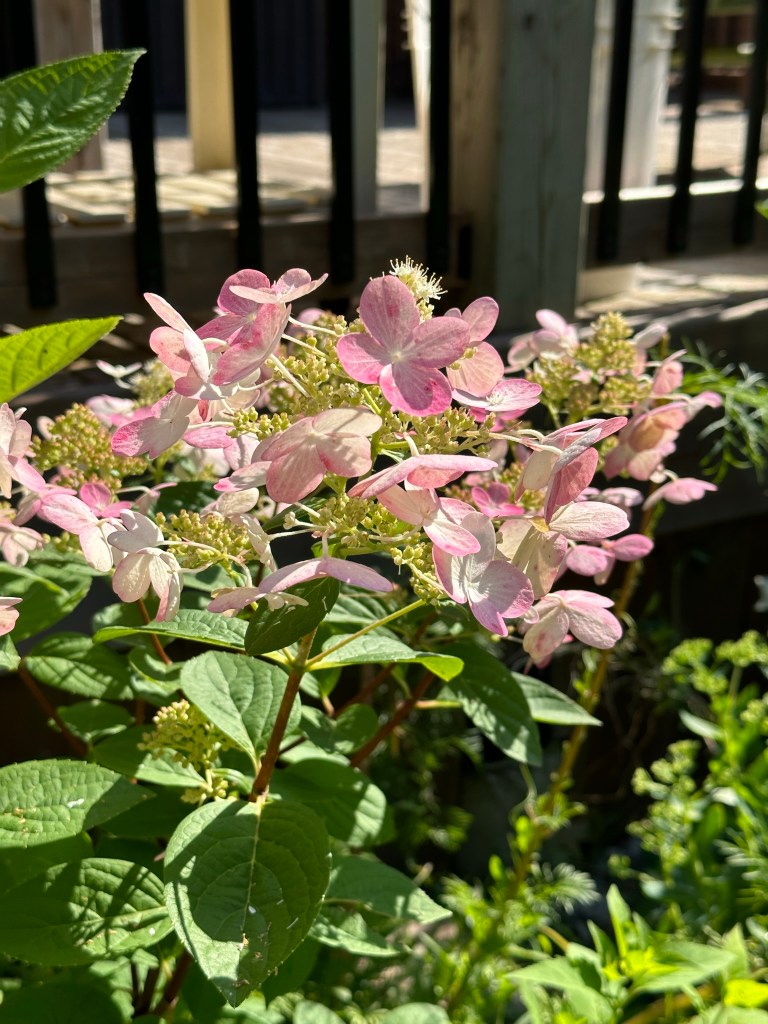
As is typical of me, I didn’t keep the label from these shrubs, but as best I can tell, these are Hydrangea paniculata ‘Savill Lace’. Lacecaps also come in a variety of colours, from pink to blue to purple. The colours of these hydrangeas are determined by the acidity of the soil. Lacecaps turn blue in acidic soil, while they grow pink flowers in neutral to alkaline ph. But Savill Lace and a couple of other varieties do not change colours depending on the soil. They are simply white, darkening to pink. This one won’t get much darker than this. Apparently, these hydrangeas bloom on new wood and should be pruned in early spring, but just for shaping purposes. I can see that this hydrangea is getting a bit rowdy so next spring I will be sure to rein it in.
Hydrangea macrophylla aka Mophead Hydrangea
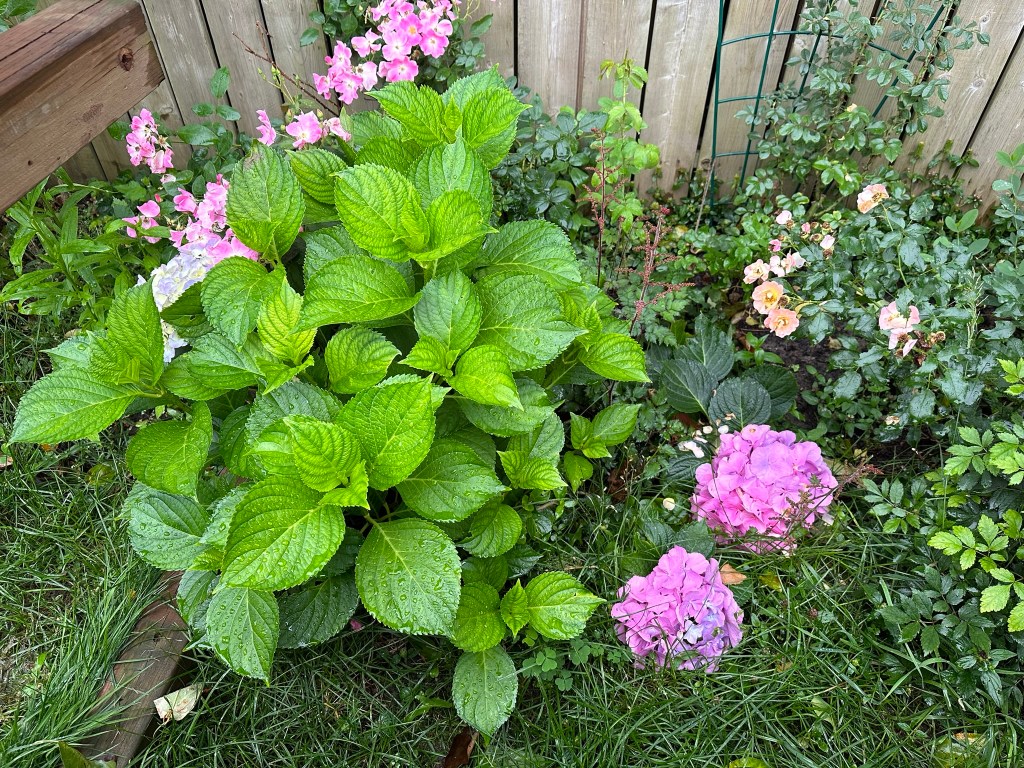
And this mophead flowered very beautifully this year, but I would like it to be better controlled next year. Be honest, doesn’t it look a little ridiculous? The flowers aren’t even on the plant! I’ve been on a bit of a journey with this shrub. It was planted in full sun initially, but never flowered. I was getting pretty desperate and moved it as a last resort before giving it away. And wouldn’t you know it, it flowered that very year. It’s in partial shade now. The fun thing about this one is that it was pink when I bought it and now has shades of violet. I wonder if it will turn completely purple or blue? Like lacecaps, mophead hydrangea colours depend on soil acidity – blue in acidic soil, pink in alkaline.
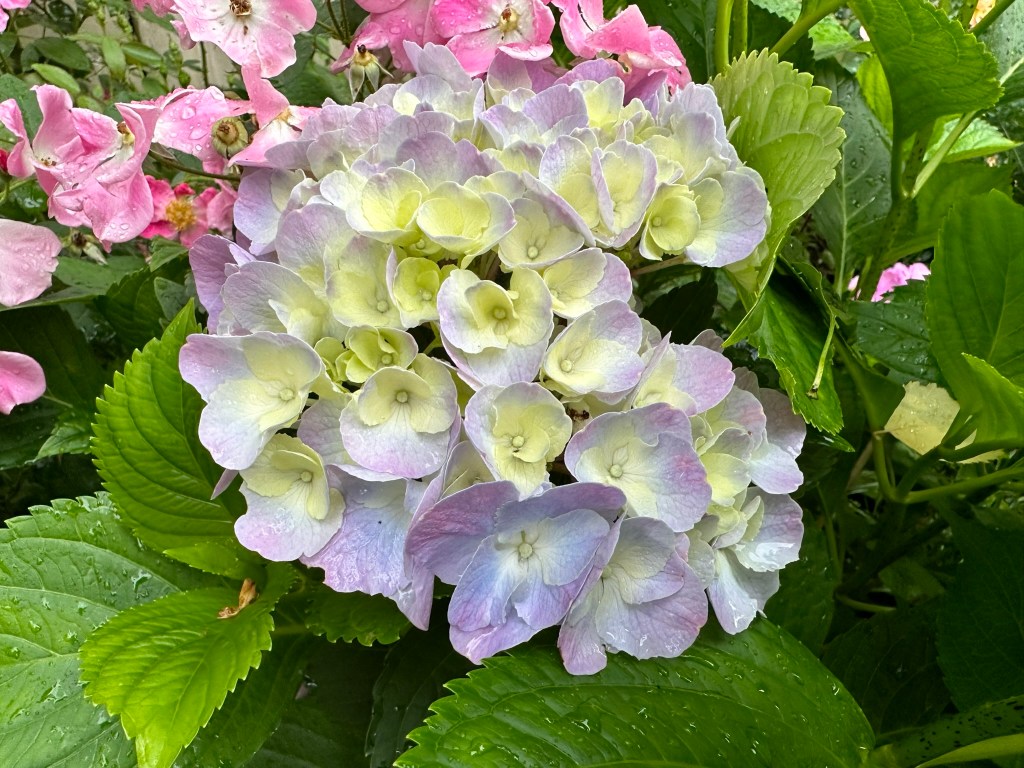
Would you believe this is a flower on the same shrub?? This flower grew on new wood.
And of course I’m finding conflicting info on when to prune this variety. I have to admit that I’m skeptical of the instructions to prune in the spring, since two of its giant blooms are on old wood. I’m reading that these varieties can flower on both old and new wood, which is consistent with what I noticed this year. Based on common sense, since the internet is arguing with itself, I’m going to prune it later this summer/fall because I would like it to be a little better behaved next year. It would be better for the flowers to stay on the shrub instead of next to it!
Panicle Hydrangea ‘Fire Light’

This last type of hydrangea is one of the few plants for which I kept the tag! I planted three of these against the back fence so I could enjoy some beauty at the back of the property. These poor shrubs! They don’t get a ton of sun, but according to the tag, they tolerate partial shade. I think I’m pushing it a bit though! And in winter our trampoline is shoved on top of them. But they keep on flowering away! I love their blooms, which also start out white before turning pink and then a deep red. They offer so much interest, since blooms that are right next to each other may be different shades. There does seem to be consensus on these cultivars. They should be pruned in late winter/early spring and only for the purposes of shaping since they grow on new wood. This one could definitely use a little shaping!

I’m happy to say that I’m not feeling like such an idiot after this little deep dive. The information is more conflicting than I would have expected. I’m going to follow my common sense and the internet. I will prune my mopheads after blooming, my Annabelles in fall, and my lacecaps and panicles in spring. Here’s hoping I’ll have even more beautiful hydrangeas to enjoy next year! What do you think, will my mophead be purple next year? What type of hydrangea is your favourite?
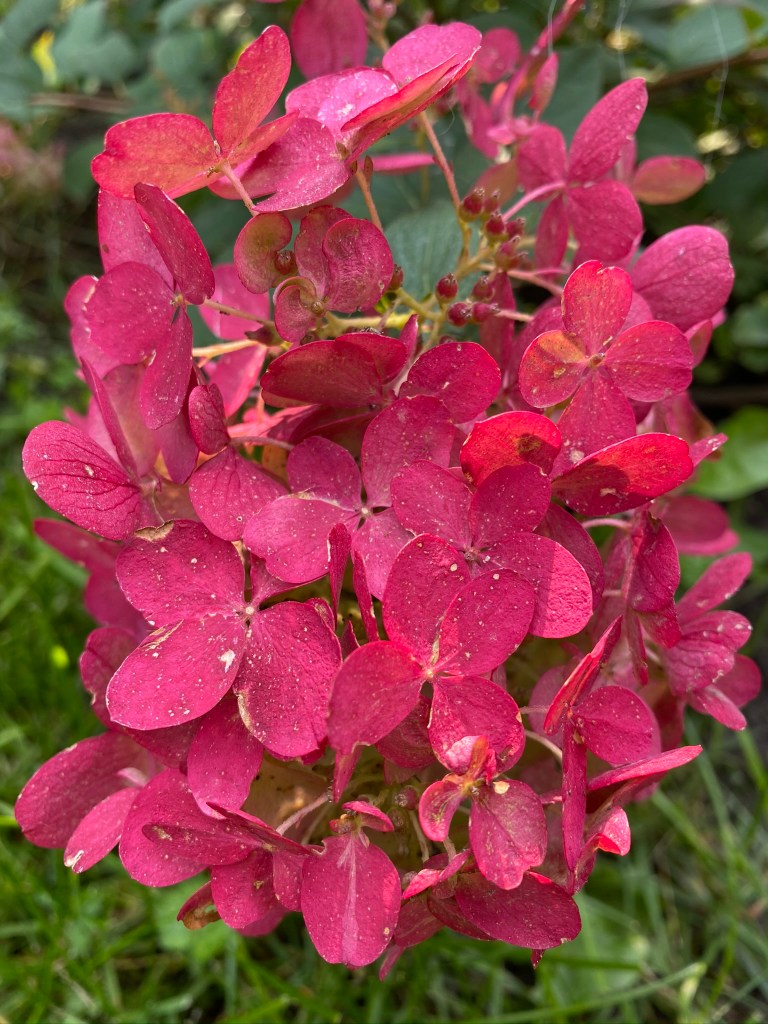
Can’t get over the stunning fall colour of this hydrangea.
 Martha's Garden Obsession