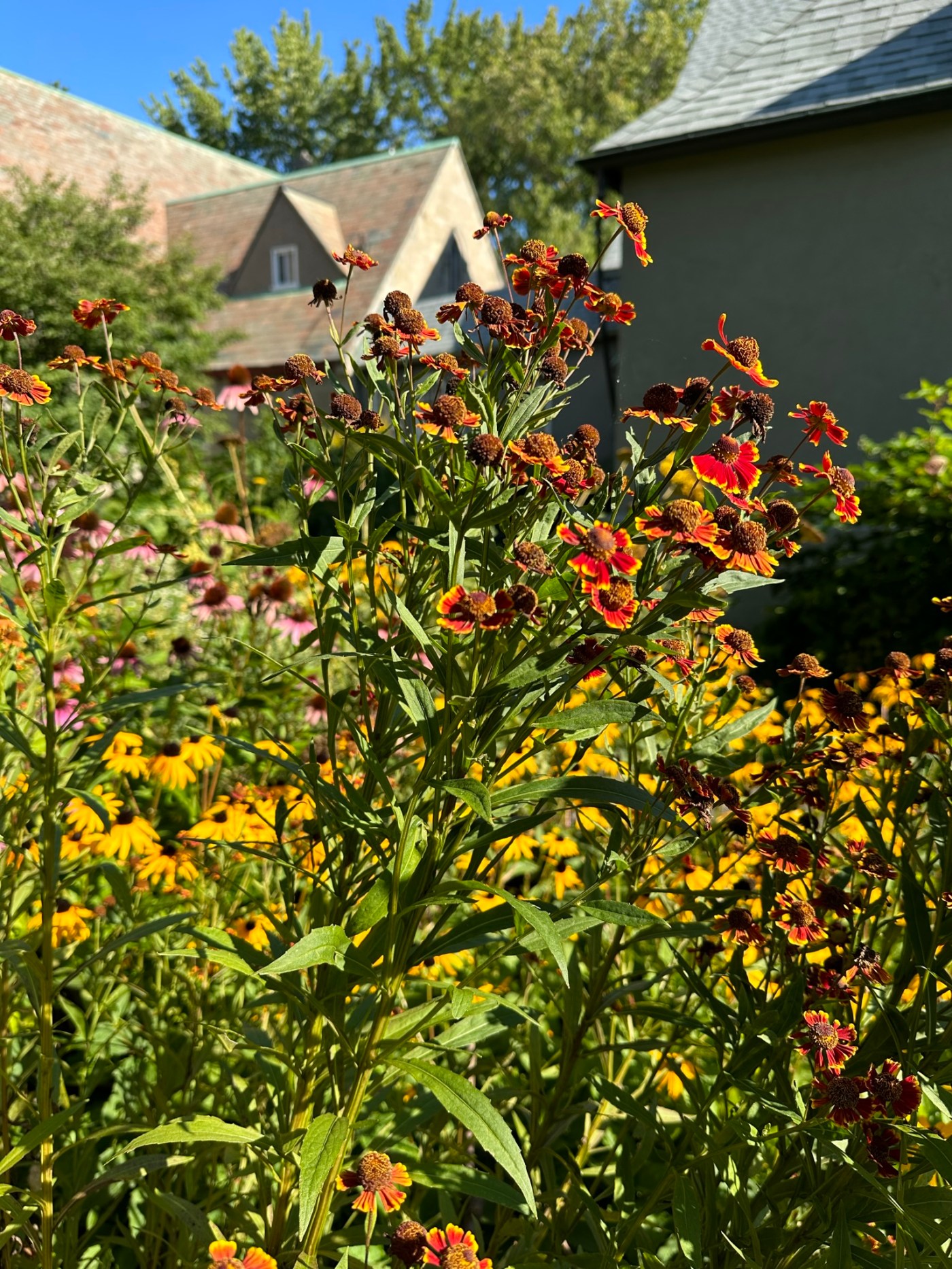
Guys I really didn’t think a post on this topic was going to be possible! I simply didn’t know that I was going to be able to track down so many native plants that are still flowering in early September! My own garden is looking so very sad. Between the slugs, rain, and three enthusiastic future FIFA stars, it’s been a tough season. But I have to say that the gardens I visited where people were focused on native gardening were cheerful, vibrant, and buzzing with pollinators. Let’s see what delights I was able to discover. Note that I am only including plants I was able to see with my own eyes, so there might even be more that I either didn’t notice or haven’t tracked down.
- Goldenrod (Solidago)
- Cardinal Flower (Lobelia cardinalis)
- Anise Hyssop (Agastache foeniculum)
- Black Eyed Susan (Rudbeckia)
- Coreopsis
- Aster
- Bottle Gentian (Gentiana andrewsii)
- Cutleaf Coneflower (Rudbeckia laciniata)
- Turtlehead (Chelone lyonii)
- Obedient Plant (Physostegia virginiana)
- Oxeye Sunflower (Heliopsis helianthoides)
- Pearly everlasting (Anaphalis margaritacea)
- Blanket flower (Gaillardia pulchella)
- Jerusalem artichoke (Helianthus tuberosus L.)
- Clematis (Clematis virginiana)
- Oakleaf Hydrangea (Hydrangea quercifolia)
- Pokeweed (Phytolacca americana L.)
First, let’s start with the plants that I featured in my previous native plants article that are still blooming.
Goldenrod (Solidago)

Goldenrod is still out in full force. There are many different varieties, many of which are native, with different blooming times. It’s so lovely to see all the bees feasting on the nectar. I photographed this lovely in my colleague’s garden.
Cardinal Flower (Lobelia cardinalis)
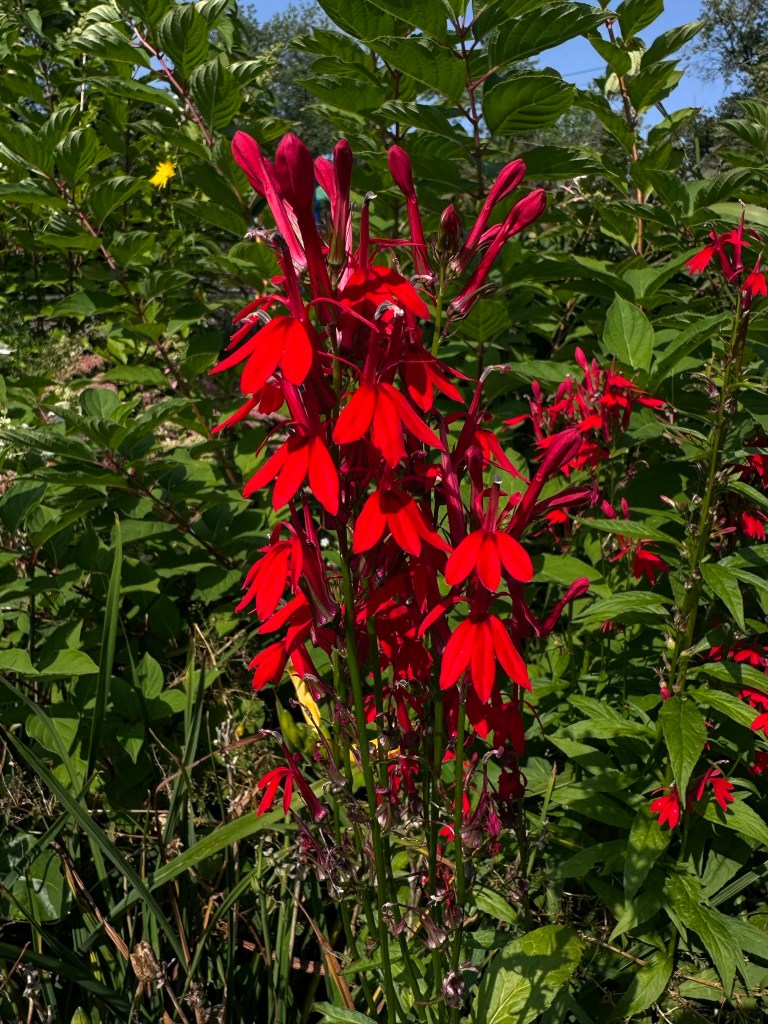
Imagine my surprise to find this blooming in a garden at a local park! I didn’t realize it would still be flowering this late. What a lovely, vibrant colour!
Anise Hyssop (Agastache foeniculum)
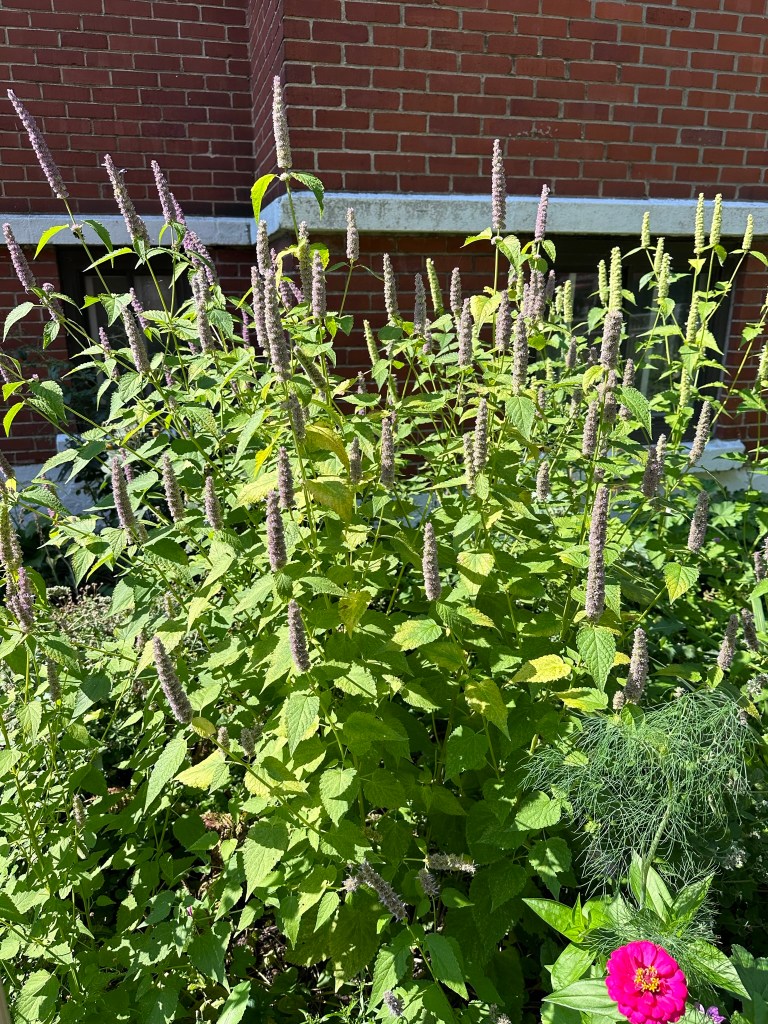
Anise Hyssop is an interesting plant in that all the tiny flowers don’t come out at once, so it never really looks like it’s in full bloom. But the bees absolutely love it and I really have come to appreciate its unique shape and what that brings to the garden. My neighbour had a ton of these in her courtyard garden, including some that were white.
Black Eyed Susan (Rudbeckia)

To me, this has to be one of the hardest natives to identify. My understanding is that only Rudbeckia hirta is truly native to Quebec and Canada, but how to identify hirta from all the other varieties is a bit beyond my skill level right now. At any rate, you will see many varieties of black eyed Susan bloom from July to frost, and some at least are natives. I don’t have many pictures of Rudbeckia as the focus. I suppose it’s not really my favourite or it feels too commonplace. But I do see it in the background of many of my pictures and it adds so much, as you can see in this pairing with obedient plant. Below it appears alongside blanket flower. It is a lovely complement to many other plants.
Coreopsis
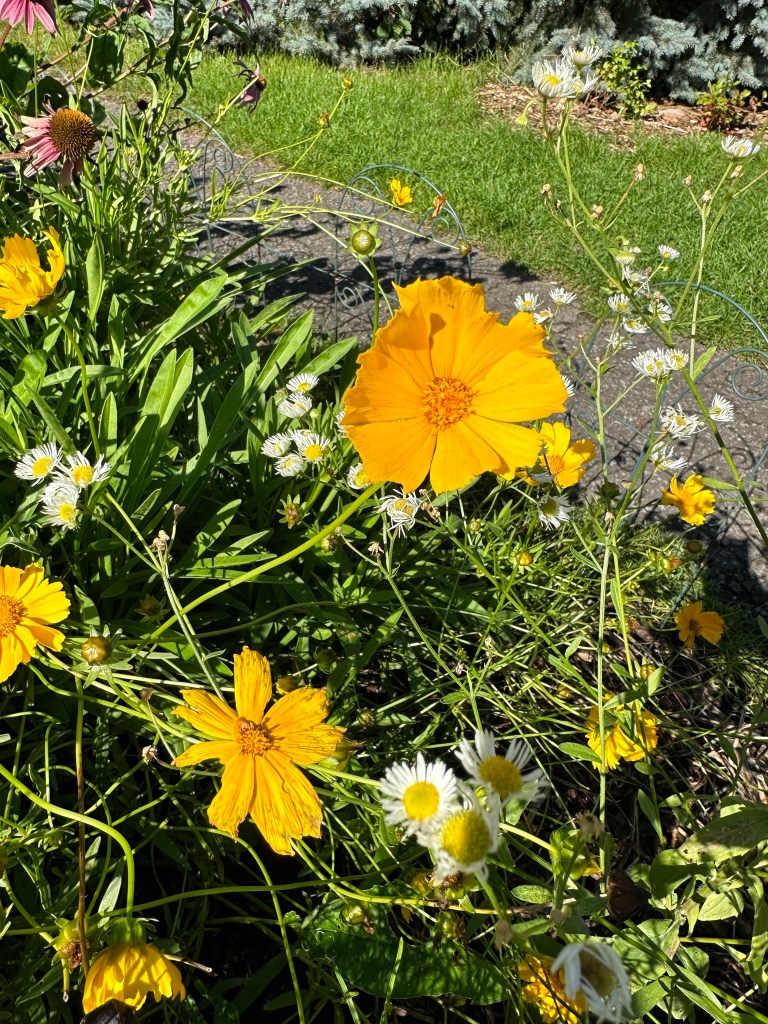
Coreopsis still blooming in my colleague’s garden! I visited her garden in June and September and both times this reliable bloomer was flowering.
Aster
Absolutely one of my top five favourite plants. I’ve planted two, but one died and the other has never flourished – both victims of Sam the groundhog. As I mentioned previously, I have moved my remaining New England Aster to my front garden and I might get a flower or two if the warmer weather holds out.
Aster is part of a monstrously huge plant family and I am not yet skilled enough to tell the difference between all the different varieties. Even searching these images provides different identification depending on the app. My understanding is that all asters are native to North America, but that cultivars have been developed as well. I will attempt to identify some below, but please take these identifications with a grain of salt!
New England Aster
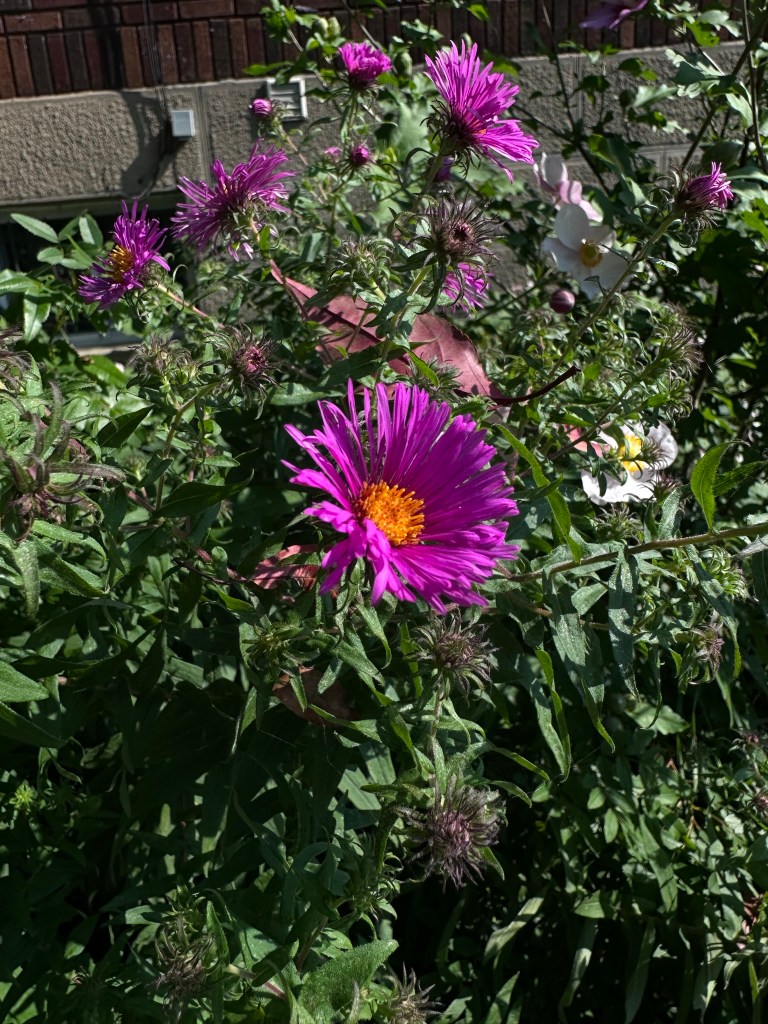
As far as I can tell, both the pink and the purple are native. The bees adore this plant in the fall, and the flowers are just gorgeous.
Smooth Aster
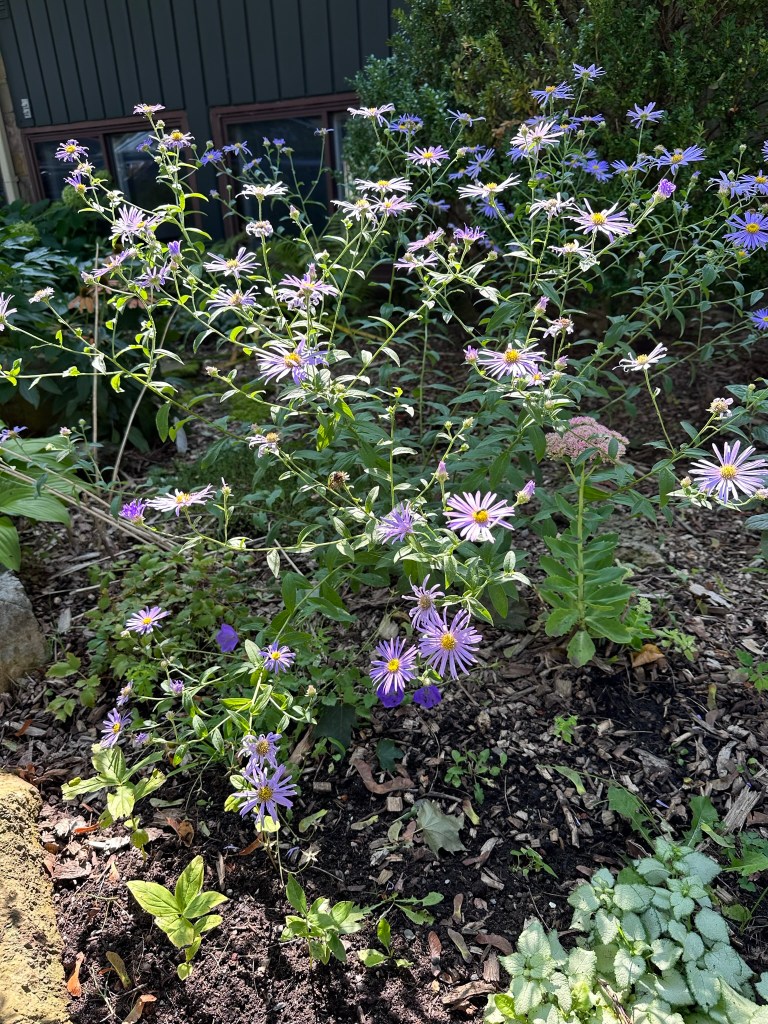
Heath Aster
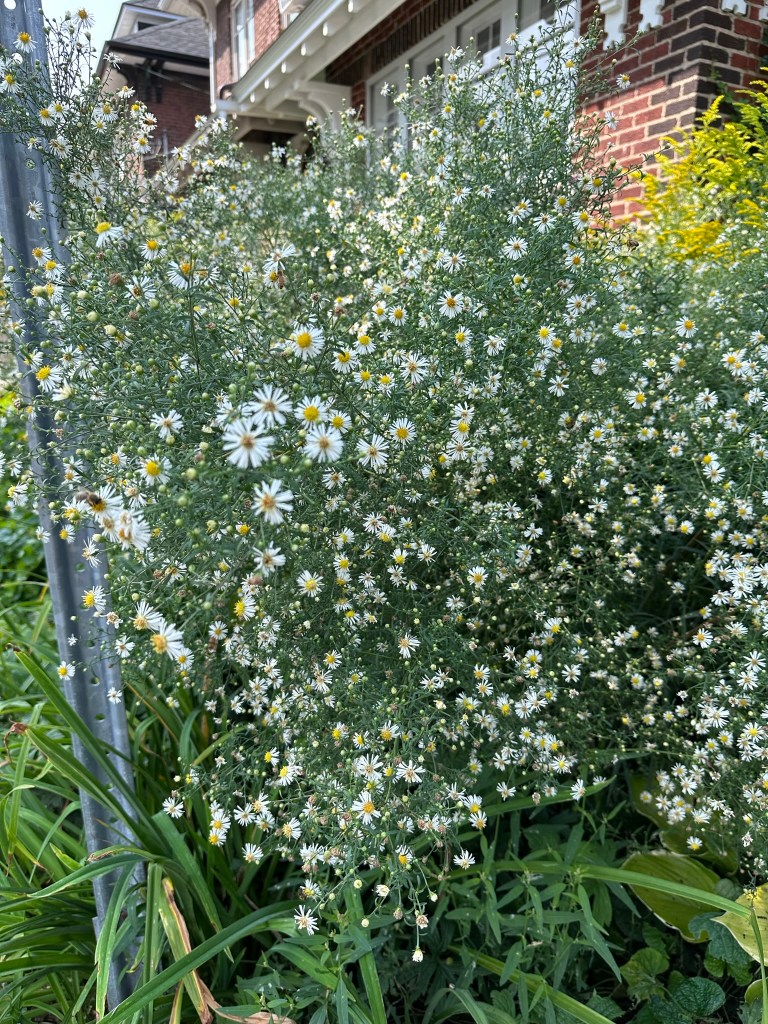
This amazing plant was positively buzzing with bees!
Alpine Aster
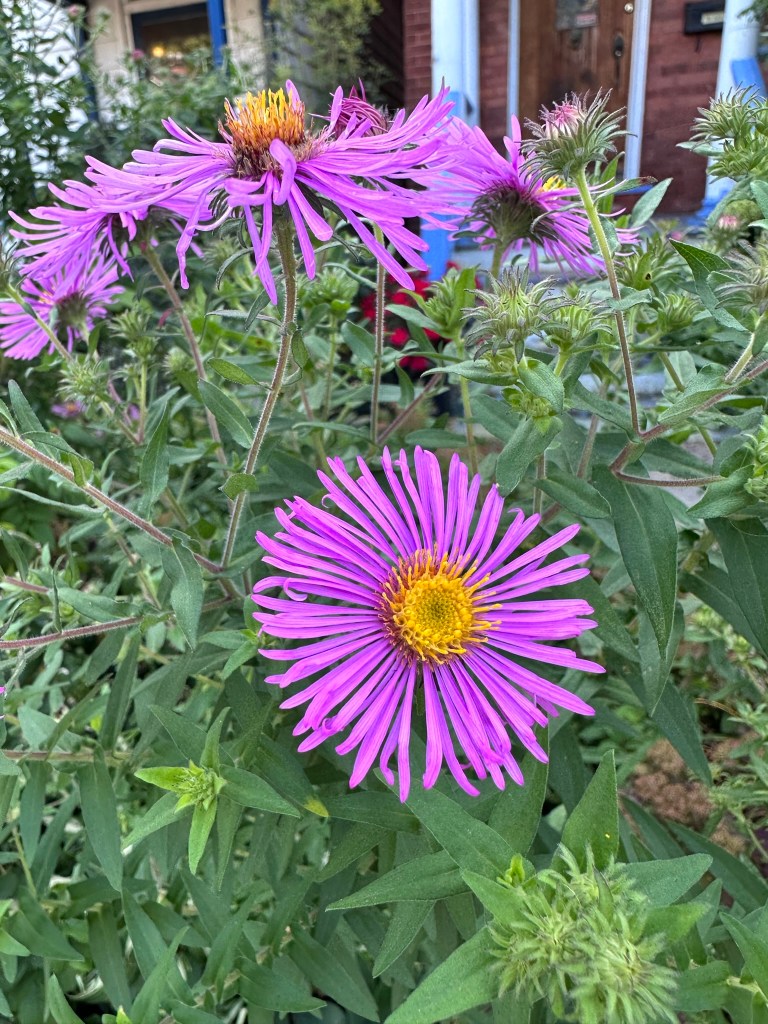
Sky Blue Aster
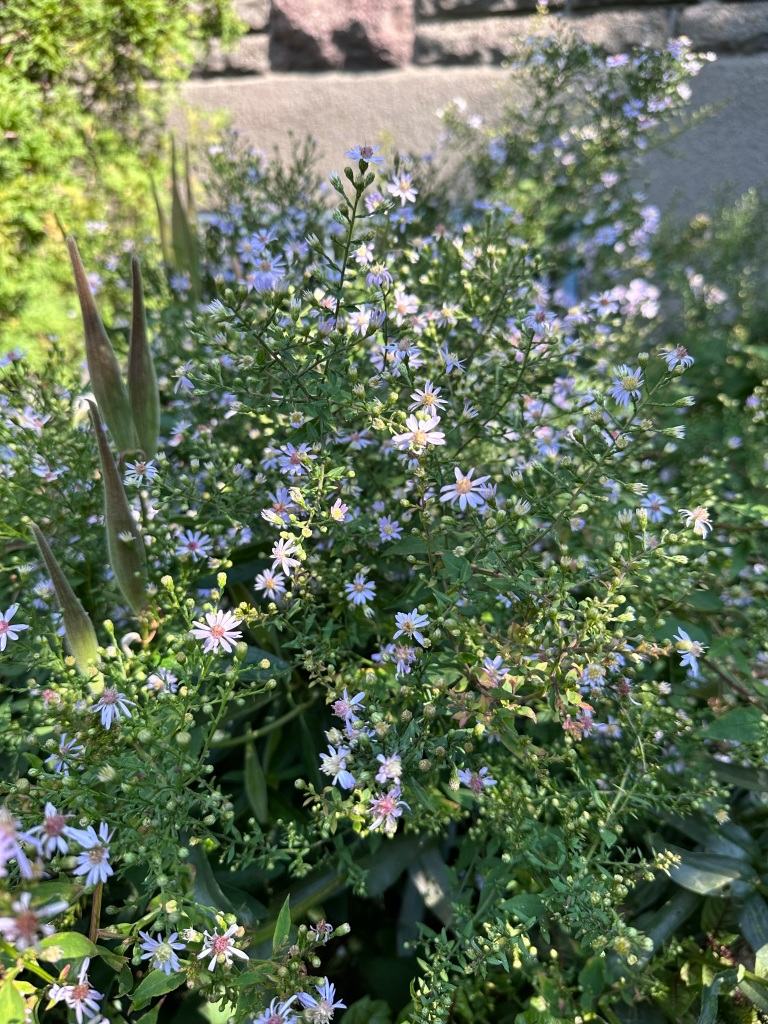
I find this aster in my colleague’s garden so sweet.
Bigleaf Aster
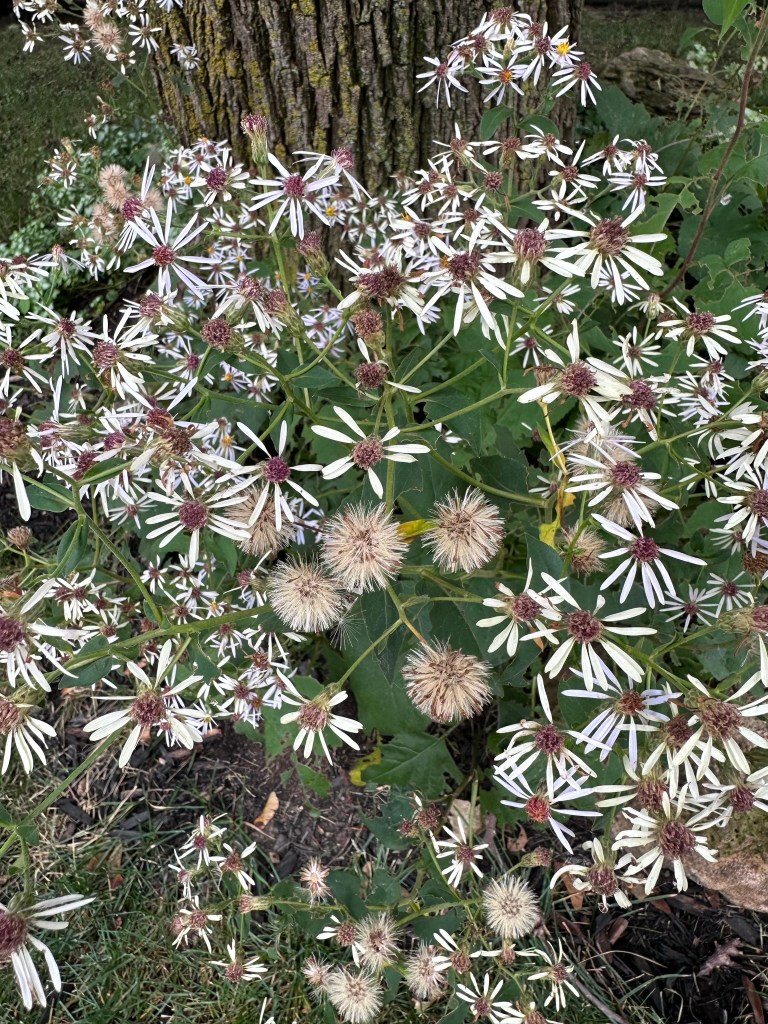
Look at the interest provided by the seed heads! Interestingly with this type of aster (and others presumably), the centres are yellow until they have been pollinated and then they turn purple.
Can you believe the amazing variety of asters just in my neighbourhood?? They also have different flowering times and reach different heights. They are some of the last sources of food for pollinators in the fall. What’s not to love?
Bottle Gentian (Gentiana andrewsii)
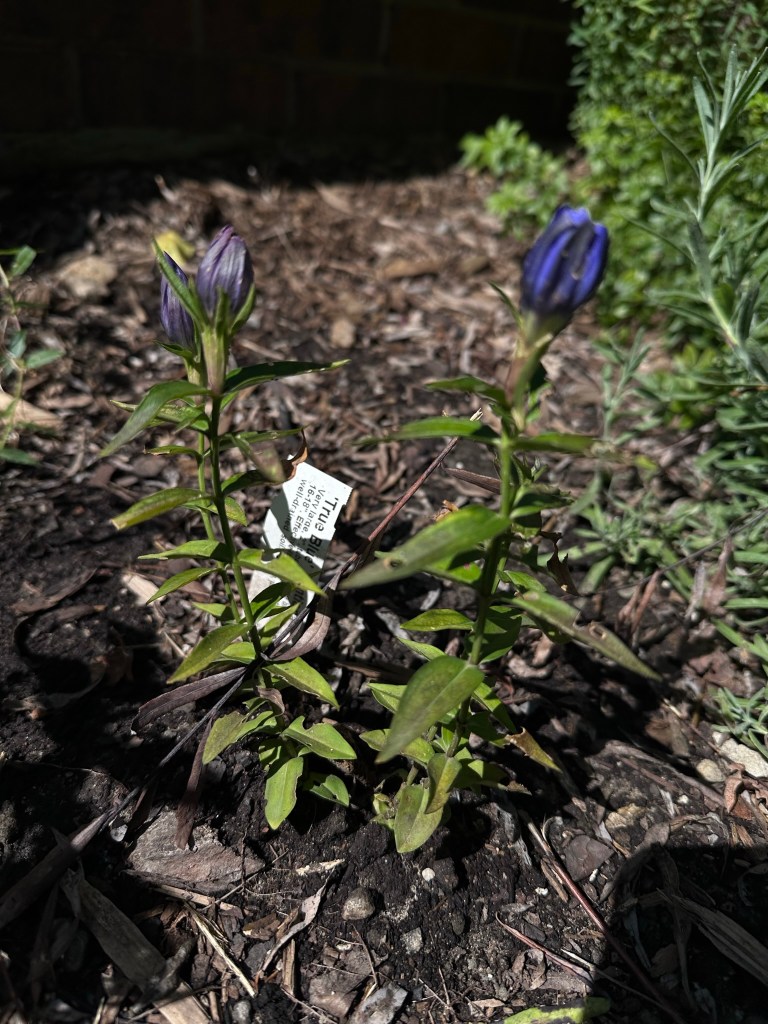
This was true serendipity for me! My mother gifted me Lorraine Johnson’s 100 Easy-to-Grow Native Plants for Canadian Gardeners and from the first time I leafed through it, I was obsessed with bottle gentian. I’ve been looking for seeds to no avail. Then one day I went out into my mother’s garden and what did I find? A tiny bottle gentian! I love the unusual colour and shape and the fact that it blooms in late summer.
From what I’ve learned on my various native gardening Facebook groups, bottle gentian can be difficult to start from seed. This low-lying plant should be placed in the front of the border and it prefers moist soil. It spreads steadily but not aggressively. Its native range is western Quebec to Manitoba and south to New Jersey. It is of special interest to bumblebees, though bees who want to drink from them must be strong enough to force open the flower, which always looks like a bud.
Cutleaf Coneflower (Rudbeckia laciniata)

So as it turns out, the plant I received from my mother this year is actually a non-native variety of this native species. It has not done at all well in my garden this year, so perhaps this would be a good alternative. It grows extremely tall—up to 10 feet—and it apparently flowers from June to November! I can’t confirm this impressive bloom time since I grabbed this pic as I was passing a garden in Ottawa so I haven’t been monitoring it all summer. But how lovely would it be to have this cheerful yellow at the back of your border throughout the summer and fall?
It is native from Quebec south to Florida and west to Idaho and Arizona. With low water requirements and growing both sun to shade, this is starting to sound like the perfect plant! The one caveat is that it spreads prolifically by underground stems, so it is more appropriate for large spaces. Cutleaf coneflower attracts birds and is of special value to native bees and honeybees.
Turtlehead (Chelone lyonii)
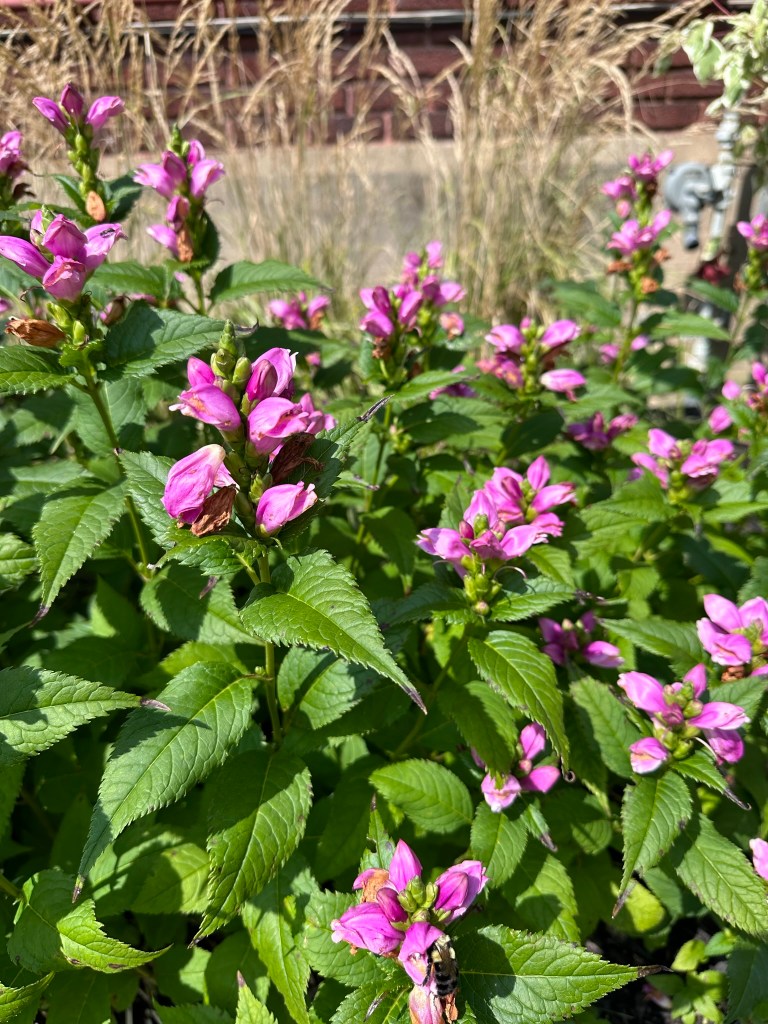
So I’m stretching the definition of native a bit with this one. Pink turtlehead has quite a limited native range, from the mountains of eastern Tennessee and Alabama to western North and South Carolina. It has become naturalized as it escaped cultivation in the northeast.
I found this in a garden in my small town and was impressed by how lush and happy it looked, even so late in the season. Apparently it will flower from June through October. It is not very tall—apparently it can reach four feet, but the ones I saw were no more than two.
Obedient Plant (Physostegia virginiana)
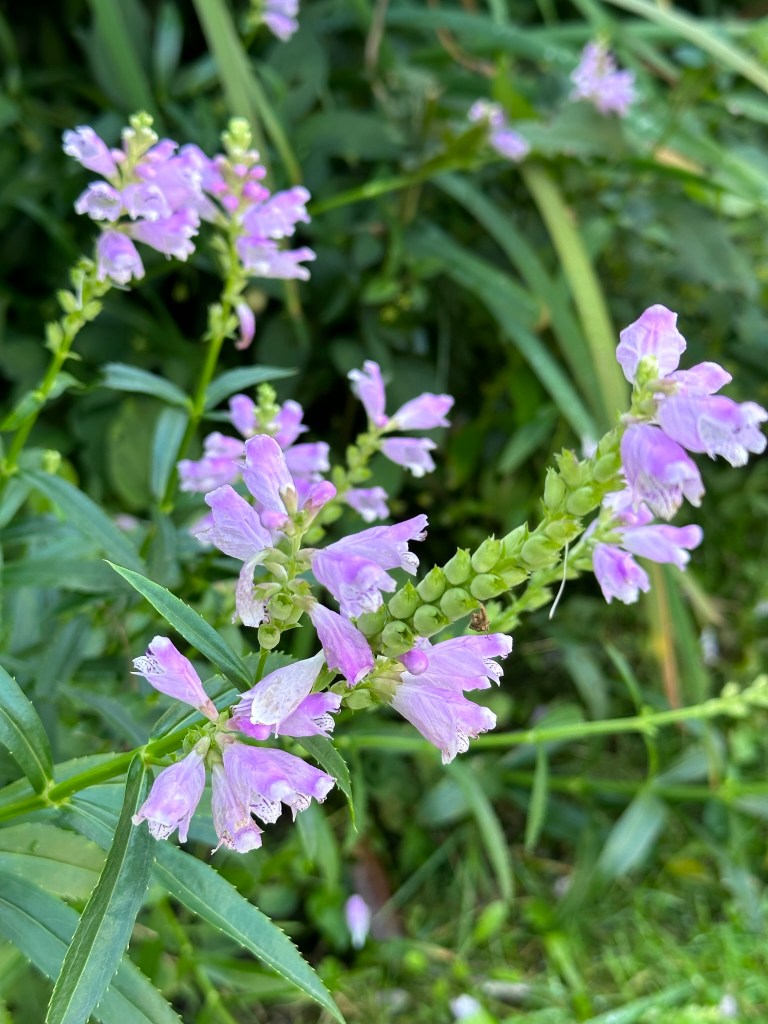
This plant’s name is kind of ironic, because everything I have readabout it suggests that it is quite disobedient. I guess it spreads quite prolifically. But it’s a nice pale violet that flowers in late summer—August through November. And it’s in the mint family so it might be a good plant for me in my constant battle with Sam the groundhog.
Sources say it grows to five feet tall, though I’ve never seen it at more than two feet. It is native to Quebec, Ontario, New Brunswick and Manitoba. I came across this planting around the corner from my house. I’ve also seen obedient plant in white but I haven’t been able to definitively determine if the white ones are native as well. This plant will grow in sun or shade and will tolerate drought and poor drainage. As I mentioned, it spreads aggressively, but its short roots make it easy to pull out. Hummingbirds and butterflies love this plant.

Potentially native white obedient plant. It’s quite pretty.
Oxeye Sunflower (Heliopsis helianthoides)
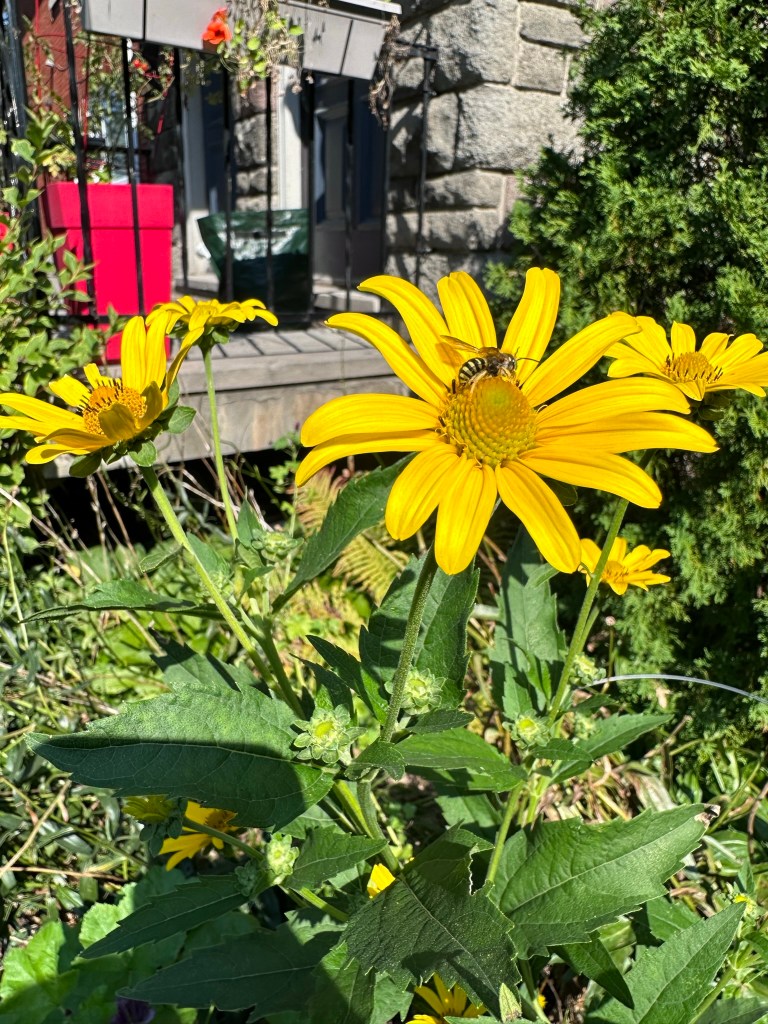
Also known as False Sunflower, this plant produces flowers that resemble sunflowers, but are much smaller. It gets quite tall, about five feet, and blooms June through September. Its native range is from southern Quebec down to Florida and west to parts of BC. It’s not too fussy, growing in sun and part shade and with low water requirements. Apparently it will attract hummingbirds. My colleague has this sweet plant growing in her native garden.
Pearly everlasting (Anaphalis margaritacea)
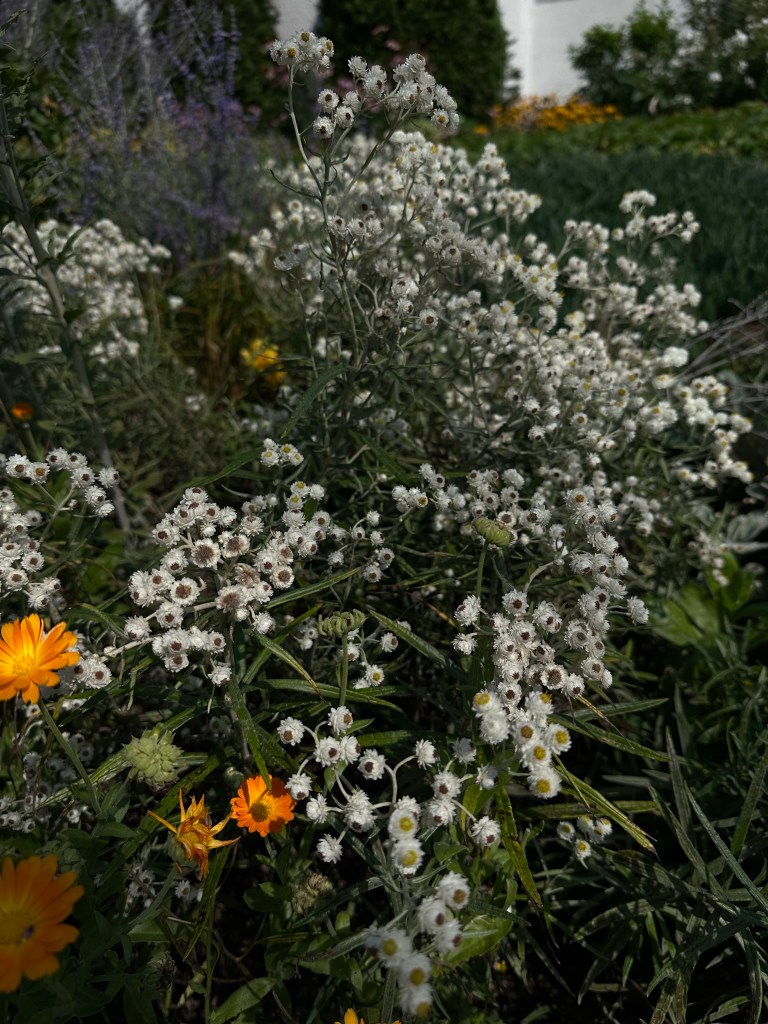
My new crush! I absolutely love the name of this sweet little plant with delightful flowers. Even the unusual foliage adds interest. This plant looks great in dried flower arrangements. It blooms from June to October and provides food for the painted lady butterfly. Native pretty much all across Canada, pearly everlasting grows in sun to part shade and tolerates drought.
Blanket flower (Gaillardia pulchella)
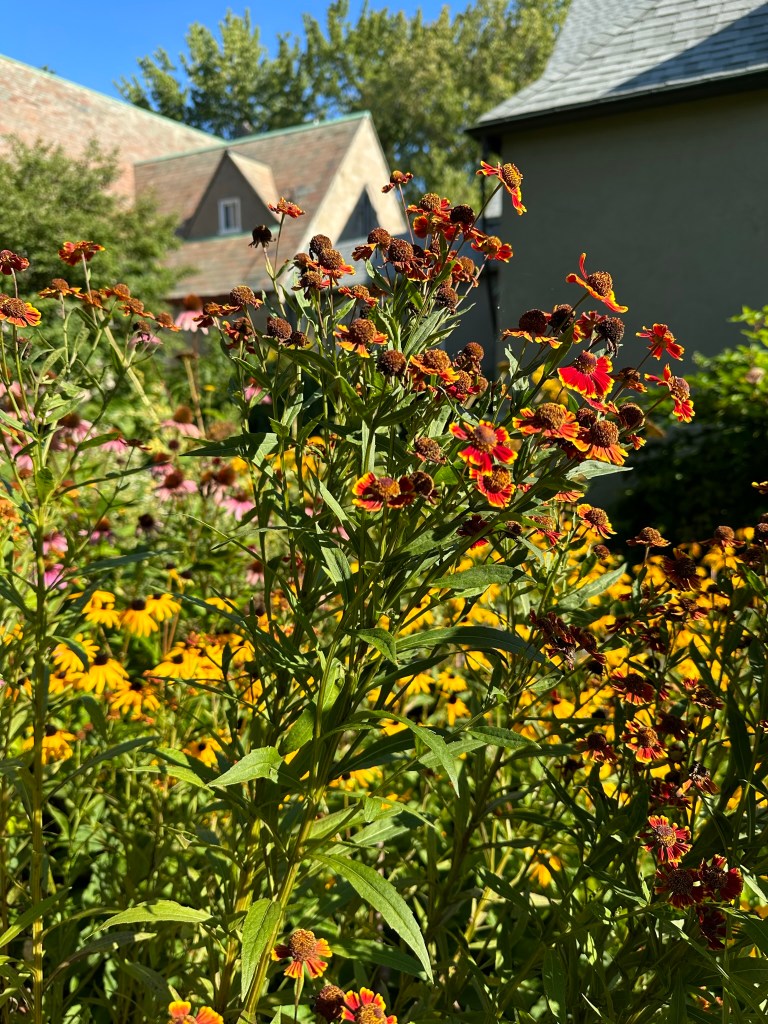
This cheerful little guy is also known as Fireweed—what a great name! Native to the US but not to Canada, its naturalized range is very large and I often see it in native(ish) gardens. It will flower year round if grown in a warm enough climate, but otherwise mostly from May to August. It grows no taller than two feet in sun or part shade and attracts butterflies.
Jerusalem artichoke (Helianthus tuberosus L.)
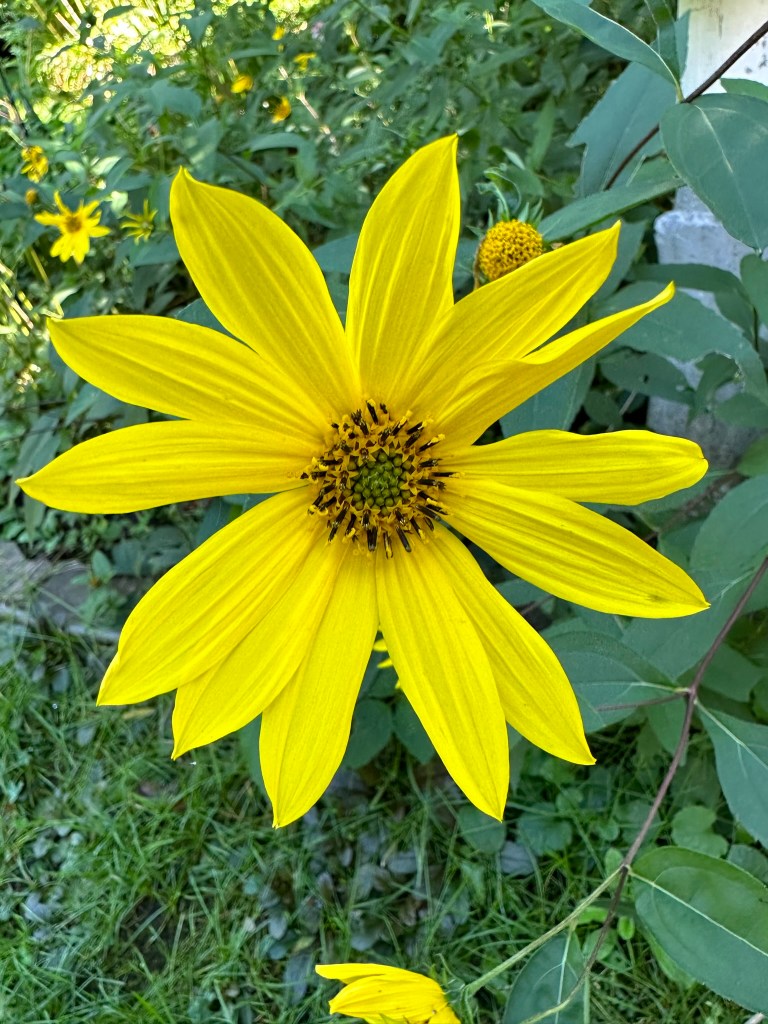
Another sunflower-type flower growing in a neighbour’s garden! This one grows up to around ten feet, though the one I saw was no more than three. It flowers late in the season, August through November. Its edible tuber was cultivated by Native Americans. In Canada, it is native only to Ontario and Saskatchewan, but its native range is vast in the United States. I like this its bright shade of yellow.
Clematis (Clematis virginiana)
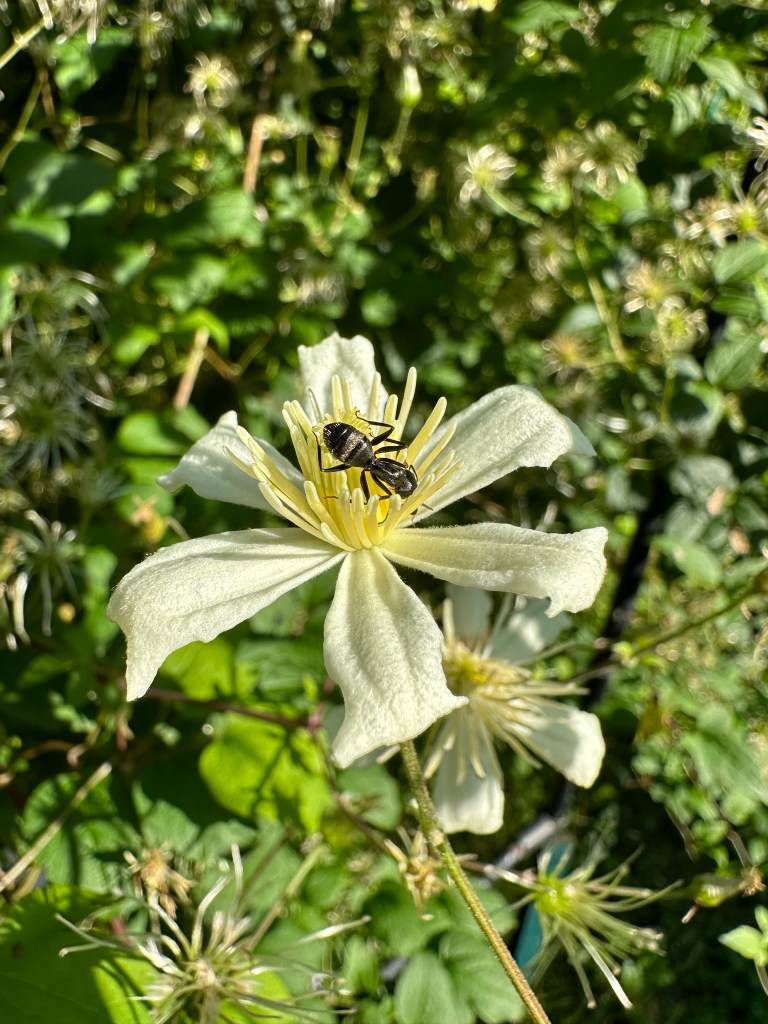
Did you know we have a clematis native to North America? I had no idea until after I photographed a neighbour’s garden! This delightful climbing vine flowers in mid- to late summer, but its spent blooms also offer a lot of interest. Native from the Maritimes to Manitoba in Canada, this climbing vine is also native to vast swaths of the US. Although all parts of the plant are poisonous to humans, it attracts butterflies and hummingbirds. It grows in moist or dry soil, sun or shade, and can grow 20 feet in just one year!
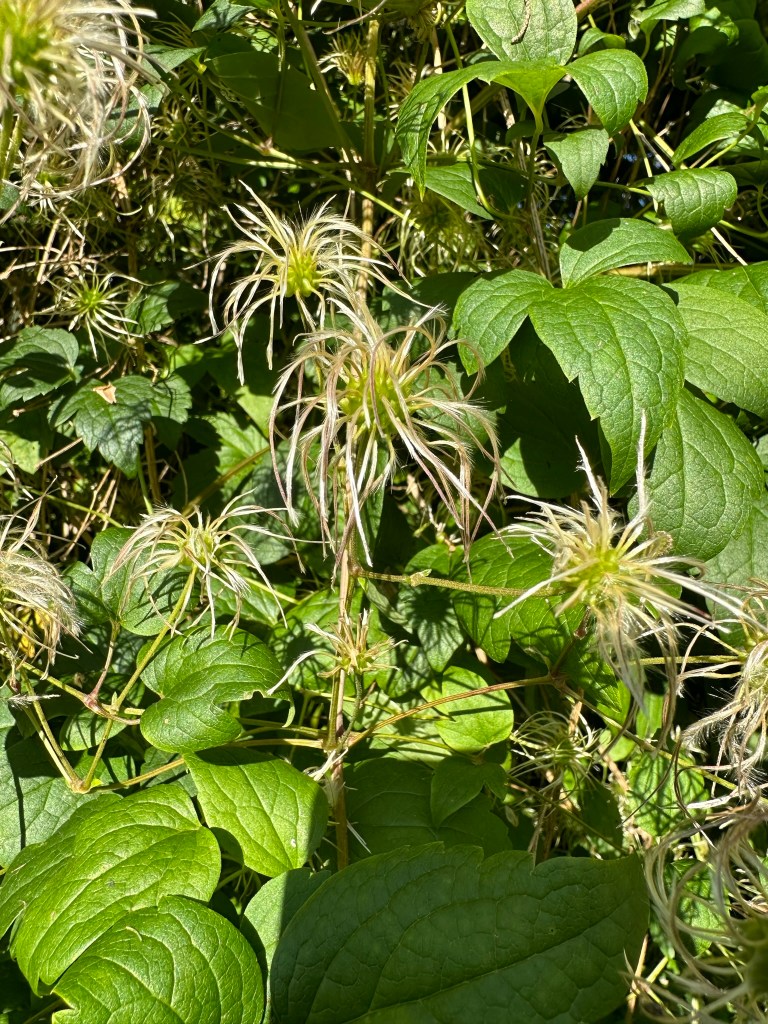
I had to include this photo of the clematis seed heads starting to form. I think they’re so cool!
Oakleaf Hydrangea (Hydrangea quercifolia)
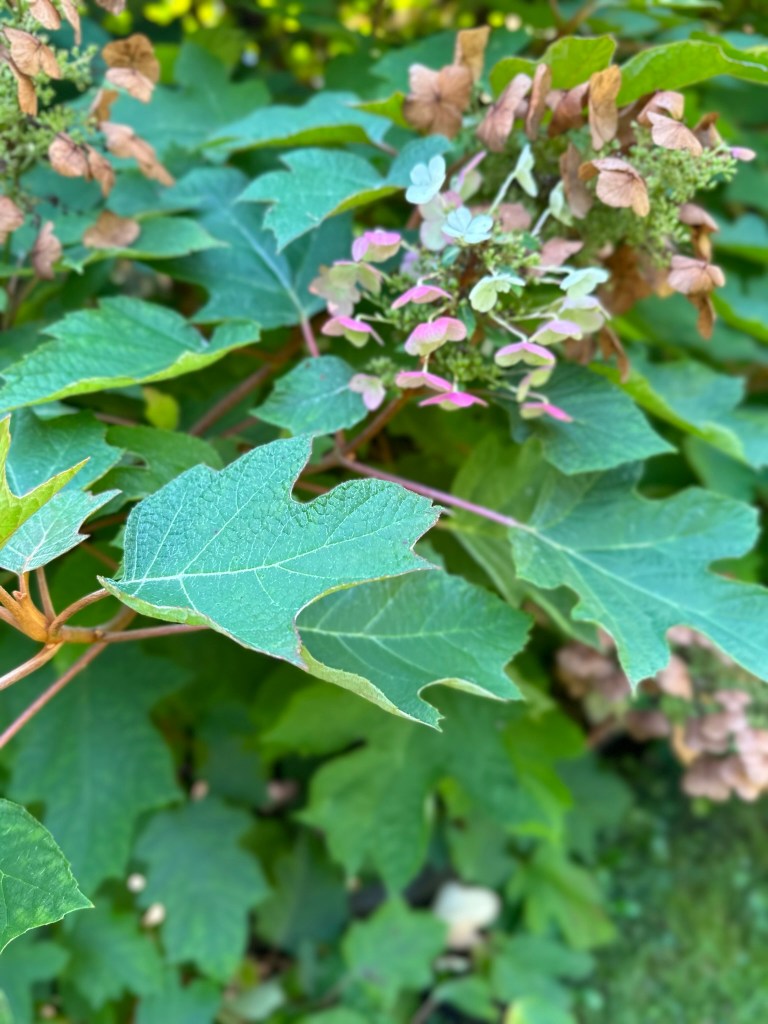
This is another plant that is native to North America, but has a fairly limited native range (Florida, Georgia and Louisiana) that is quite far from Montreal! My neighbour has a huge one in her garden, and indeed they can reach 12 feet tall. The Oakleaf hydrangea grows in shade and flowers April through July, though I suspect that in zone 5 its bloom time is later. I took this photo at the end of August and the blooms were pretty much spent, though some colour remains, as you can see. As I found in my garden, hydrangeas have had a good year, probably beacuse of all the rain!
Pokeweed (Phytolacca americana L.)

So I’m not sure if this shrub is desirable or not, but I came across it and found the berries so fascinating that I thought I’d include it. Pokeweed has poisonous berries and roots and is a shrub that can grow up to 20 feet tall. (Did you know shrubs get that tall? How is it not a tree at that height?) It is native to much of the US and New Brunswick, Quebec and Ontario in Canada. It can flower year round in the southern parts of its range but flowers summer through fall in the northern areas of its range. This plant attracts birds, but is poisonous to other animals and humans. In this photo you can see the flowers and berries in various stages of ripeness. It’s interesting to look at if nothing else.
I’ve learned so much about native gardening this summer. My hope is that next year I will be able to add many more native plants to my own garden. I could never have imagined that I would have so many to choose from! This year also taught me that my number one nemesis, Sam the groundhog, seems to leave plants in the mint family alone. This opens up any number of options to me as I learn more. I hope you’ve enjoyed joining me on this deep dive into long-flowering native plants. Which one is your favourite? Are there any you think I should track down?
 Martha's Garden Obsession
What a comprehensive review of natives you provide in this post. Lots of good possibilities for another growing year!
LikeLike