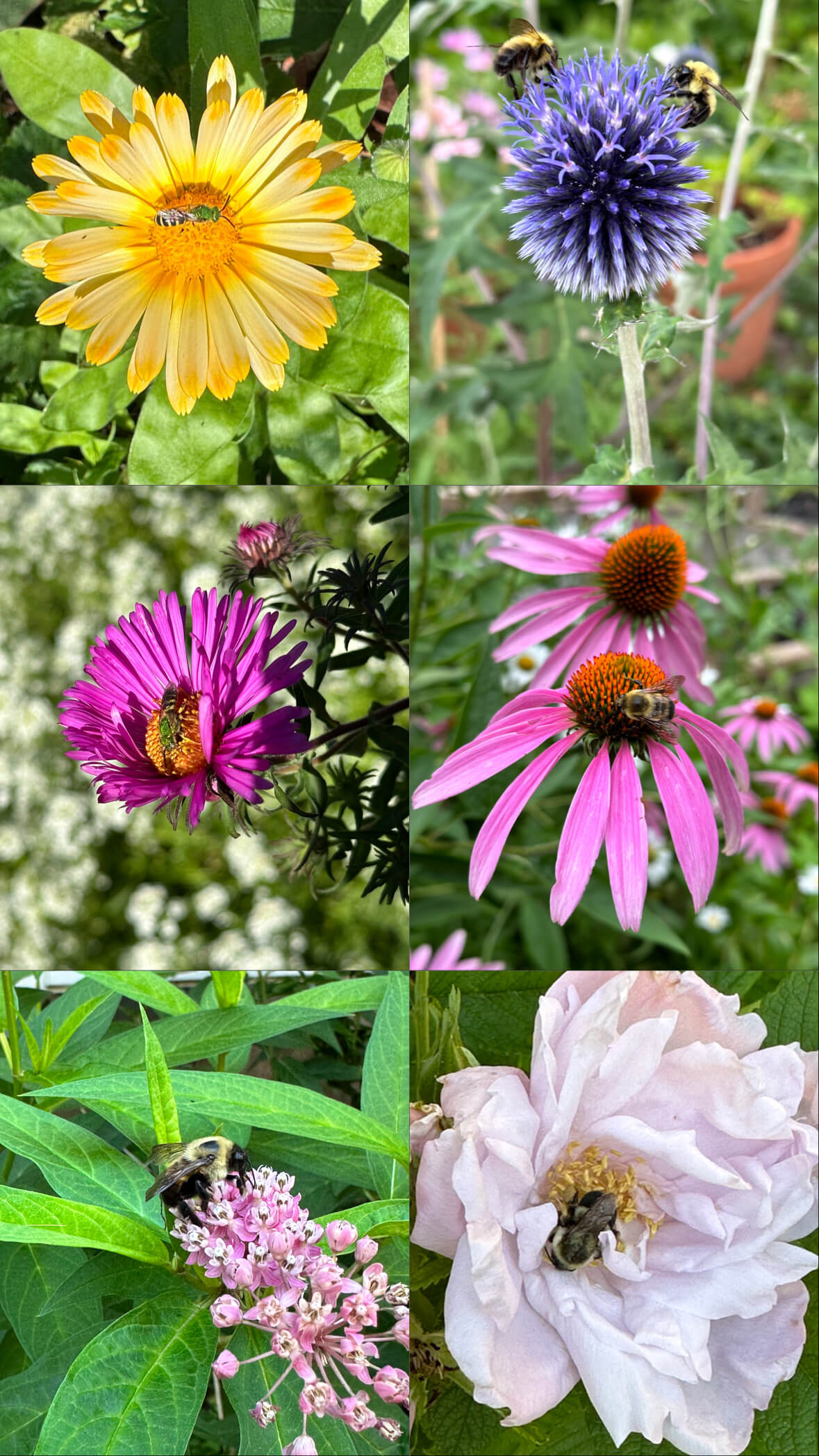

Other than beautiful flowers, my favourite thing about gardening has to be watching the bees buzz around the plants that I’ve started and nurtured. To me, gardening is so much more rewarding knowing that I’m helping to support our ecosystem. And bees are just so cute, especially when they’re blissfully rolling around inside flowers. Sometimes I’ll hear my flowers buzzing before I even see the little guys!
I’ve compiled a list of the flowers that I find do the best job of attracting bees. You’ll notice that most of them are native. This is partly because I do find that they can’t be beat for attracting bees, but the more I learn, the less confident I feel that all flowers are the same for bees. There is an argument that although the bees might appear to be enjoying your non-native plants, they are not deriving the same nourishment that they would from a native plant. Think of native plants as a healthy, balanced meal and non-native plants as junk food. I’m not sure how widely accepted this argument is, but I do know that native plants have many benefits, including that they usually require less water, so I am going to favour them wherever I can.
- Meadowsweet
- Swamp Milkweed
- Globe Thistle
- Yarrow
- Echinacea
- Anise hyssop
- Sedum Autumn Joy
- Sunflowers
- Aster
- Goldenrod
Meadowsweet
Meadowsweet is a recent discovery of mine. The beautiful fluffy flowers on this perennial shrub in the rose family are absolute bee magnets. It flowers from May to October and loves moisture. It is the larval host for the Spring Azure butterfly. You can feel extra good about planting this shrub because it is native to large swaths of North America. A lovely neighbour gave me a piece of this plant along with another relative, Steeplebush. I can’t wait to see if they took and if they flower this summer!
Swamp Milkweed
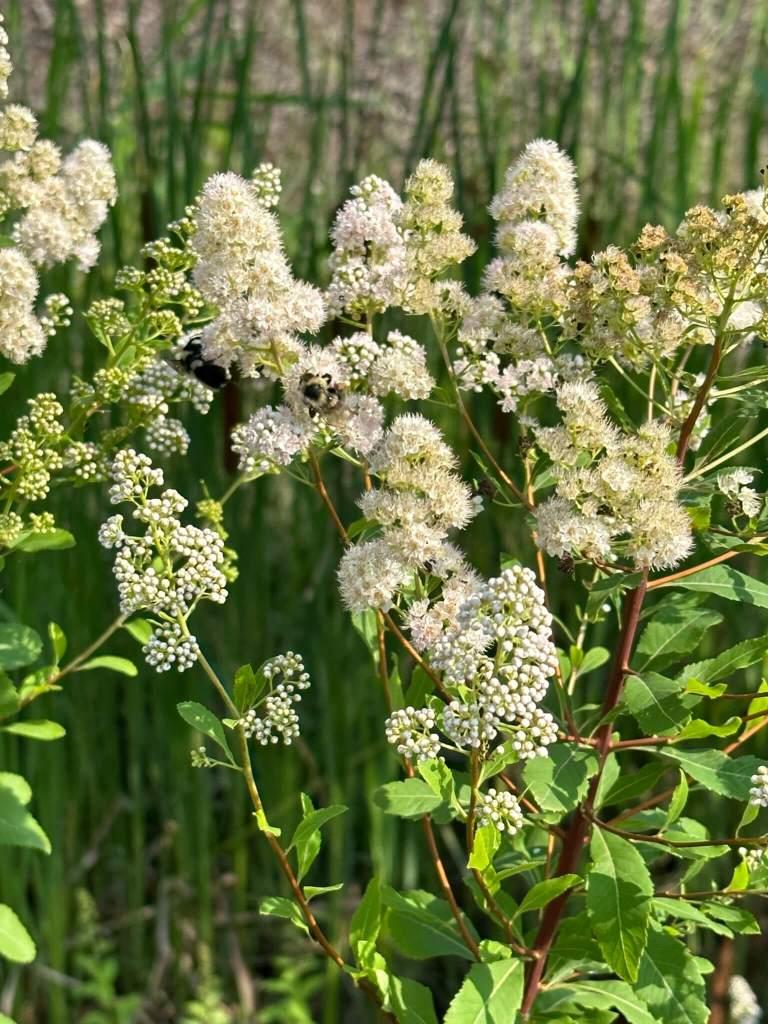
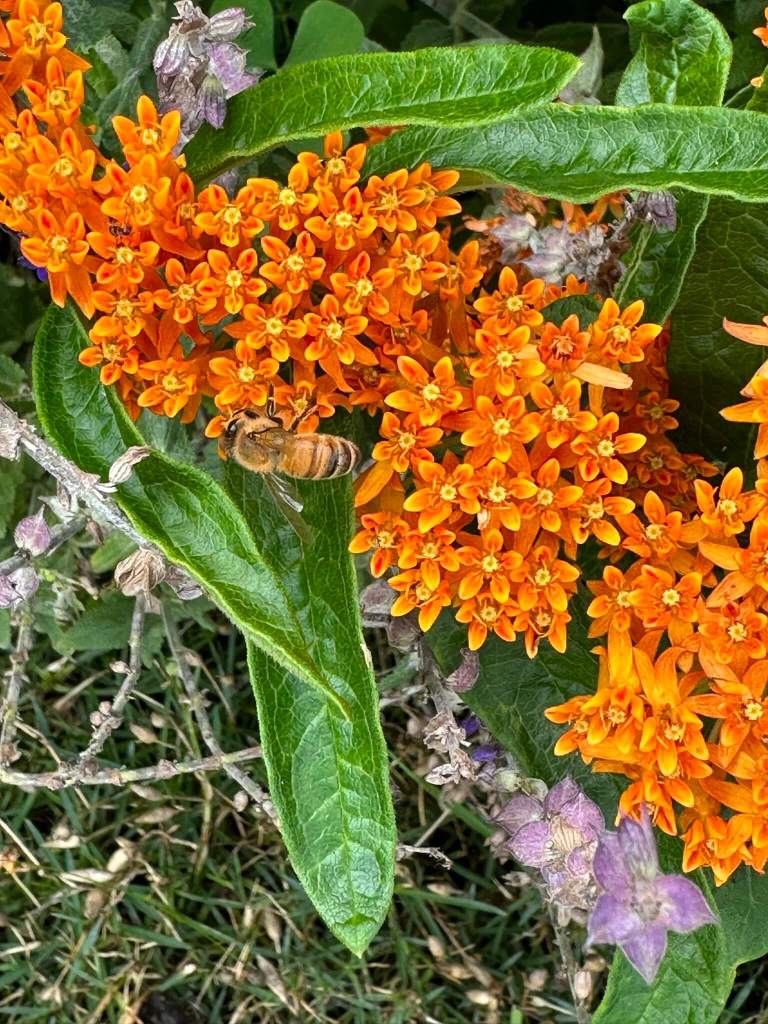
As I’ve mentioned previously I planted swamp milkweed four years ago and it has been an absolute delight. This perennial is constantly covered in bees. Swamp milkweed flowers from June to May and is the larval host to the Monarch and Queen butterflies. Although I’ve examined mine closely, I have yet to see any evidence of butterfly activity. I hope this year is the charm! I would imagine that all types of milkweed are attractive to bees and I will hopefully find out about two more this year! Another generous neighbour gave me seeds for butterfly milkweed and the rare and sought-after purple milkweed. I started both using the winter sowing technique. I love butterfly milkweed so much for its vibrant colour and I can’t wait to see the purple milkweed, a completely new variety to me.
Globe Thistle
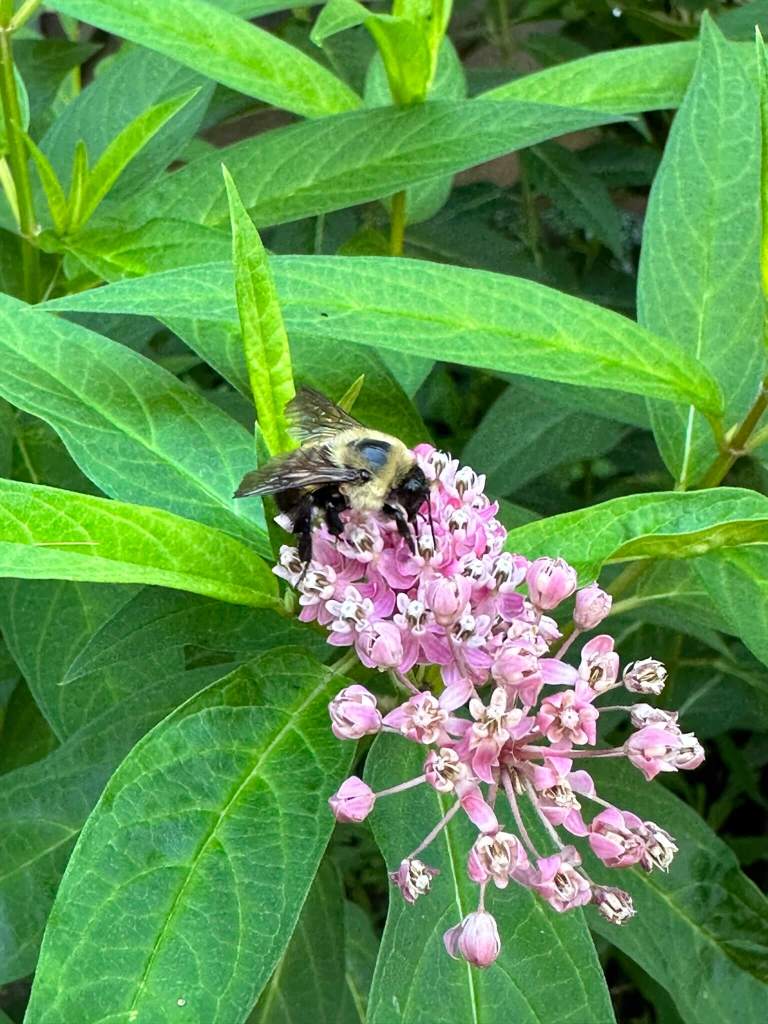
I became familiar with this beauty in my mother’s garden this summer. I truly couldn’t believe how many bees were on this perennial! It is very beautiful and would make an excellent cut flower, but it is unfortunately not native to North America. It loves sun and blooms from June through September.
Yarrow
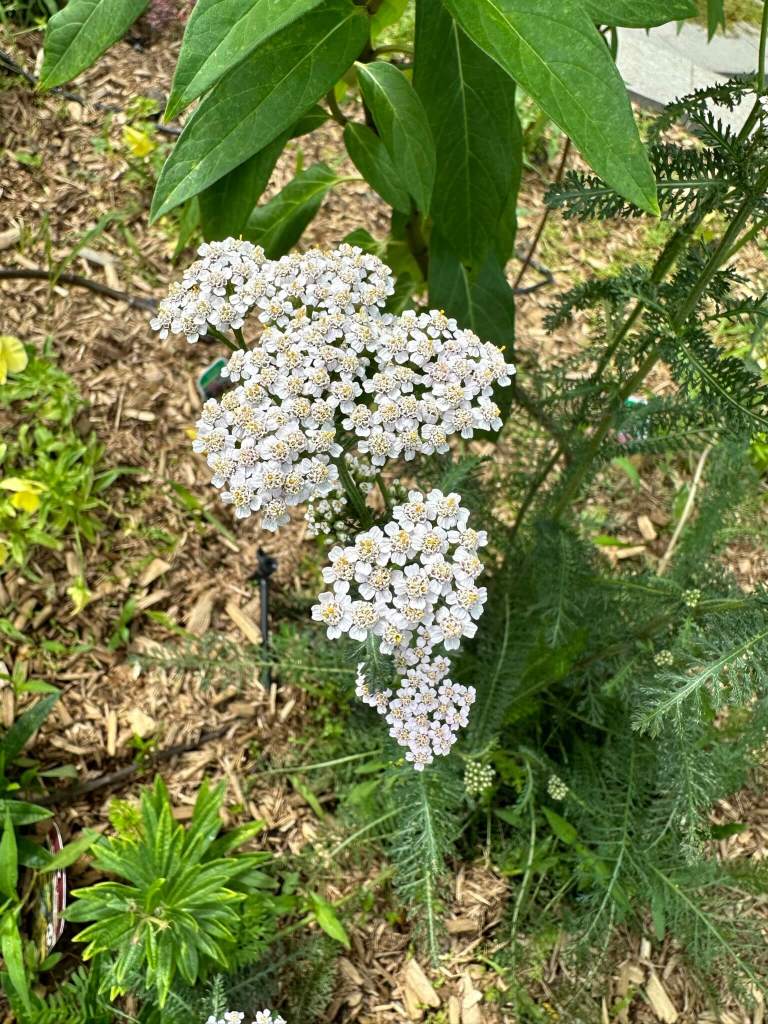
Bees absolutely love yarrow and so do I! Whether or not yarrow is native to North America is a bit of a controversy that is too complicated for me to fully understand, but I think the bottom line is that most yarrow is native. Yarrow comes in a variety of colours, but only common yarrow is native to North America.
The benefits of this perennial include:
- Its impressive bloom time, flowering from April to September
- It makes an attractive addition to a cut flower garden and is an excellent dried flower.
- It is easy to start from seed and of special value to native bees.
Echinacea
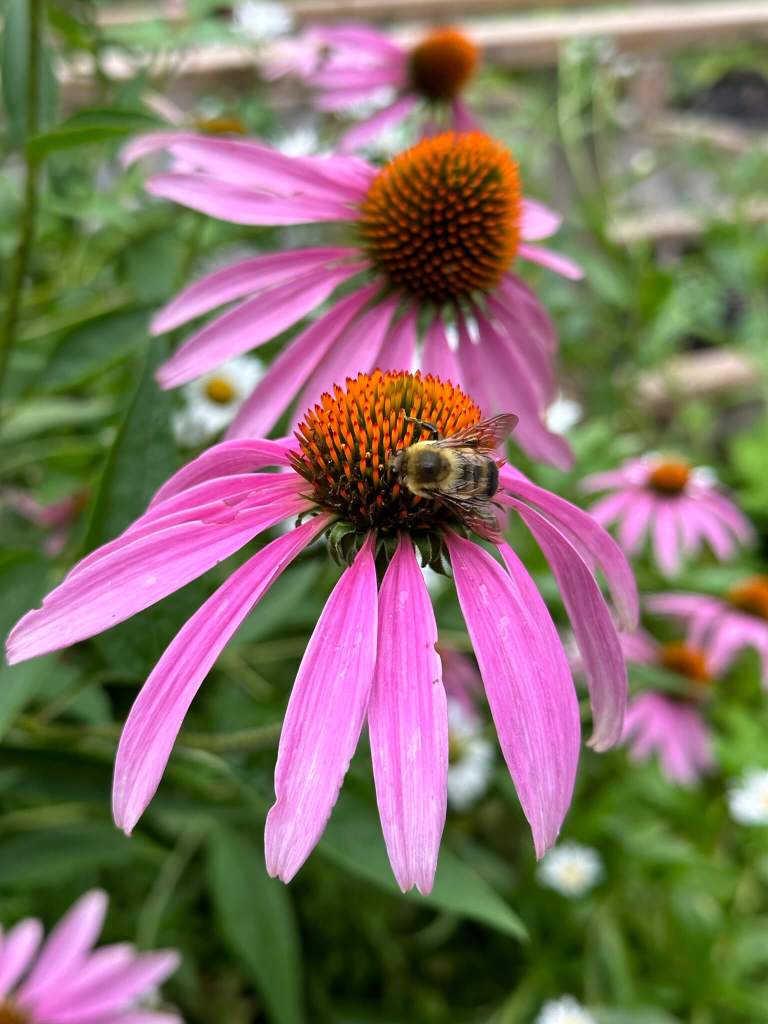
This beautiful perennial coneflower has a long bloom time and is of special value to native bees. You might remember that I started echinacea from seed last year. It took a long time to take and didn’t flower. I hope this year I (and the bees!) will be able to enjoy its beautiful flowers! It’s native to much of the US and is considered a near native in parts of Canada. I’ve often seen finches eating the seeds from my coneflower cultivars and I’m sure they must love the seeds from the original variety as well.
Anise hyssop
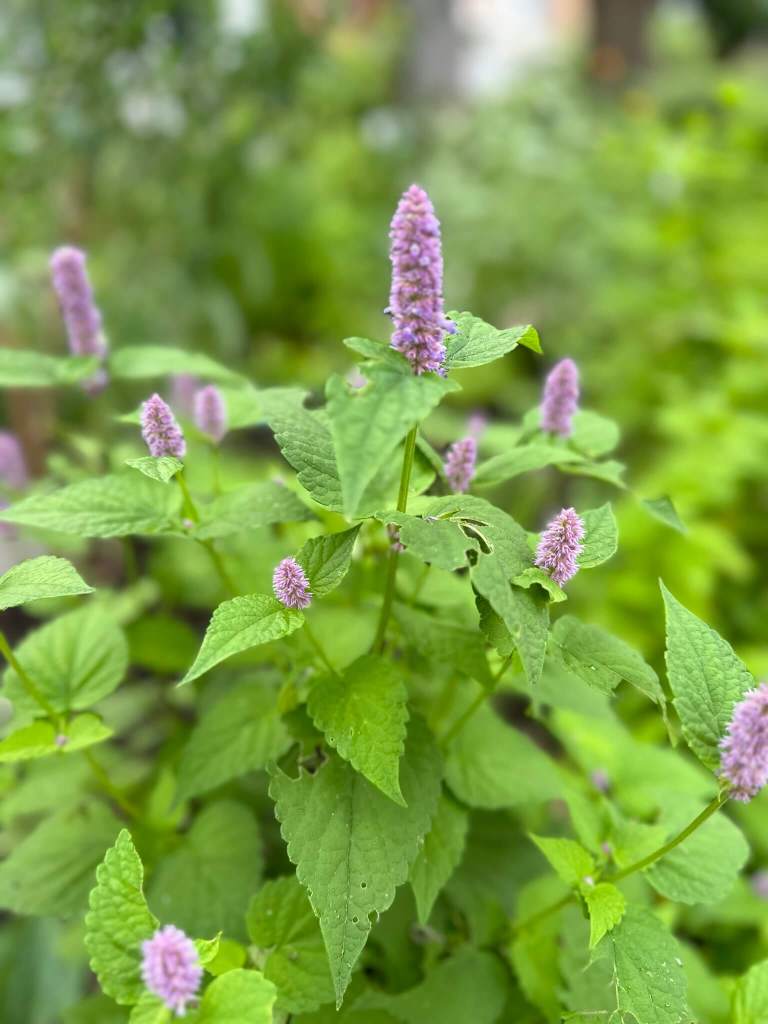
The leaves of this plant in the mint family have a licorice smell. The spiky purple flowers bloom from June through September and are particularly attractive to bees. This perennial grows in sun, part sun, and shade and is of special value to many different types of bees. I started some from seed last year and again it didn’t flower but I’m hopeful for this year!
Sedum Autumn Joy
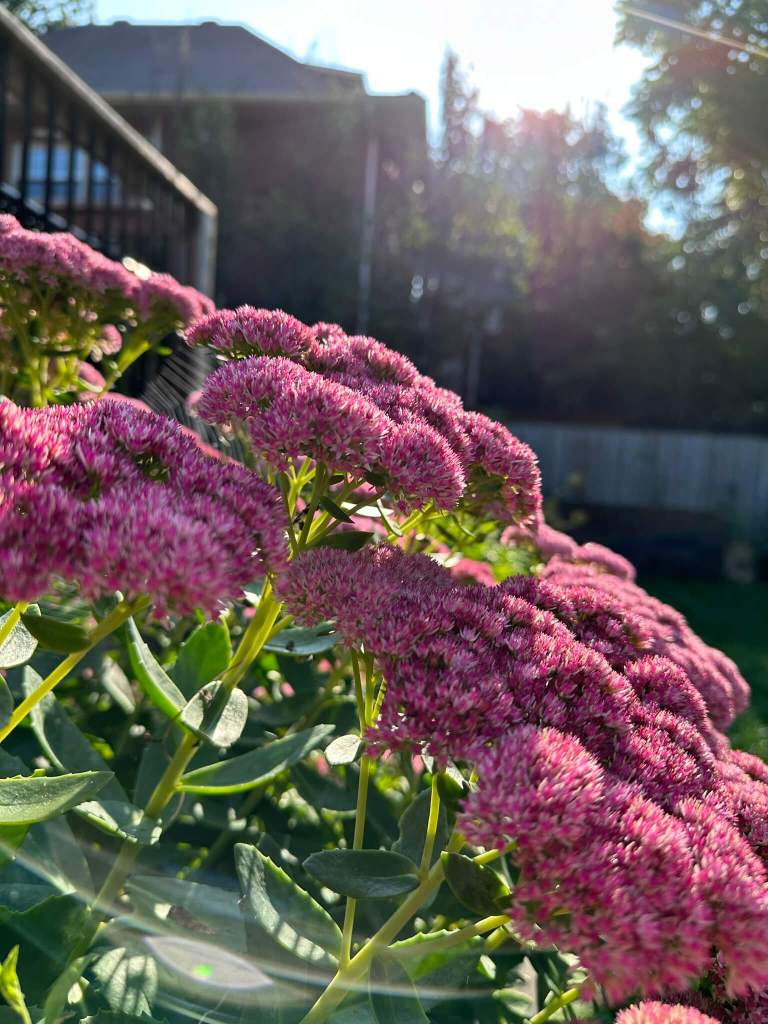
Sedum Autumn Joy is not native to North America, but the bees definitely don’t discriminate. Of all the flowers in my garden, this perennial is usually the most covered in bees, of many different varieties. It flowers from August to the first frost and offers winter interest. The flowers also dry well. It grows prolifically and I’ve had to divide mine multiple times, but other than that it requires no maintenance at all. As much as I’m trying to focus on native plants, I would be hard pressed to get rid of this staple in my garden.
Sunflowers
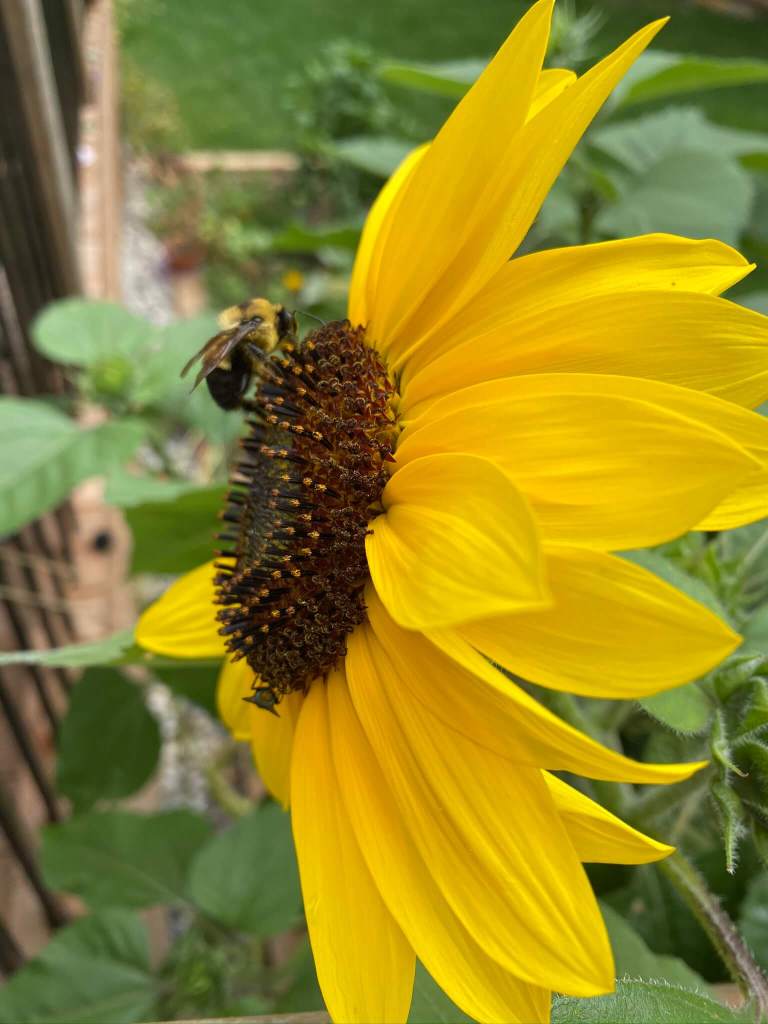
There are so many varieties of sunflowers that it’s hard to narrow down which ones are best for bees. I suspect they may all be very attractive. Indeed, there are some varieties of sunflowers that are perennial and native to North America, but I don’t have a lot of experience with them. The only annuals on this list, sunflowers grow easily from seed and even with our relatively short growing season in Quebec, they can be direct sowed. They are beautiful and the seedheads can provide food to birds as well.
Aster
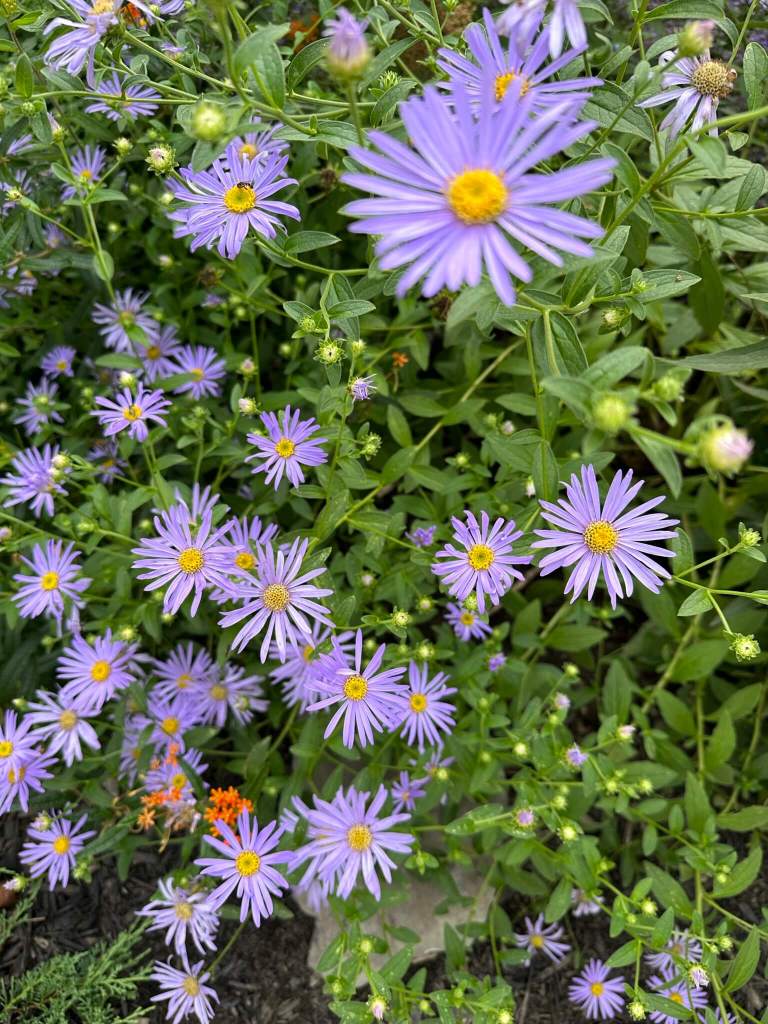
Asters are fascinating to me. It is a huge species, but I’m referring here to the plants that would be identified as aster. There are a ton of different varieties, most of which are native to North America. And the bees absolutely love these perennials! I’ve previously documented my adventures growing aster and was so happy to finally have some success this past summer. Aster flowers late in the season and is one of the last food sources for bees. It attracts butterflies and is of special benefit to different varieties of bees. Fun fact: aster disks (the yellow centre) change colour from yellow to darker and reddish after pollination to let bees know that they have already been pollinated. Isn’t nature amazing??
Goldenrod
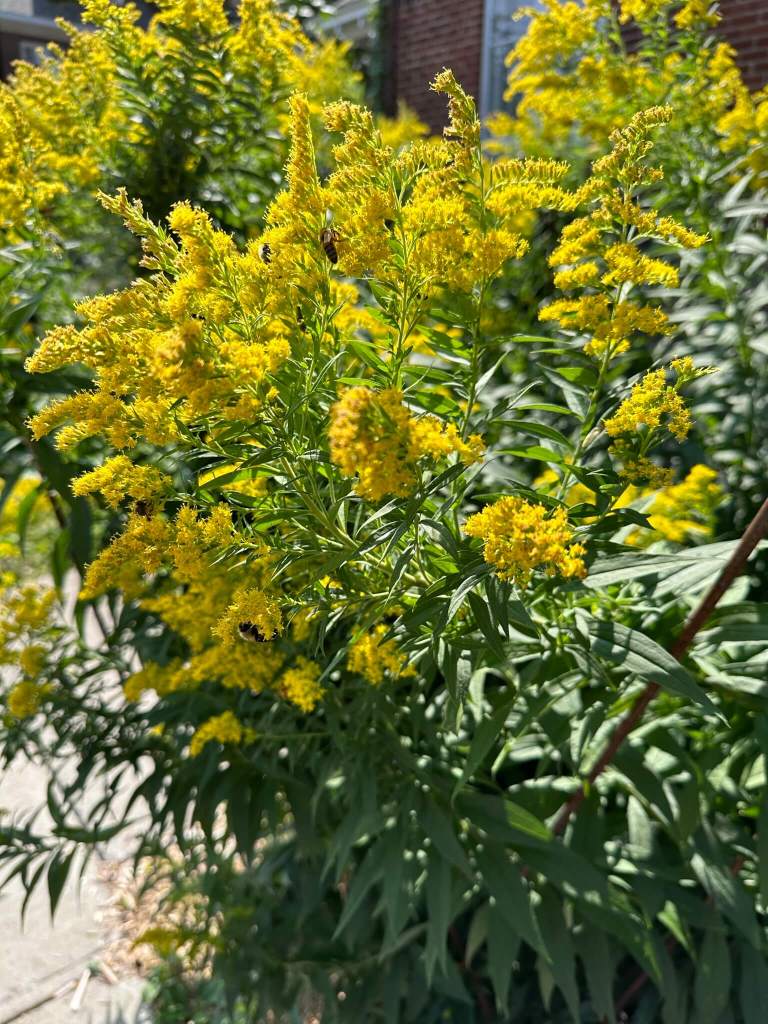
Growing up, I always viewed Goldenrod as a weed. It is often confused with ragweed, which is responsible for hay fever, but this perennial does not trigger allergies. Recently, I’ve completely fallen in love with it, in large part from seeing how much bees love it. It blooms in late summer and offers cheerful late-season colour. There are a bunch of different varieties, all of which are native to North America, I believe.
These are just the top ten plants that come to mind for me when I think about attracting bees. Which plants work best to attract bees to your garden? Do you disagree with any of my selections?
 Martha's Garden Obsession
Leave a comment