If you’re an avid gardener, you’ve probably experienced the push to plant more native plants. There are so many excellent reasons to do so. They provide the ideal food for local birds and bees. They won’t take over and become invasive. They help prevent erosion and many require less watering because they are adapted to the local climate. Why wouldn’t we all grow native plants only? If I’m being honest, a lot of my hesitation has been very selfish—I want a garden that looks pretty! But does it have to be an either/or situation? Is it possible to plant a native garden that is also attractive?
If you’d asked me even just a few years ago, my answer would have been no. I couldn’t see that there was much of interest that could be planted in a native garden. It all looked like weeds to me. Or boring. Ferns, the occasional white flower, and lots of goldenrod, right? I want to plant a garden that supports life on earth, but that means sacrificing beauty and interest, right?
But I’ve come to learn that there are actually a wide variety of native plants available to North Americans, or even more locally to Quebec. It’s not clear to me how much one needs to limit their location when choosing their plants. As a person living in Quebec, is a plant native to Nova Scotia or somewhere in the US considered native for me? Or am I limited to plants native to Canada? Or even Quebec? I mean, borders are arbitrary, after all. This is something I want to explore further in a future post. In the meantime, let’s take a broader view of the term “native plant” and have fun looking at the pretty plants I was able to see right in Montreal and Ottawa that are native at least to North America and often even more locally.
- Cardinal Flower (Lobelia cardinalis)
- Coreopsis
- Pink Tickseed/Rose Coreopsis (Coreopsis rosea)
- Blazing Star (Liatris)
- Butterfly Milkweed (Asclepias tuberosa)
- Spotted Joe-Pye Weed (Eutrochium maculatum)
- Echinacea/Eastern Purple Coneflower (Echinacea purpurea)
- Black-Eyed Susan (Rudbeckia)
- Evening Primrose (Oenothera biennis)
- Broad-Leaved Meadowsweet/White Meadowsweet (Spiraea latifolia)
- Swamp Milkweed (Asclepias incarnata)
- Anise Hyssop (Agastache foeniculum)
- Monarda/Wild Bergamot/Bee Balm
- Goldenrod/Canada Goldenrod (Solidago canadensis)
As I’ve mentioned previously, a certain someone is making it near impossible for me to successfully grow native plants. So I reached out to my community and asked to photograph their native plants. And wouldn’t you know, I’ve seen and photographed so many native plants that I’m going to have to break this topic up over several posts. I’m going to focus on what is blooming now, at the end of July/early August.
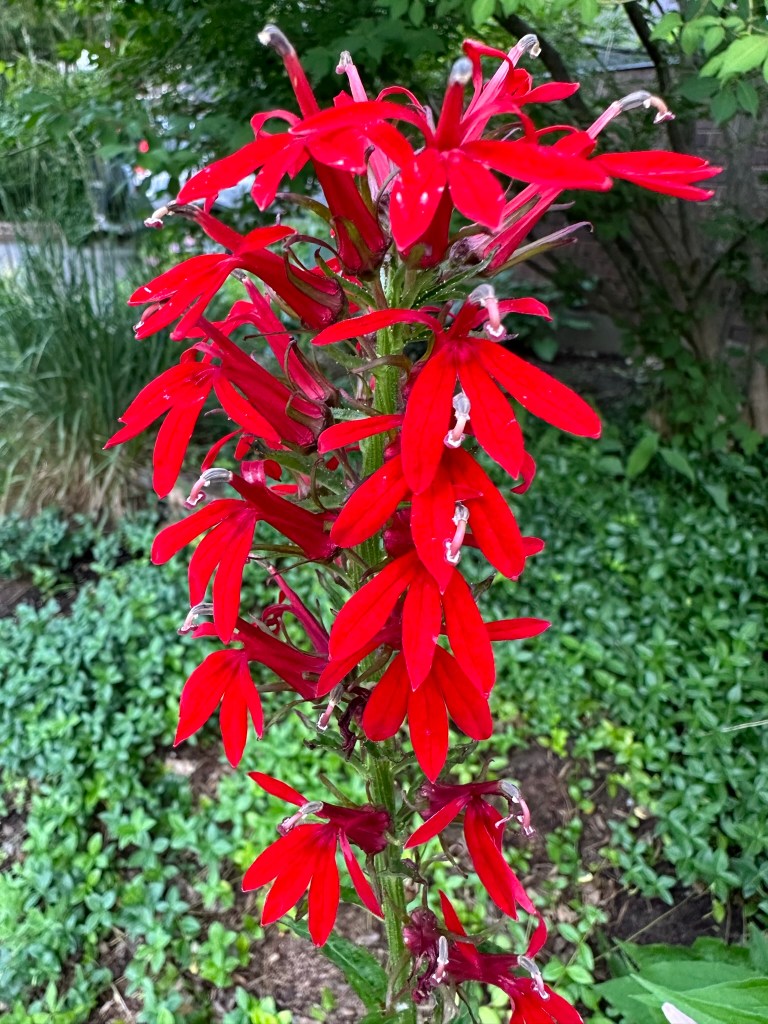
Cardinal Flower (Lobelia cardinalis)
This plant likes full sun to partial shade and its main requirement is water. Native to southeastern Canada, parts of the US and all the way to Colombia, it attracts hummingbirds and is easy to start from seed. This photo was taken in my mother’s garden. It is the Cardinal flower’s first year in her garden, but presumably it will spread by self-seeding. Although I personally do not care for red flowers, it is surprising and exciting to see a vibrant red in a native plant.
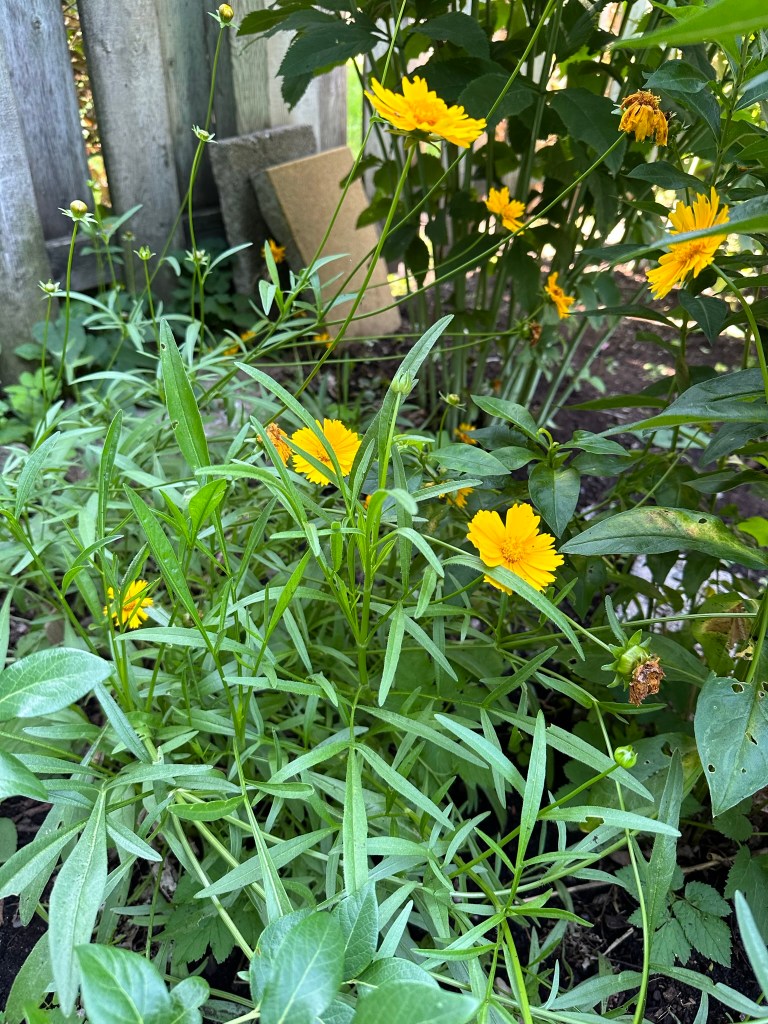
Coreopsis
These yellow flowers attract butterflies and bees. Coreopsis will bloom throughout the summer if you deadhead the spent flowers. I took this photo early in the season in a colleague’s garden. Native to much of the US, as well as BC and Ontario in Canada, it is actually considered invasive in Japan. Easy to start from seeds and drought tolerant, this plant attracts butterflies and is beneficial to native bees.
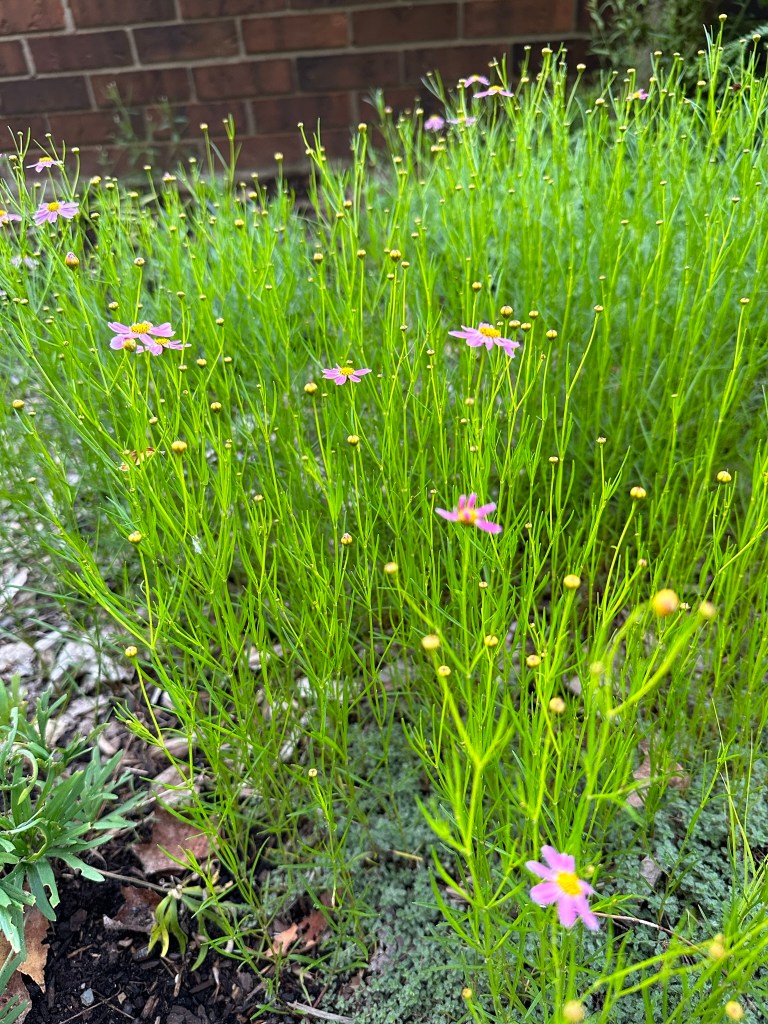
Pink Tickseed/Rose Coreopsis (Coreopsis rosea)
Native to Nova Scotia and other parts of North America, this plant grows to about two feet at maturity. The flowers are tiny, but prolific and the foliage is a lovely bright green. It blooms from summer through to fall and might be best described as a ground cover. This photo is from my mother’s garden, but I’m not sure it captures how truly tiny the flowers are. They are extremely cute on a plant that I find quite unique.

Blazing Star (Liatris)
I love this plant. It’s nice to see a bright purple and I think they are so ridiculous looking, like a Dr. Seuss drawing. I had a hard time figuring out if this is indeed the native form of Liatris. A lot of the images I found online looked different from one another, but all said they were native. The varieties Liatris native to North America are spread across Ontario and Quebec, as well as widely across the US. The bees seem to love it and it offers great midsummer interest. This is another photo from my mom’s garden.
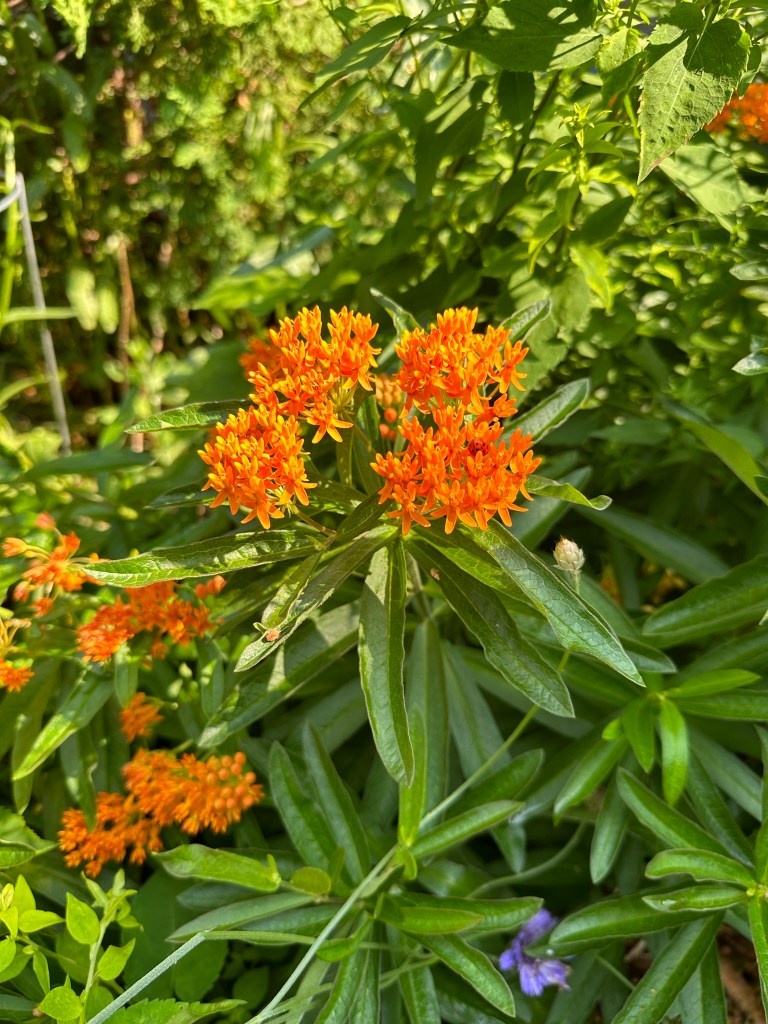
Butterfly Milkweed (Asclepias tuberosa)
Speaking of vibrant colours! Butterfly milkweed is so pretty and attracts bees and butterflies, including monarchs. This is a milkweed that won’t take over and is easy to start from seed. It is shorter than many other milkweeds, at a maximum height of around two feet. Found in five Canadian provinces, as well as widely across the US, this plant is drought tolerant. I took this photo in a colleague’s garden.
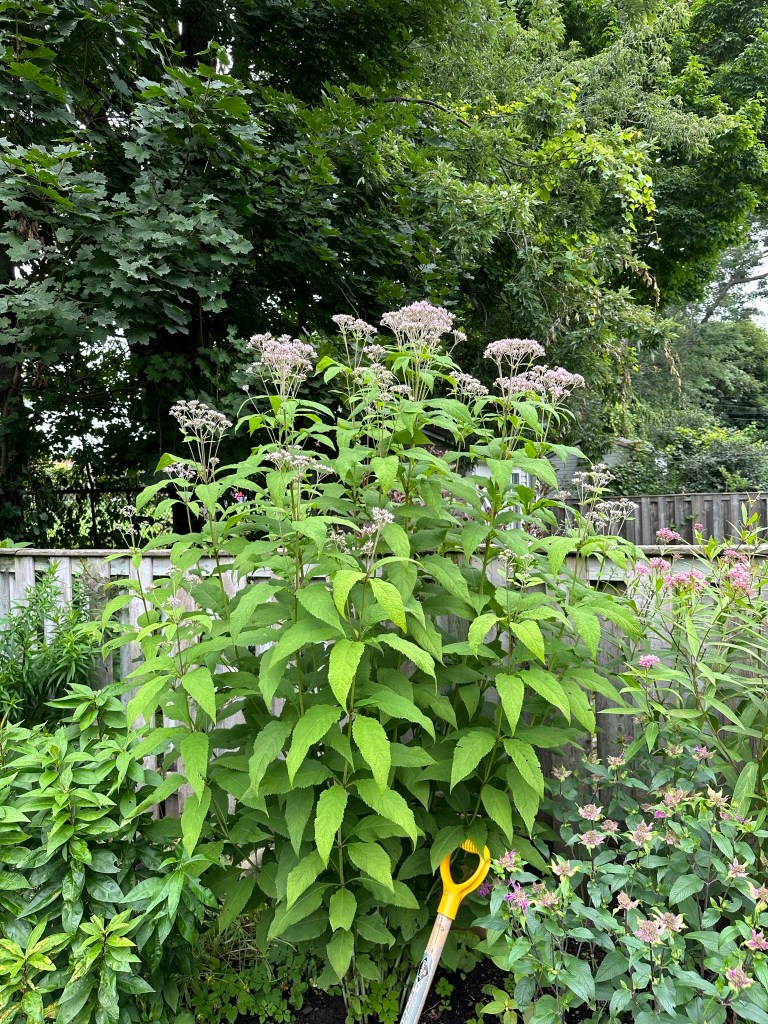
Spotted Joe-Pye Weed (Eutrochium maculatum)
This plant has a long flowering period – summer to fall. It provides nectar for bees and butterflies. Native to vast swaths of North America, including Ontario and Quebec, it attracts butterflies and is the larval host to some varieties of moths. If you’re looking for a nice tall plant for the back of your border, this is a great choice, as you can see in this photo of my neighbour’s garden. I’ve seen some that were over five feet, and indeed, it can even reach as tall as six feet!
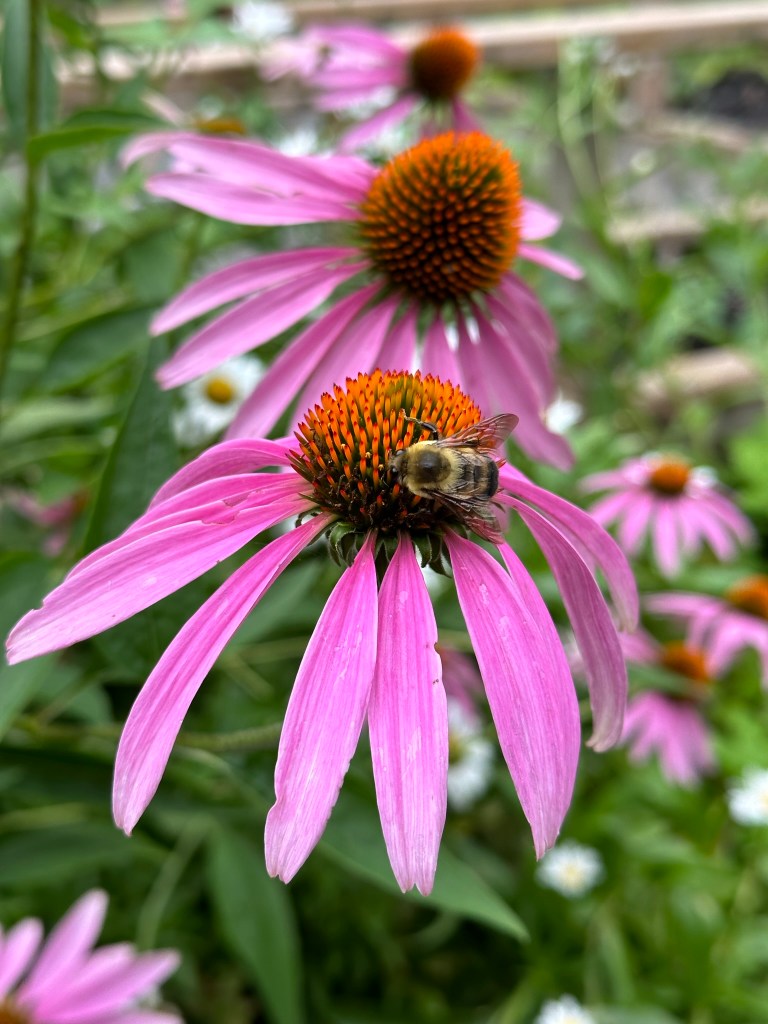
Echinacea/Eastern Purple Coneflower (Echinacea purpurea)
I’ve been on a bit of a journey with echinacea. In my determination to plant the native variety, I tracked some echinacea purpurea seeds down. And they weren’t easy to find either! I started them using the winter sowing technique. They grew extremely slowly, so I kept them in a pot til they were big enough to transplant. I put them all over my property and I’m holding my breath to see if Sam is going to eat them. This plant is actually considered a near-native to Canada (a new term to me!). Its native range is the northeastern US, right on the border with Ontario. It attracts butterflies and hummingbirds and bees. While I wait to see if mine blooms, enjoy a lovely picture of a happy bee feasting in my neighbour’s garden.
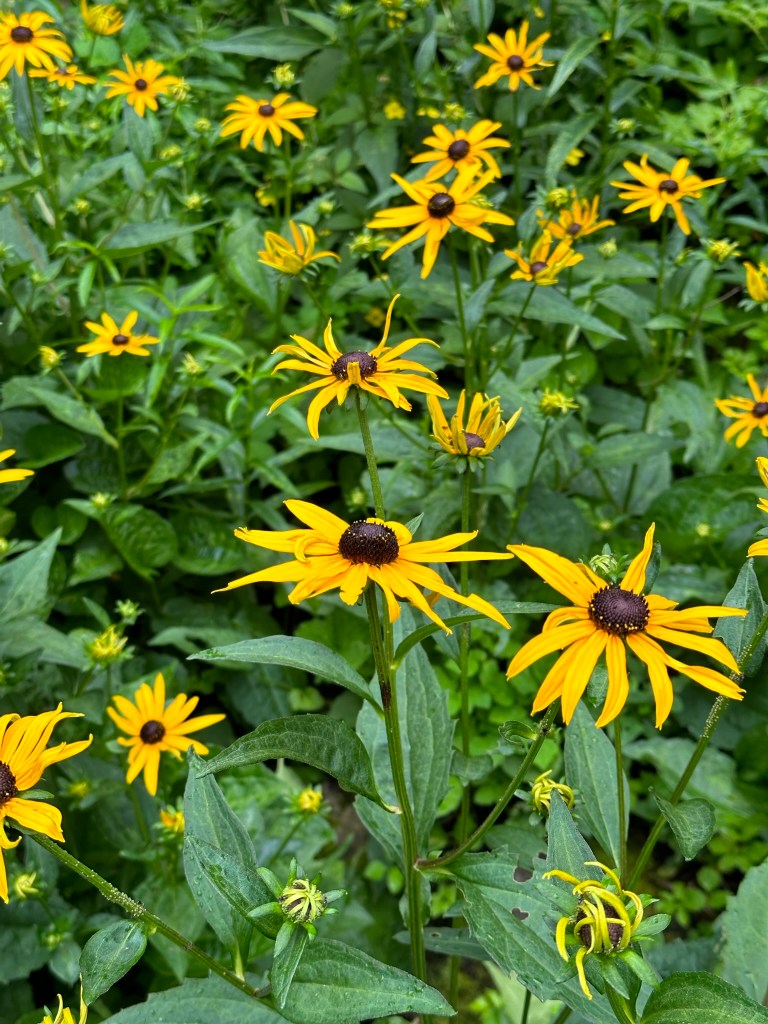
Black-Eyed Susan (Rudbeckia)
I’ve long wanted Black-Eyed Susan in my garden. I tried spreading seeds, but didn’t have any luck. I don’t generally succeed when spreading seed – I think my columbine is my only success. If ever space opens up in my garden, I will be sure to add this plant. Black-Eyed Susans are very cheerful and tolerate poor growing conditions and drought. This makes them very good candidates when you are trying to limit your use of water. There are many varieties of this plant native to North America, but only one to Canada. It provides nectar for bees, butterflies and beetles. Here is a lovely colony in my neighbour’s garden.
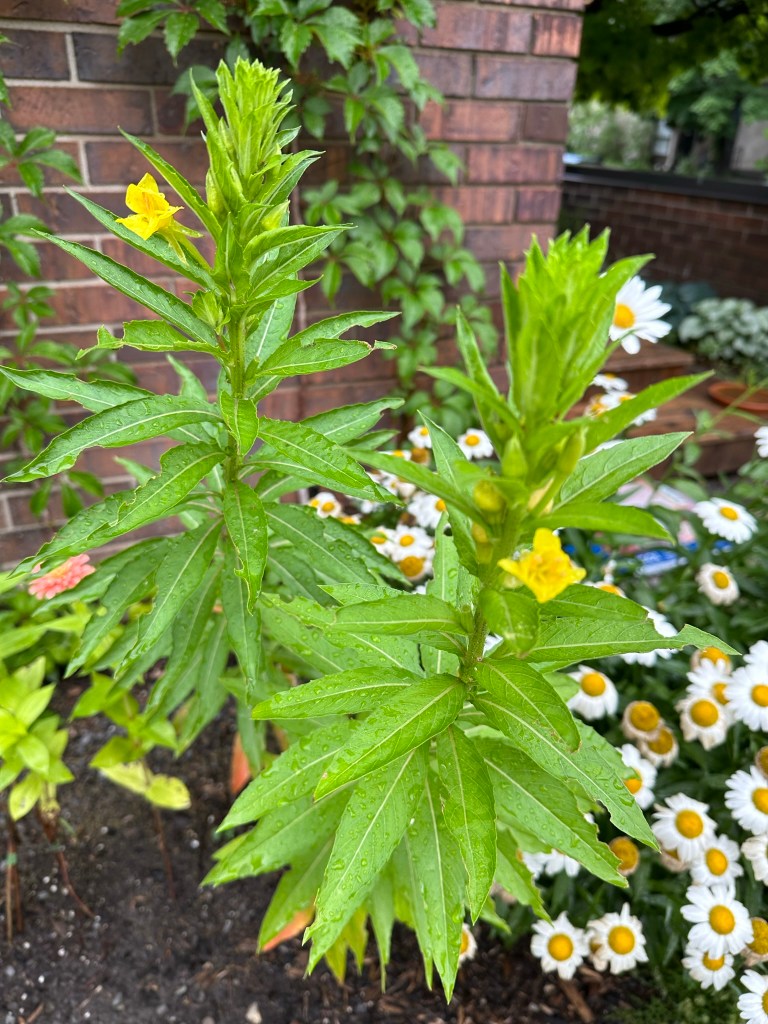
Evening Primrose (Oenothera biennis)
Another native plant in my mother’s garden! This plant is a prolific self-sower that can be easily started from seed. This plant attracts moths and appears to glow in the dark. It opens in the evening and closes by noon, hence its name. The seeds of this biennial are important to birds. It flowers from July to October and is native to vast swaths of Canada and the US.
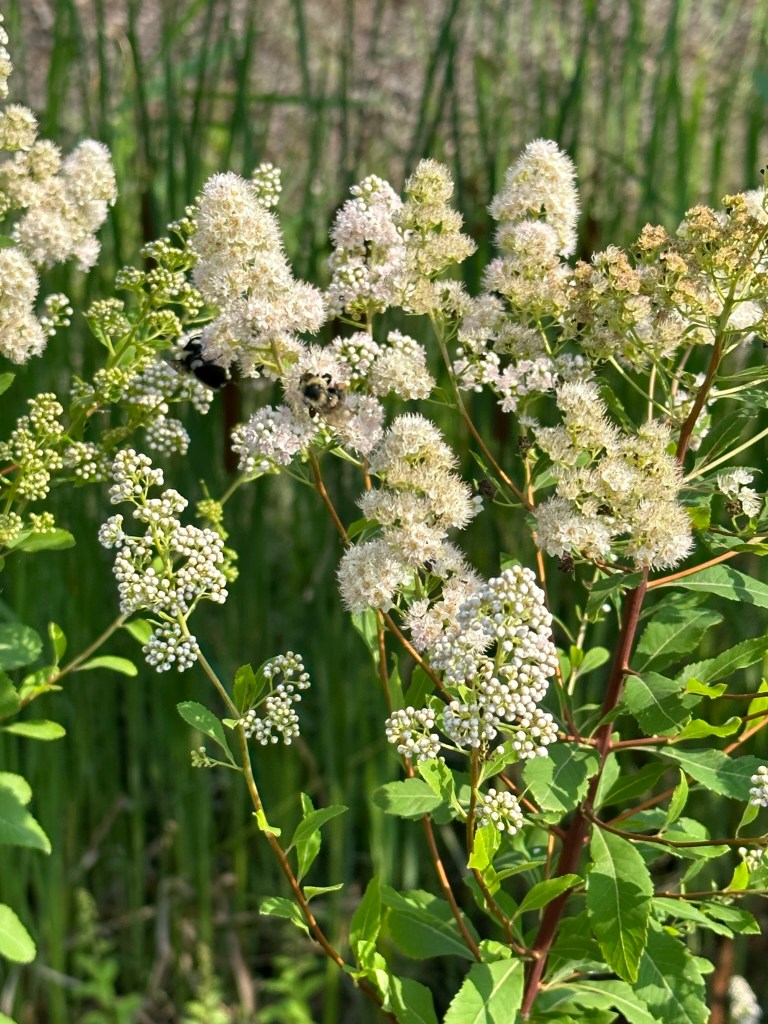
Broad-Leaved Meadowsweet/White Meadowsweet (Spiraea latifolia)
This plant is indigenous to Quebec, Ontario and other parts of North America. It blooms from May to October and is extremely popular with bees. I took this picture on the escarpment near my house where our government has been making progress in restoring the ecosystem. I kind of fell in love with this plant and I believe I’ll be able to add some to my garden this fall.
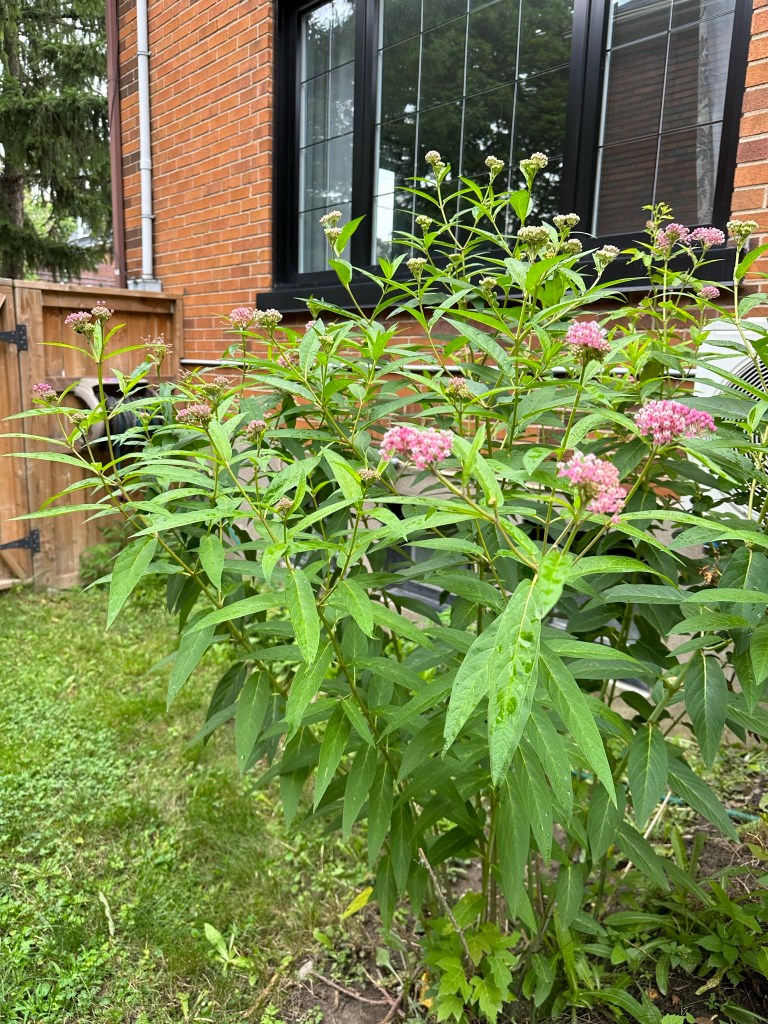
Swamp Milkweed (Asclepias incarnata)
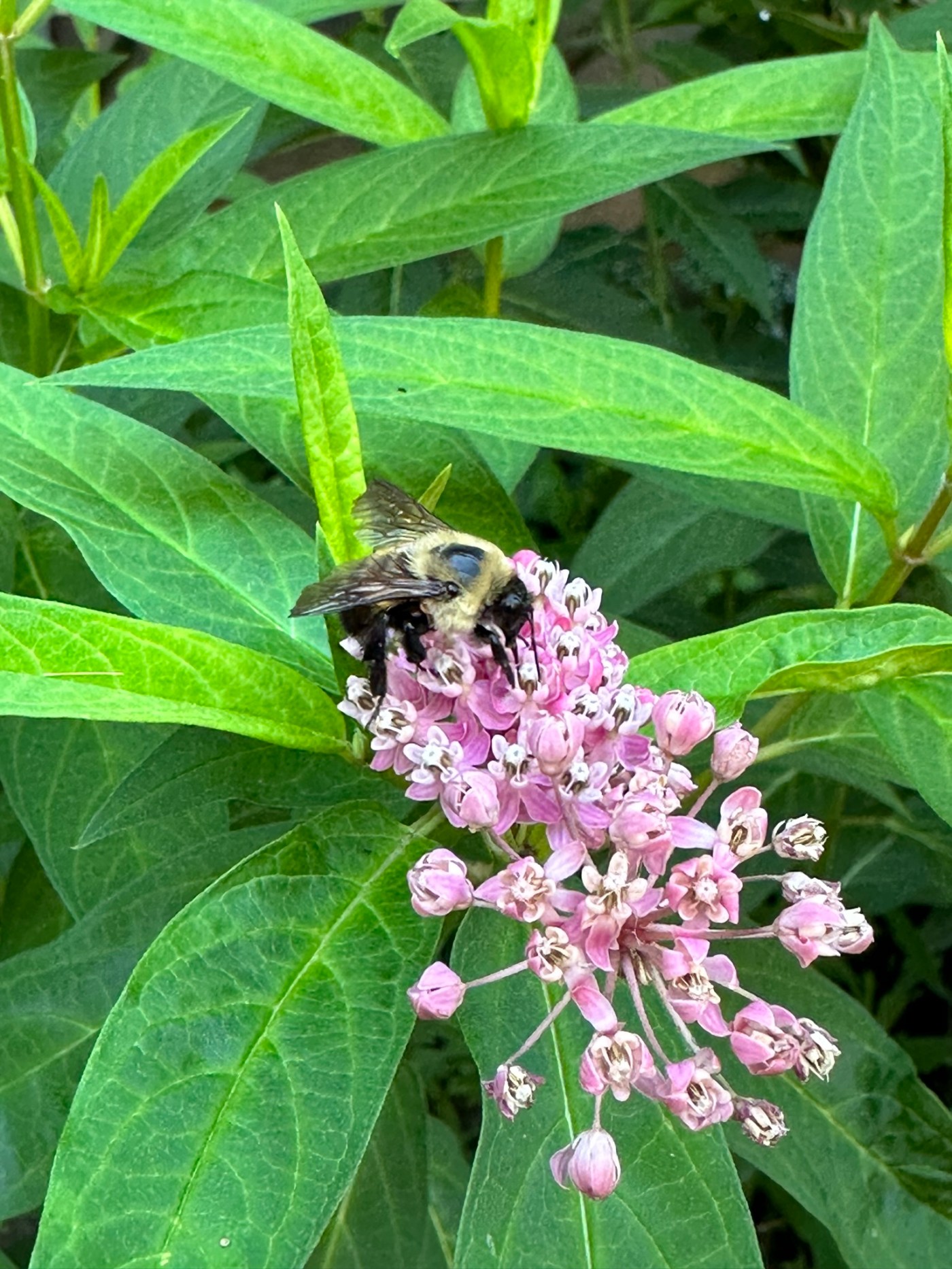
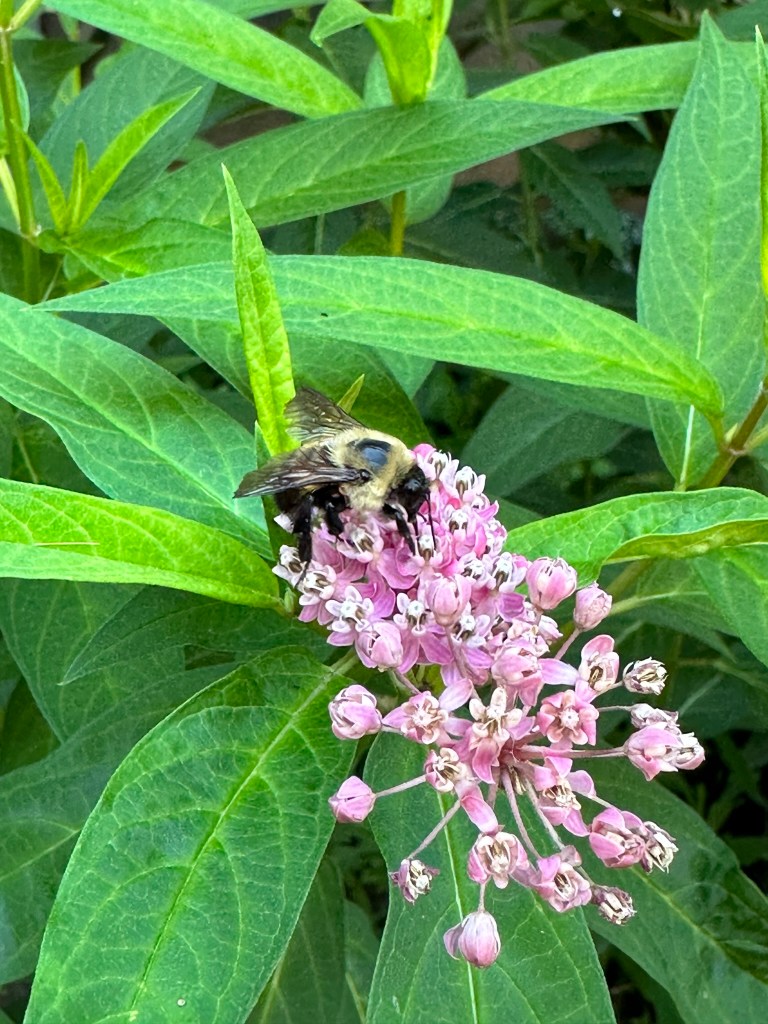
Check it out—a native in my garden! I started this milkweed from seed three years ago. It has grown every year, and this summer it is just exploding! I’ve placed it in a great place so I can enjoy its blooms from several windows. It’s been very happy with all the rain we’ve received this summer. Like butterfly milkweed, it is larval food for the monarch butterfly and attracts different butterflies and insects. It is native to Quebec and Nova Scotia and parts of the US.
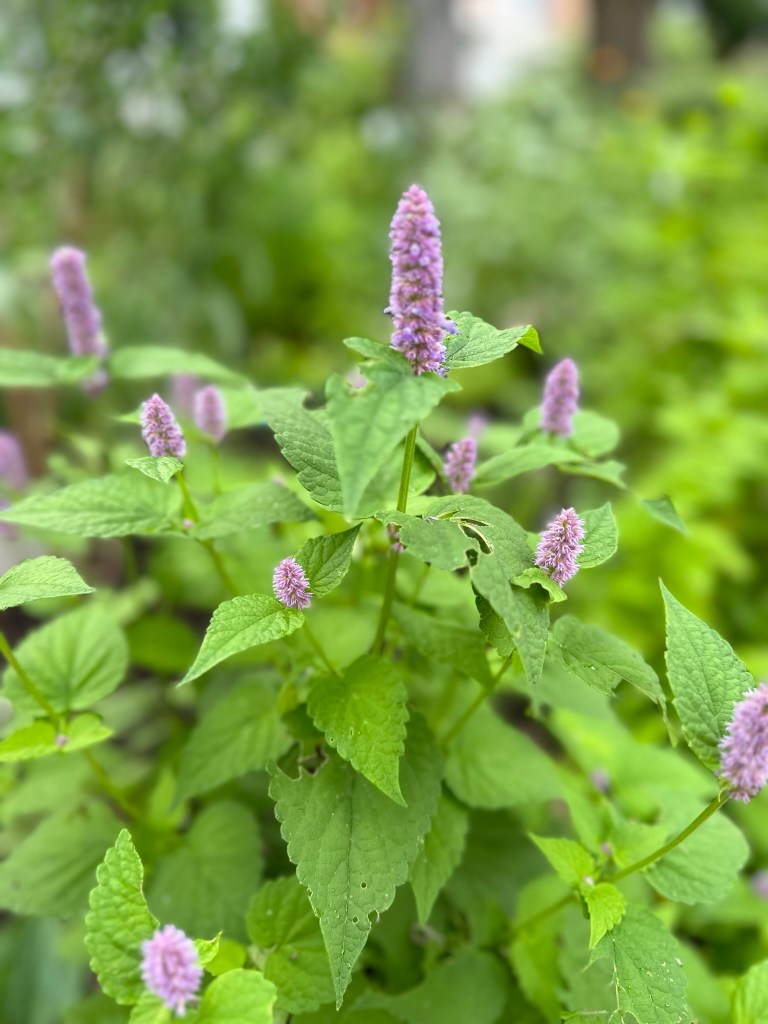
Anise Hyssop (Agastache foeniculum)
Another native that I tried to start using winter sowing. This was probably the least successful of the varieties I tried. I suspect that I spilled the cups to be honest, but I do have a small patch that seems to have taken. I don’t have any plants that look anything like anise hyssop and would be thrilled if it would take off. I think the groundhog will leave it alone since it’s a member of the mint family and he won’t like its smell. It’s native to the US. This picture was taken in my neighbour’s garden.
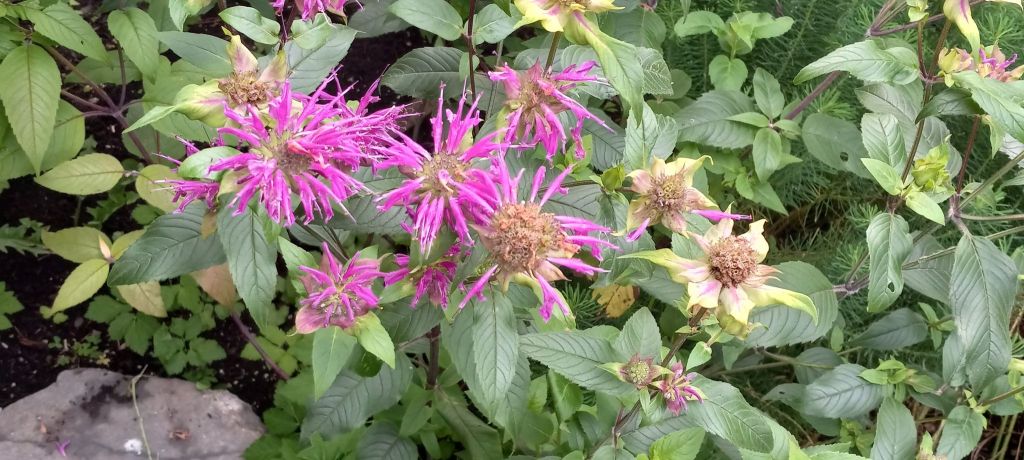
Monarda/Wild Bergamot/Bee Balm
This is the wild form of bee balm. I already have a type of bee balm in my garden and it has been pretty unremarkable. Not very tall, spreading very slowly, but I like the purple flowers. So I thought I’d try winter sowing the native version. Imagine my surprise when visiting other people’s gardens to find out that monarda in fact gets VERY tall—two to five feet! It has grown well in my garden, but hasn’t flowered yet. It seems that the groundhog does not eat any variety of bee balm since they have all been left alone. Bee balm is native to most of southern Canada except the maritime provinces and many parts of the US. In the image above taken in my neighbour’s garden. I love the colour!
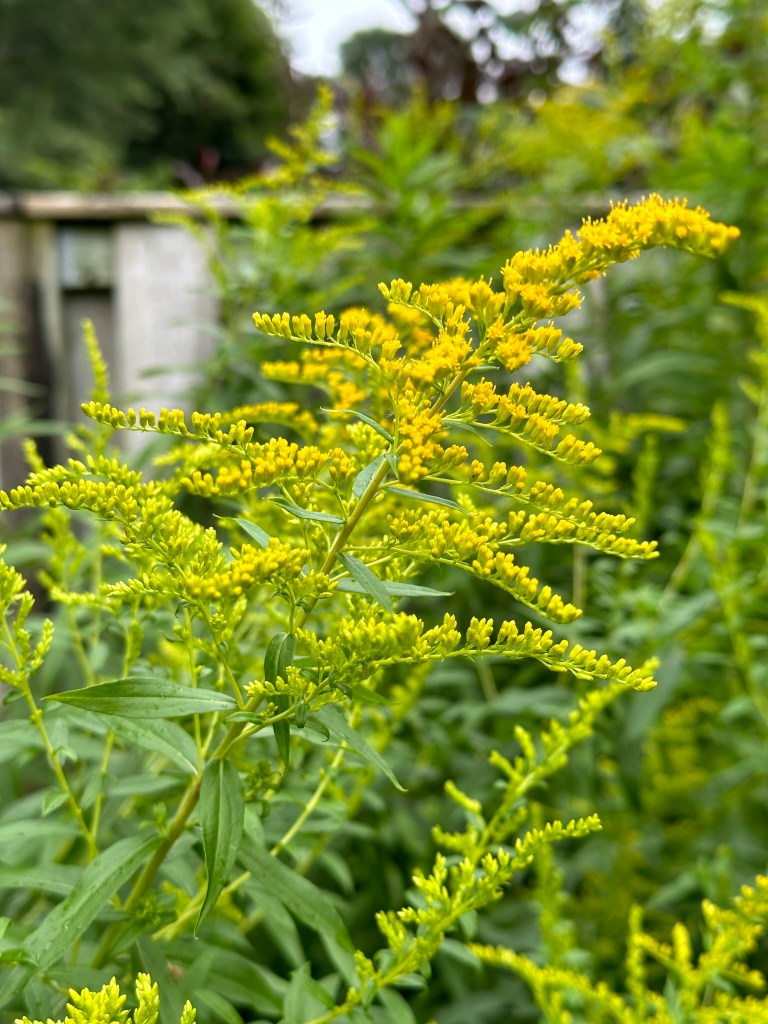
Goldenrod/Canada Goldenrod (Solidago canadensis)
I’ve been guilty of thinking of this plant as a weed, probably due to confusing it with ragweed. But actually, it’s very pretty and a great addition to a border. Even better, it’s of special benefit to native and honey bees. It is native to much of North America. This photo was taken in my neighbour’s garden.
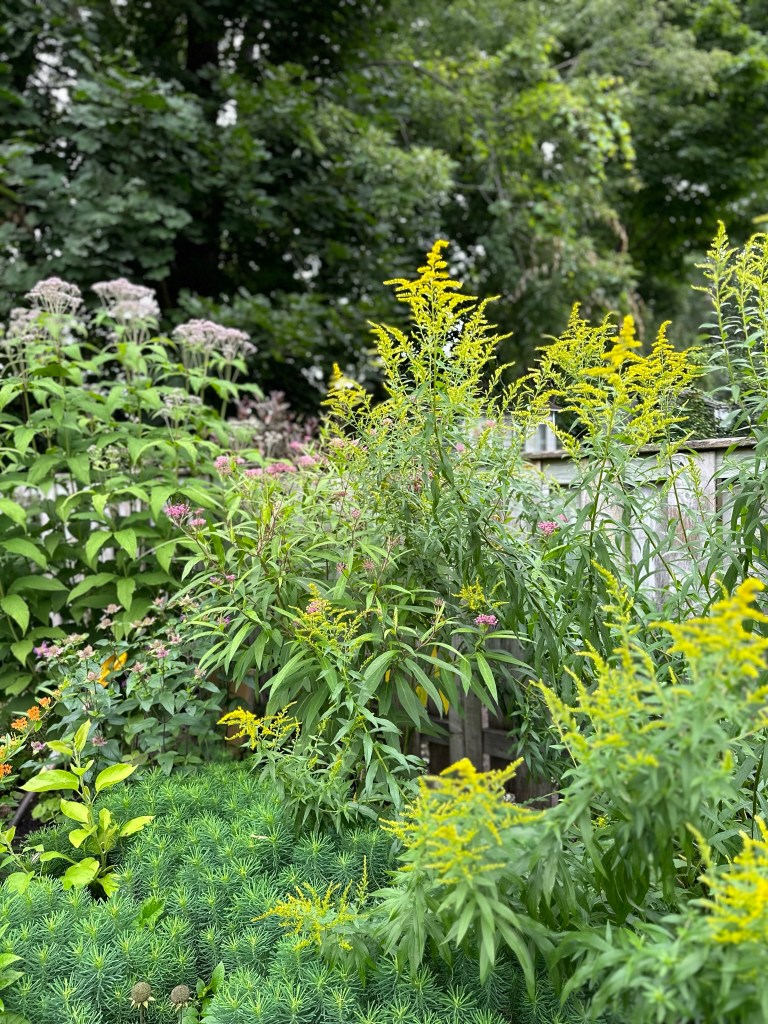
This is an image of a neighbour’s native garden. Isn’t it beautiful? In just this image, I see Spotted Joe-Pye Weed, Monarda, Butterfly Milkweed, Swamp Milkweed, and Goldenrod. I would love to have a garden that looks just like this – both beautiful and productive.
Guys, I honestly can’t believe this collection of native plants that I’ve managed to see and photograph this summer! I had no idea there were so many beautiful and interesting native plants available. And there are many more that I still want to track down. I’ve loved learning so much about native plants – and there’s still so much more that I don’t know. Which are your favourites? Am I am missing any? Did you know that such a variety of plants was native to North America?
I’m excited to continue on this journey of discovery!


The Goldenrod does look like ragweed. I can’t tell the difference and due to allergies to ragweed, I do avoid it. It looks pretty though.
LikeLike